
|
Section 00 TETRABIBLOS
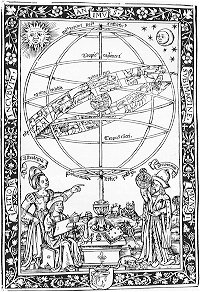 CONTENTS CONTENTS BOOK I
1. INTRODUCTION ................................. Section 01
2. THAT KNOWLEDGE BY ASTRONOMICAL MEANS IS
ATTAINABLE, AND HOW FAR....................... Section 02
3. THAT IT IS ALSO BENEFICIAL.................... Section 03
4. OF THE POWER OF THE PLANETS................... Section 04
5. OF BENEFICENT AND MALEFICENT PLANETS.......... Section 05
6. OF MASCULINE AND FEMININE PLANETS............. Section 06
7. OF DIURNAL AND NOCTURNAL PLANETS.............. Section 07
8. OF THE POWER OF THE ASPECTS TO THE SUN........ Section 08
9. OF THE POWER OF THE FIXED STARS............... Section 09
10. OF THE EFFECT OF THE SEASONS AND OF THE
FOUR ANGLES................................... Section 10
11. OF SOLSTITIAL, EQUINOCTIAL, SOLID, AND
BICORPOREAL SIGNS............................. Section 11
12. OF MASCULINE AND FEMININE SIGNS............... Section 12
13. OF THE ASPECTS OF THE SIGNS................... Section 13
14. OF COMMANDING AND OBEYING SIGNS............... Section 14
15. OF SIGNS WHICH BEHOLD EACH OTHER AND
SIGNS OF EQUAL POWER.......................... Section 15
16. OF DISJUNCT SIGNS............................. Section 16
17. OF THE HOUSES OF THE SEVERAL PLANETS.......... Section 17
18. OF THE TRIANGLES.............................. Section 18
19. OF EXALTATIONS................................ Section 19
20. OF THE DISPOSITION OF TERMS................... Section 20
21. ACCORDING TO THE CHALDAEANS................... Section 21
22. OF PLACES AND DEGREES......................... Section 22
23. OF FACES, CHARIOTS, AND THE LIKE.............. Section 23
24. OF APPLICATIONS AND SEPARATIONS AND THE
OTHER POWERS.................................. Section 24
BOOK II
25. INTRODUCTION.................................. Section 25
26. OF THE CHARACTERISTICS OF THE INHABITANTS
OF THE GENERAL CLIMES......................... Section 26
27. OF THE FAMILIARITIES BETWEEN COUNTRIES AND
THE TRIPLICITIES AND STARS.................... Section 27
28. METHOD OF MAKING PARTICULAR PREDICTIONS ...... Section 28
29. OF THE EXAMINATION OF THE COUNTRIES
AFFECTED...................................... Section 29
30. OF THE TIME OF THE PREDICTED EVENTS .......... Section 30
31. OF THE CLASS OF THOSE AFFECTED ............... Section 31
32. OF THE QUALITY OF THE PREDICTED EVENT......... Section 32
33. OF THE COLORS OF ECLIPSES, COMETS, AND
THE LIKE...................................... Section 33
34. CONCERNING THE NEW MOON OF THE YEAR........... Section 34
35. OF THE NATURE OF THE SIGNS, PART BY PART,
AND THEIR EFFECT UPON THE WEATHER ............ Section 35
36. OF THE INVESTIGATION OF WEATHER IN DETAIL..... Section 36
37. OF THE SIGNIFICANCE OF ATMOSPHERIC SIGNS...... Section 37
BOOK III
38. INTRODUCTION.................................. Section 38
39. OF THE DEGREE OF THE HOROSCOPIC POINT......... Section 39
40. THE SUBDIVISION OF THE SCIENCE OF NATIVITIES.. Section 40
41. OF PARENTS.................................... Section 41
42. OF BROTHERS AND SISTERS....................... Section 42
43. OF MALES AND FEMALES.......................... Section 43
44. OF TWINS...................................... Section 44
45. OF MONSTERS................................... Section 45
46. OF CHILDREN THAT ARE NOT REARED............... Section 46
47. OF LENGTH OF LIFE............................. Section 47
48. OF BODILY FORM AND TEMPERAMENT................ Section 48
49. OF BODILY INJURIES AND DISEASES............... Section 49
50. OF THE QUALITY OF THE SOUL.................... Section 50
51. OF DISEASES OF THE SOUL....................... Section 51
BOOK IV
52. INTRODUCTION.................................. Section 52
53. OF MATERIAL FORTUNE........................... Section 53
54. OF THE FORTUNE OF DIGNITY .................... Section 54
55. OF THE QUALITY OF ACTION. .................... Section 55
56. OF MARRIAGE................................... Section 56
57. OF CHILDREN................................... Section 57
58. OF FRIENDS AND ENEMIES........................ Section 58
59. OF FOREIGN TRAVEL............................. Section 59
60. OF THE QUALITY OF DEATH....................... Section 60
61. OF THE DIVISION OF TIMES...................... Section 61
Section 01 THE QUADRIPARTITE MATHEMATICAL TREATISE,
OR
"TETRABIBLOS,"
OF
CLAUDIUS PTOLEMY.
BOOK I.
1. Introduction.
OF the means of prediction through astronomy, O Syrus, two are the most important and valid. One, which is first both in order and in effectiveness, is that whereby we apprehend the aspects of the movements of sun, moon, and stars in relation to each other and to the earth, as they occur from time to time; the second is that in which by means of the natural character of these aspects themselves we investigate the changes which they bring about in that which they surround. The first of these, which has its own science, desirable in itself even though it does not attain the result given by its combination with the second, has been expounded to you as best we could in its own treatise by the method of demonstration. We shall now give an account of the second and less self-sufficient method in a properly philosophical way, so that one whose aim is the truth might never compare its perceptions with the sureness of the first, unvarying science, for he ascribes to it the weakness and unpredictability of material qualities found in individual things, nor yet refrain from such investigation as is within the bounds of possibility, when it is so evident that most events of a general nature draw their causes from the enveloping heavens. But since everything that is hard to attain is easily assailed by the generality of men, and in the case of the two before-mentioned disciplines the allegations against the first could be made only by the blind, while there are specious grounds for those levelled at the second -- for its difficulty in parts has made them think it completely incomprehensible, or the difficulty of escaping what is known has disparaged even its object as useless -- we shall try to examine briefly the measure of both the possibility and the usefulness of such prognostication before offering detailed instruction on the subject. First as to its possibility.
Section 02 2. That Knowledge by Astronomical Means is Attainable, and How Far.
A very few considerations would make it apparent to all that a certain power emanating from the eternal ethereal substance is dispersed through and permeates the whole region about the earth, which throughout is subject to change, since, of the primary sublunar elements, fire and air are encompassed and changed by the motions in the ether, and in turn encompass and change all else, earth and water and the plants and animals therein. For the sun, together with the ambient, is always in some way affecting everything on the earth, not only by the changes that accompany the seasons of the year to bring about the generation of animals, the productiveness of plants, the flowing of waters, and the changes of bodies, but also by its daily revolutions furnishing heat, moisture, dryness, and cold in regular order and in correspondence with its positions relative to the zenith. The moon, too, as the heavenly body nearest the earth, bestows her effluence most abundantly upon mundane things, for most of them, animate or inanimate, are sympathetic to her and change in company with her; the rivers increase and diminish their streams with her light, the seas turn their own tides with her rising and setting, and plants and animals in whole or in some part wax and wane with her. Moreover, the passages of the fixed stars and the planets through the sky often signify hot, windy, and snowy conditions of the air, and mundane things are affected accordingly. Then, too, their aspects to one another, by the meeting and mingling of their dispensations, bring about many complicated changes. For though the sun's power prevails in the general ordering of quality, the other heavenly bodies aid or oppose it in particular details, the moon more obviously and continuously, as for example when it is new, at quarter, or full, and the stars at greater intervals and more obscurely, as in their appearances, occultations, and approaches. If these matters be so regarded, all would judge it to follow that not only must things already compounded be affected in some way by the motion of these heavenly bodies, but likewise the germination and fruition of the seed must be moulded and conformed to the quality proper to the heavens at the time. The more observant farmers and herdsmen, indeed, conjecture, from the winds prevailing at the time of impregnation and of the sowing of the seed, the quality of what will result; and in general we see that the more important consequences signified by the more obvious configurations of sun, moon, and stars are usually known beforehand, even by those who inquire, not by scientific means, but only by observation. Those which are consequent upon greater forces and simpler natural orders, such as the annual variations of the seasons and the winds, are comprehended by very ignorant men, nay even by some dumb animals; for the sun is in general responsible for these phenomena. Things that are not of so general a nature, however, are comprehended by those who have by necessity become used to making observations, as, for instance, sailors know the special signs of storms and winds that arise periodically by reason of the aspects of the moon and fixed stars to the sun. Yet because they cannot in their ignorance accurately know the times and places of these phenomena, nor the periodic movements of the planets, which contribute importantly to the effect, it happens that they often err. If, then, a man knows accurately the movements of all the stars, the sun, and the moon, so that neither the place nor the time of any of their configurations escapes his notice, and if he has distinguished in general their natures as the result of previous continued study, even though he may discern, not their essential, but only their potentially effective qualities, such as the sun's heating and the moon's moistening, and so on with the rest; and if he is capable of determining in view of all these data, both scientifically and by successful conjecture, the distinctive mark of quality resulting from the combination of all the factors, what is to prevent him from being able to tell on each given occasion the characteristics of the air from the relations of the phenomena at the time, for instance, that it will be warmer or wetter? Why can he not, too, with respect to an individual man, perceive the general quality of his temperament from the ambient at the time of his birth, as for instance that he is such and such in body and such and such in soul, and predict occasional events, by use of the fact that such and such an ambient is attuned to such and such a temperament and is favorable to prosperity, while another is not so attuned and conduces to injury? Enough, however; for the possibility of such knowledge can be understood from these and similar arguments.
The following considerations might lead us to observe that criticism of the science on the score of impossibility has been specious but undeserved. In the first place, the mistakes of those who are not accurately instructed in its practice, and they are many, as one would expect in an important and many-sided art, have brought about the belief that even its true predictions depend upon chance, which is incorrect. For a thing like this is an impotence, not of the science, but of those who practice it. Secondly; most, for the sake of gain, claim credence for another art in the name of this, and deceive the vulgar, because they are reputed to foretell many things, even those that cannot naturally be known beforehand, while to the more thoughtful they have thereby given occasion to pass equally unfavorable judgement upon the natural subjects of prophecy. Nor is this deservedly done; it is the same with philosophy -- we need not abolish it because there are evident rascals among those that pretend to it. Nevertheless it is clear that even though one approach astrology in the most inquiring and legitimate spirit possible, he may frequently err, not for any of the reasons state, but because of the very nature of the thing and his own weakness in comparison with the magnitude of his profession. For in general, besides the fact that every science that deals with the quality of its subject-matter is conjectural and not to be absolutely affirmed, particularly One which is composed of many unlike elements, it is furthermore true that the ancient configurations of the planets, upon the basis of which we attach to similar aspects of our own day the effects observed by the ancients in theirs, Can be more Or less similar to the modern aspects, and that, too, at long intervals, but not identical, since the exact return of all the heavenly bodies and the earth to the same positions, unless one holds vain opinions of his ability to comprehend and know the incomprehensible, either takes place not at all or at least not in the period of time that falls within the experience of man; so that for this reason predictions sometimes fail, because of the disparity of the examples on which they are based. As to the investigation of atmospheric phenomena, this would be the only difficulty, since no other cause besides the movement of the heavenly bodies is taken into consideration. But in an inquiry concerning nativities and individual temperaments in general, one can see that there are circumstances of no small importance and of no trifling character, which join to cause the special qualities of those who are born. For differences of seed exert a very great influence on the special traits of the genus, since, if the ambient and the horizon are the same, each seed prevails to express in general its own form, for example, man, horse, and so forth; and the places of birth bring about no small variation in what is produced. For if the seed is generically the same, human for example, and the condition of the ambient the same, those who are born differ much, both in body and soul, with the difference of countries. In addition to this, all the aforesaid conditions being equal, rearing and customs contribute to influence the particular way in which a life is lived. Unless each one of these things is examined together with the causes that are derived from the ambient, although this latter be conceded to exercise the greatest influence (for the ambient is one of the causes for these things being what they are, while they in turn have no influence upon it), they can cause much difficulty for those who believe that in such cases everything can be understood, even things not wholly within its jurisdiction, from the motion of the heavenly bodies alone.
Since this is the case, it would not be fitting to dismiss all prognostication of this character because it can sometimes be mistaken, for we do not discredit the art of the pilot for its many errors; but as when the claims are great, so also when they are divine, we should welcome what is possible and think it enough. Nor, further, should we gropingly and in human fashion demand everything of the art, but rather join in the appreciation of its beauty, even in instances wherein it could not provide the full answer; and as we do not find fault with the physicians, when they examine a person, for speaking both about the sickness itself and about the patient's idiosyncrasy, so too in this case we should not object to astrologers using as a basis for calculation nationality, country, and rearing, or any other already existing accidental qualities.
Section 03 3. That it is also Beneficial.
In somewhat summary fashion it has been shown how prognostication by astronomical means is possible, and that it can go no further than what happens in the ambient and the consequences to man from such causes -- that is, it concerns the original endowments of faculties and activities of soul and body, their occasional diseases, their endurance for a long or a short time, and, besides, all external circumstances that have a directive and natural connection with the original gifts of nature, such as property and marriage in the case of the body and honor and dignities in that of the soul, and finally what befalls them from time to time. The remaining part of our project would be to inquire briefly as to its usefulness, first distinguishing how and with what end in view we shall take the meaning of the word usefulness. For if we look to the goods of the soul, what could be more conducive to well-being, pleasure, and in general satisfaction than this kind of forecast, by which we gain full view of things human and divine? And if we look to bodily goods, such knowledge, better than anything else, would perceive what is fitting and expedient for the capabilities of each temperament. But if it does not aid in the acquisition of riches, fame, and the like, we shall be able to say the same of all philosophy, for it does not provide any of these things as far as its own powers are concerned. We should not, however, for that reason be justified in condemning either philosophy or this art, disregarding its greater advantages.
To a general examination it would appear that those who find fault with the uselessness of prognostication have no regard for the most important matters, but only for this -- that foreknowledge of events that will happen in any case is superfluous; this, too, quite unreservedly and without due discrimination. For, in the first place. we should consider that even with events that will necessarily take place their unexpectedness is very apt to cause excessive panic and delirious joy. while foreknowledge accustoms and calms the soul by experience of distant events as though they were present, and prepares it to greet with calms and steadiness whatever comes. A second reason is that we should not believe that separate events attend mankind as the result of the heavenly cause as if they had been originally ordained for each person by some irrevocable divine command and destined -- to take place by necessity without the possibility of any other cause whatever interfering. Rather is it true that the movement of the heavenly bodies, to be sure. is eternally performed in accordance with divine. unchangeable destiny, while the change of earthly things is subject to a natural and mutable rate, and in drawing its first causes from above it is governed by chance and natural sequence. Moreover, some things happen to mankind through more general circumstances and not as the result of an individual's own natural propensities -- for example, when men perish in multitudes by conflagration or pestilence or cataclysms, through monstrous and inescapable changes in the ambient, for the lesser cause always yields to the greater and stronger; other occurrences, however, accord with the individual's own natural temperament through miner and fortuitous antipathies of the ambient. For if these distinctions are thus made, it is clear that both in general and in particular whatever events depend upon a first cause, which is irresistible and more powerful than anything that opposes it, must by all means take place; on the contrary, of events that are not of this character, those which are provided with resistant forces are easily averted, while those that are not follow the primary natural causes, to be sure, but this is due to ignorance and not to the necessity of almighty power. One might observe this same thing happening in all events whatsoever that have natural causes. For even of stones, plants, and animals, and also of wounds, mishaps, and sicknesses, some are of such a nature as to act of necessity, others only if no opposing thing interferes. One should therefore believe that physical philosophers predict what is to befall men with foreknowledge of this character and do not approach their task under false impressions; for certain things, because their effective causes are numerous and powerful, are inevitable, but others for the opposite reason may be averted. Similarly those physicians who can recognize ailments know beforehand those which are always fatal and those which admit of aid. In the case of events that may be modified we must give heed to the astrologer, when, for example, he says that to such and such a temperament, with such and such a character of the ambient, if the fundamental proportions increase or decrease, such and such an affection will result. Similarly we must believe the physician, when he says that this sore will spread or cause putrefaction, and the miner, for instance, that the lodestone attracts iron: just as each of these, if left to itself through ignorance of the opposing forces, will inevitably develop as its original nature compels, but neither will the sore cause spreading or putrefaction if it receives preventive treatment, nor will the lodestone attract the iron if it is rubbed with garlic; and these very deterrent measures also have their resisting power naturally and by fate; so also in the other cases, if future happenings to men are not known, or if they are known and the remedies are not applied, they will by all means follow the course of primary nature; but if they are recognized ahead of time and remedies are provided, again quite in accord with nature and fate, they either do not occur at all or are rendered less severe. And in general, since such power is the same whether applied to things regarded universally or particularly, one would wonder why all believe in the efficacy of prediction in universal matters, and in its usefulness for guarding one's interests (for most people admit that they have foreknowledge of the seasons, of the significance of the constellations, and of the phases of the moon, and take great forethought for safeguarding themselves, always contriving cooling agents against summer and the means of warmth against winter, and in general preparing their own natures with moderation as a goal; furthermore, to ensure the safety of the seasons and of their sailings they watch the significance of the fixed stars, and, for the beginning of breeding and sowing, the aspects of the moon's light at its full, and no one ever condemns such practices either as impossible or useless); but, on the other hand, as regards particular matters and those depending upon the mixture of the other qualities -- such as predictions of more or less, of cold or of heat, and of the individual temperament -- some people believe neither that foreknowledge is still possible nor that precautions can be taken in most instances. And yet, since it is obvious that, if we happen to have cooled ourselves against heat in general, we shall suffer less from it, similar measures can prove effective against particular forces which increase this particular temperament to a disproportionate amount of heat. For the cause of this error is the difficulty and unfamiliarity of particular prognostication, a reason which in most other situations as well brings about disbelief. And since for the most part the resisting faculty is not coupled with the prognostic, because so perfect a disposition is rare, and since the force of nature takes its course without hindrance when the primary natures are concerned, an opinion has been produced that absolutely all future events are inevitable and unescapable.
But, I think, just as with prognostication, even if it be not entirely infallible, at least its possibilities have appeared worthy of the highest regard, so too in the case of defensive practice, even though it does not furnish a remedy for everything. its authority in some instances at least, however few or unimportant, should be welcomed and prized. and regarded as profitable in no ordinary sense.
Recognizing, apparently, that these things are so, those who have most advanced this faculty of the art, the Egyptians, have entirely united medicine with astronomical prediction. For they would never have devised certain means of averting or warding off or remedying the universal and particular conditions that come or are present by reason of the ambient, if they had had any idea that the future cannot be moved and changed. But as it is, they place the faculty of resisting by orderly natural means in second rank to the decrees of fate, and have yoked to the possibility of prognostication its useful and beneficial faculty, through what they call their iatromathematical systems (medical astrology), in order that by means of astronomy they may succeed in learning the qualities of the underlying temperatures, the events that will occur in the future because of the ambient, and their special causes, on the ground that without this knowledge any measures of aid ought for the most part to fail, because the same onesare not fitted for all bodies or diseases; and, on the other band, by means of medicine, through their knowledge of what is properly sympathetic or antipathetic in each case, they proceed, as far as possible, to take precautionary measures against impending illness and to prescribe infallible treatment for existing disease.
Let this be, to this point, our summarily stated preliminary sketch. We shall now conduct our discussion after the manner of an introduction, beginning with the character of each of the heavenly bodies with respect to its active power, in agreement with the physical observations attached to them by the ancients, and in the first place the powers of the planets, sun, and moon.
Section 04 4. Of the Power of the Planets.
The active power of the sun's essential nature is found to be heating and, to a certain degree, drying. This is made more easily perceptible in the case of the sun than any other heavenly body by its size and by the obviousness of its seasonal changes, for the closer it approaches to the zenith the more it affects us in this way. Most of the moon's power consists of humidifying, clearly because it is close to the earth and because of the moist exhalations therefrom. Its action therefore is precisely this, to soften and cause putrefaction in bodies for the most part, but it shares moderately also in heating power because of the light which it receives from the sun.
It is Saturn's quality chiefly to cool and, moderately, to dry, probably because he is furthest removed both from the sun's heat and the moist exhalations about the earth. Both in Saturn's case and in that of the other planets there are powers, too, which arise through the observation of their aspects to the sun and the moon, for some of them appear to modify conditions in the ambient in one way, some in another, by increase or by decrease.
The nature of Mars is chiefly to dry and to burn, in conformity with his fiery color and by reason of his nearness to the sun, for the sun's sphere lies just below him.
Jupiter has a temperate active force because his movement takes place between the cooling influence of Saturn and the burning power of Mars. He both heats and humidifies; and because his heating power is the greater by reason of the underlying spheres, he produces fertilizing winds.
Venus has the same powers and tempered nature as Jupiter, but acts in the opposite way; for she warms moderately because of her nearness to the sun, but chiefly humidifies, like the moon, because of the amount of her own light and because she appropriates the exhalations from the moist atmosphere surrounding the earth.
Mercury in general is found at certain times alike to be drying and absorptive of moisture, because he never is far removed in longitude from the heat of the sun; and again humidifying, because he is next above the sphere of the moon, which is closest to the earth; and to change quickly from one to the other, inspired as it were by the speed of his motion in the neighborhood of the sun itself.
Section 05 5. Of Beneficent and Maleficent Planets.
Since the foregoing is the case, because two of the four humours are fertile and active, the hot and the moist (for all things are brought together and increased by them), and two are destructive and passive, the dry and the cold, through which all things, again, are separated and destroyed, the ancients accepted two of the planets, Jupiter and Venus, together with the moon, as beneficent because of their tempered nature and because they abound in the hot and the moist, and Saturn and Mars as producing effects of the opposite nature, one because of his excessive cold and the other for his excessive dryness; the sun and Mercury, however, they thought to have both powers, because they, have a common nature, and to join their influences with those of the other planets, with whichever of them they are associated.
Section 06 6. Of Masculine and Feminine Planets.
Again, since there are two primary kinds of natures, male and female, and of the forces already mentioned that of the moist is especially feminine -- for as a general thing this element is present to a greater degree in all females, and the others rather in maleswith good reason the view has been handed down to us that the moon and Venus are feminine, because they share more largely in the moist, and that the sun, Saturn, Jupiter, and Mars are masculine, and Mercury common to both genders, inasmuch as he produces the dry and the moist alike. They say too that the stars become masculine or feminine according to their aspects to the sun, for when they are morning stars and precede the sun they become masculine, and feminine when they are evening stars and follow the sun. Furthermore this happens also according to their positions with respect to the horizon; for when they are in positions from the orient to mid-heaven, or again from the occident to lower mid-heaven, they become masculine because they are eastern, but in the other two quadrants, as western stars, they become feminine.
Section 07 7. Of Diurnal and Nocturnal Planets.
Similarly, since of the two most obvious intervals of those which make up time, the day is more masculine because of its heat and active force, and night more feminine because of its moisture and its gift of rest, the tradition has consequently been handed down that the moon and Venus are nocturnal, the sun and Jupiter diurnal, and Mercury common as before, diurnal when it is a morning star and nocturnal as an evening star. They also assigned to each of the sects the two destructive stars, not however in this instance on the principle of similar natures, but of just the opposite; for when stars of the same kind are joined with those of the good temperament their beneficial influence -- is increased, but if dissimilar stars are associated with the destructive onesthe greatest part of their injurious power is broken. Thus they assigned, Saturn, which is cold, to the warmth of day, and Mars, which is dry, to the moisture of night, for in this way each of them -- attains good proportion through admixture and becomes a proper member of its sect, which provides moderation.
Section 08 8. Of the Power of the Aspects to the Sun
Now, mark you, likewise, according to their aspects to the sun, the moon and three of the planets experience increase and decrease in their own powers. For in its waxing from new moon to first quarter the moon is more productive of moisture; in its passage from first quarter to full, of heat; from full to last quarter; of dryness, and from last quarter to occultation, of cold. The planets, in oriental aspects only, are more productive of moisture from rising to their first station, of heat from first station to evening rising, of dryness from evening rising to the second station, of cold from second station to setting; and it is clear that when they are associated with one another they produce very many variations of quality in our ambient, the proper force of each one for the most part persisting, but being changed in quantity by the force of the stars that share the configuration.
Section 09 9. Of the Power of the Fixed Stars.
As it is next in order to recount the natures of the fixed stars with reference to their special powers, we shall set forth their observed characters in an exposition like that of the natures of the planets, and in the first place those of the onesthat occupy the figures in the zodiac itself.
The stars in the head of Aries, then, have an effect like the power of Mars and Saturn, mingled; those in the mouth like Mercury's power and moderately like Saturn's; those in the hind foot like that of Mars, and those in the tail like that of Venus.
Of those in Taurus, the stars along the line where it is cut off have a temperature like that of Venus and in a measure like that of Saturn; those in the Pleiades, like those of the moon and Jupiter; of the stars in the head, the one of the Hyades that is bright and somewhat reddish, called the Torch, has a temperature like that of Mars; the others, like that of Saturn and moderately, like that of Mercury; those in the tips of the horns, like that of Mars.
Of the stars in Gemini, those in the feet share the same quality as Mercury and, to a less degree, as Venus; the bright stars in the thighs, the same as Saturn; of the two bright stars in the heads, the one in the head in advance the same as Mercury; it is also called the star of Apollo; the one in the head that follows, the same as Mars; it is also called the star of Hercules.
Of the stars in Cancer, the two in the eyes produce the same effect as Mercury, and, to a less degree, as Mars; those in the claws, the same as Saturn and Mercury; the cloud-like cluster in the breast, called the Manger, the same as Mars and the moon; and the two on either side of it, which are called Asses, the same as Mars and the sun.
Of those in Leo, the two in the head act in the same way as Saturn and, to a less degree, as Mars; the three in the throat, the same as Saturn and, to a less degree, as Mercury; the bright star upon the heart, called Regulus, the same as Mars and Jupiter; those in the hip and the bright star in the tail, the same as Saturn and Venus; and those in the thighs, the same as Venus and, to a less degree, Mercury.
Of the stars in Virgo, those in the head and the one upon the tip of the southern wing have an effect like that of Mercury and, in less degree, of Mars; the other bright stars of the wing and those on the girdles like that of Mercury and, in a measure, of Venus; the bright star in the northern wing, called Vindemiator, like those of Saturn and Mercury; the so-called Spica, like that of Venus and, in a less degree, that of Mars; those in the tips of the feet and the train like that of Mercury and, in a less degree, Mars.
Of those in the Claws of the Scorpion, the onesat their very extremities exercise the same influence as do Jupiter and Mercury; those in the middle parts the same as do Saturn and, to a less degree, Mars.
Of the stars in the body of Scorpio, the bright stars on the forehead act in the same way as does Mars and in some degree as does Saturn; the three in the body, the middle one of which is tawny and rather bright and is called Antares, the same as Mars and, in some degree, Jupiter; those in the joints, the same as Saturn and, in some degree, Venus; those in the sting, the same as Mercury and Mars; and the so-called cloud-like cluster, the same as Mars and the moon.
Of the stars in Sagittarius, those in the point of his arrow have an effect like that of Mars and the moon; those in the bow and the grip of his hand, like that of Jupiter and Mars; the cluster in his forehead, like that of the sun and Mars; those in the cloak and his back, like that of Jupiter and, to a less degree, of Mercury; those in his feet, like that of Jupiter and Saturn; the quadrangle upon the tail, like that of Venus and, to a less degree, of Saturn.
Of the stars in Capricorn, those in the horns act in the same way as Venus and, in same degree, as Mars; those in the mouth, as Saturn and, in same degree, as Venus; those in the feet and the belly, as Mars and Mercury; and those in the tail, as Saturn and Jupiter.
Of the stars in Aquarius, those in the shoulders exert an influence like that of Saturn and Mercury, together with those in the left arm and the cloak; those in the thighs, like that of Mercury in a greater degree and like that of Saturn in a lesser degree; those in the stream of water, like that of Saturn and, in same degree, like that of Jupiter.
Of the stars in Pisces, those in the head of the southern Fish act in the same way as Mercury and somewhat as does Saturn; those in the body, as do Jupiter and Mercury; those in the tail and the southern cord, as do Saturn and, in some degree, Mercury; those in the body and backbone of the northern Fish, as do Jupiter and, in some degree, Venus; those in the northern part of the cord, as do Saturn and Jupiter; and the bright star on the bond, as do Mars and, in some degree, Mercury.
Of the stars in the configurations north of the zodiac, the bright stars in Ursa Minor have a similar quality to that of Saturn and, to a less degree, to that of Venus; those in Ursa Major, to that of Mars; and the cluster of the Coma Berenices beneath the Bear's tail, to that of the moon and Venus; the bright stars in Draco, to that of Saturn, Mars, and Jupiter; those of Cepheus, to that of Saturn and Jupiter: those in Bootes, to that of Mercury and Saturn; the bright, tawny star, to that of Jupiter and Mars, the star called Arcturus; the star in Corona Septentrionalis, to that of Venus and Mercury; those in Geniculator, to that of Mercury; those in Lyra, to that of Venus and Mercury; and likewise those in Cygnus. The stars in Cassiopeia have the effect of Saturn and Venus; those in Perseus, of Jupiter and Saturn; the cluster in the hilt of the sword, of Mars and Mercury; the bright stars in Auriga, of Mars and Mercury; those in Ophiuchus, of Saturn and, to some degree, of Venus; those in his serpent, of Saturn and Mars; those in Sagitta, of Mars and, to some degree, of Venus; those in Aquila, of Mars and Jupiter; those in Delphinus, of Saturn and Mars; the bright stars in the Horse, of Mars and Mercury; those in Andromeda, of Venus; those in Triangulum, of Mercury.
Of the stars in the formations south of the zodiac the bright star in the mouth of Piscis Australis has an influence similar to that of Venus and Mercury; those in Cetus, similar to that of Saturn; of those in Orion, the stars on his shoulders similar to that of Mars and Mercury, and the other bright stars similar to that of Jupiter and Saturn; of the stars in Eridanus the last bright one has an influence like that of Jupiter and the others like that of Saturn; the star in Lepus, like that of Saturn and Mercury; of those in Canis, the others like that of Venus, and the bright star in the mouth, like that of Jupiter and, to a less degree, of Mars; the bright star Procyon, like that of Mercury. and, in a less degree, that of Mars; the bright stars in Hydra, like that of Saturn and Venus; those in Crater, like that of Venus and, in a less degree, of Mercury; those in Corvus, like that of Mars and Saturn; the bright stars of Argo, like that of Saturn and Jupiter; of those in Centaurus, the onesin the human body, like that of Venus and Mercury, and the bright stars in the equine body like that of Venus and Jupiter; the bright stars in Lupus, like that of Saturn and, in less degree, of Mars; those in Are, like that of Venus and, to a lesser degree, of Mercury; and the bright stars in Corona Australis, like that of Saturn and Mercury.
Such, then, are the observations of the effects of the stars themselves as made by our predecessors.
Section 10 10. Of the Effect of the Seasons and of the Four Angles.
Of the four seasons of the year, spring, summer, autumn, and winter, spring exceeds in moisture on account of its diffusion after the cold has passed and warmth is setting in; the summer, in heat, because of the nearness of the sun to the zenith; autumn more in dryness, because of the sucking up of the moisture during the hot season just past; and winter exceeds in cold, because the sun is farthest away from the zenith. For this reason, although there is no natural beginning of the zodiac, since it is a circle, they assume that the sign which begins with the vernal equinox, that of Aries, is the starting point of them all, making the excessive moisture of the spring the first part of the zodiac as though it were a living creature, and taking next in order the remaining seasons, because in all creatures the earliest ages, like the spring, have a larger share of moisture and are tender and still delicate. The second age, up to the prime of life, exceeds in heat, like summer; the third, which is now past the prime and on the verge of decline, has an excess of dryness, like autumn; and the last, which approaches dissolution, exceeds in its coldness, like winter.
Similarly, too, of the four regions and angles of the horizon, from which originate the winds from the cardinal points, the eastern one likewise excels in dryness because, when the sun is in that region, whatever has been moistened by the night then first begins to be dried; and the winds which blow from it, which we call in general Apeliotes, are without moisture and drying in effect. The region to the south is hottest because of the fiery heat of the sun's passages through mid-heaven and because these passages, on account of the inclination of our inhabited world, diverge more to the south; and the winds which blow thence and are called by the general name Notus are hot and rarefying. The region to the west is itself moist, because when the sun is therein the things dried out during the day then first begin to become moistened; likewise the winds which blow from this part, which we call by the general name Zephyrus, are fresh and moist. The region to the north is the coldest, because through our inhabited world's inclination it is too far removed from the causes of heat arising from the sun's culmination, as it is also when the sun is at its lower culmination; and the winds which blow thence, which are called by the general name Boreas, are cold and condensing in effect.
The knowledge of these facts is useful to enable one to form a complete judgement of temperatures in individual instances. For it is easily recognizable that, together with such conditions as these, of seasons, ages, or angles, there is a corresponding variation in the potency of the stars' faculties, and that in the conditions akin to them their quality is purer and their effectiveness stronger, those that are heating by nature, for instance, in heat, and those that are moistening in the moist, while under opposite conditions their power is adulterated and weaker. Thus the heating stars in the cold periods and the moistening stars in the dry periods are weaker, and similarly in the other cases, according to the quality produced by the mixture.
Section 11 11. Of Solstitial, Equinoctial, Solid, and Bicorporeal Signs.
After the explanation of these matters the next subject to be added would be the natural characters of the zodiacal signs themselves, as they have been handed down by tradition. For although their more general temperaments are each analogous to the seasons that take place in them, certain peculiar qualities of theirs arise from their kinship to the sun, moon, and planets, as we shall relate in what follows, putting first the unmingled powers of the signs themselves alone, regarded both absolutely and relatively to one another.
The first distinctions, then, are of the so-called solstitial, equinoctial, solid, and bicorporeal signs. For there are two solstitial signs, the first interval of 30° from the summer solstice, the sign of Cancer, and the first from the winter solstice, Capricorn; and they have received their name from what takes place in them. For the sun turns when he is at the beginning of these signs and reverses his latitudinal progress, causing summer in Cancer and winter in Capricorn. Two signs are called equinoctial, the One which is first from the spring equinox, Aries, and the one which begins with the autumnal equinox, Libra; and they too again are named from what happens there, because when the sun is at the beginning of these signs he makes the nights exactly equal to the days.
Of the remaining eight signs four are called solid and four bicorporeal. The solid signs, Taurus, Leo, Scorpio, and Aquarius, are those which follow the solstitial and equinoctial signs; and they are so called because when the sun is in them the moisture, heat, dryness, and cold of the seasons that begin in the preceding signs touch us more firmly, not that the weather is naturally any more intemperate at that time, but that we are by then inured to them and for that reason are more sensible of their power.
The bicorporeal signs, Gemini, Virgo, Sagittarius, and Pisces, are those which follow the solid signs, and are so called because they are between the solid and the solstitial and equinoctial signs and share, as it were, at end and beginning, the natural properties of the two states of weather.
Section 12 12. Of Masculine and Feminine Signs.
Again, in the same way they assigned six of the signs to the masculine and diurnal nature and an equal number to the feminine and nocturnal. An alternating order was assigned to them because day is always yoked to night and close to it, and female to male. Now as Aries is taken as the starting-point for the reasons we have mentioned, and as the male likewise rules and holds first place, since also the active is always superior to the passive in power, the signs of Aries and Libra were thought to be masculine and diurnal, an additional reason being that the equinoctial circle which is drawn through them completes the primary and most powerful movement of the whole universe. The signs in succession after them correspond, as we said, in alternating order.
Same, however, employ an order of masculine and feminine signs whereby the masculine begins with the sign that is rising, called the horoscope. For just as some begin the solstitial signs with the moon's sign because the moon changes direction more swiftly than the rest, so they begin the masculine signs with the horoscope because it is further to the east, some as before making use of the alternate order of signs, and others dividing by entire quadrants, and designating as matutinal and masculine signs those of the quadrant from the horoscope to mid-heaven and those of the opposite quadrant from the occident to the lower mid-heaven, and as evening and feminine the other two quadrants. They have also attached other descriptions to the signs, derived from their shapes; I refer, for example, to "four-footed," -. terrestrial," "commanding,"" fecund," and similar appellations. These, since their reason and their significance are directly derived, we think it superfluous to enumerate, since the quality resulting from such conformations can be explained in connection with those predictions wherein it is obviously useful.
Section 13 13. Of the Aspects of the Signs.
Of the parts of the zodiac those first are familiar one to another which are in aspect. These are the oneswhich are in opposition, enclosing two right angles, six signs, and 180 degrees; those which are in trine, enclosing one and one-third right angles, four signs, and 120 degrees; those which are said to be in quartile, enclosing one right angle, three signs, and 90 degrees, and finally those that occupy the sextile position, enclosing two-thirds of a right angle, two signs, and 60 degrees.
We may learn from the following why only these intervals have been taken into consideration. The explanation of opposition is immediately obvious, because it causes the signs to meet on one straight line. But if we take the two fractions and the two superparticulars most important in music, and if the fractions one-half and one-third be applied to opposition, composed of two right angles, the half makes the quartile and the third the sextile and trine. Of the superparticulars, if the sesquialter and sesquitertian be applied to the quartile interval of one right angle, which lies between them, the sesquialter makes the ratio of the quartile to the sextile and the sesquitertian that of trine to quartile. Of these aspects trine and sextile are called harmonious because they are composed of signs of the same kind, either entirely of feminine or entirely of masculine signs; while quartile and opposition are disharmonious because they are composed of signs of opposite kinds.
Section 14 14. Of Commanding and Obeying Signs.
Similarly the names "commanding" and "obeying" are applied to the divisions of the zodiac which are disposed at an equal distance from the same equinoctial sign, whichever it may be, because they ascend in equal period of time and are on equal parallels. Of these the ones in the summer hemisphere are called "commanding" and those in the winter hemisphere "obedient," because the sun makes the day longer than the night when he is in the summer hemisphere, and shorter in the winter.
Section 15 15. Of Signs which Behold each other and Signs of Equal Power.
Again they say that the parts which are equally removed from the same tropical sign, whichever it may be, are of equal power, because when the sun comes into either of them the days are equal to the days, the nights to the nights, and the lengths of their own hours are the same. These also are said to "behold" one another both for the reasons stated and because each of the pair rises from the same part of the horizon and sets in the same part
Section 16 16. Of Disjunct Signs.
"Disjunct" and "alien" are the names applied to those divisions of the zodiac which have none whatever of the aforesaid familiarities with one another. These are the oneswhich belong neither to the class of commanding or obeying, beholding or of equal power, and furthermore they are found to be entirely without share in the four aforesaid aspects, opposition, trine, quartile, and sextile, and are either one or five signs apart; for those which are one sign apart are as it were averted from one another and, though they are two, bound the angle of One, and those that are five signs apart divide the whole circle into unequal parts. while the other aspects make an equal division of the perimeter.
Section 17 17. Of the Houses of the Several Planets.
The planets also have familiarity with the parts of the zodiac, through what are called their houses, triangles, exaltations, terms, and the like. The system of houses is of the following nature. Since of the twelve signs the most northern, which are closer than the others to our zenith and therefore most productive of heat and of warmth are Cancer and Leo, they assigned these to the greatest and most powerful heavenly bodies, that is, to the luminaries, as houses, Leo, which is masculine, to the sun and Cancer, feminine, to the moon. In keeping with this they assumed the semicircle from Leo to Capricorn to be solar and that from Aquarius to Cancer to be lunar, so that in each of the semicircles one sign might be assigned to each of the five planets as its own, one bearing aspect to the sun and the other to the moon, consistently with the spheres of their motion and the peculiarities of their natures. For to Saturn, in whose nature cold prevails, as opposed to heat, and which occupies the orbit highest and farthest from the luminaries, were assigned the signs opposite Cancer and Leo, namely Capricorn and Aquarius, with the additional reason that these signs are cold and wintry, and further that their diametrical aspect is not consistent with beneficence. To Jupiter, which is moderate and below Saturn's sphere, were as signed the two signs next to the foregoing, windy and fecund, Sagittarius and Pisces, in triangular aspect to the luminaries, which is a harmonious and beneficent configuration. Next, to Mars, which is dry in nature and occupies a sphere under that of Jupiter, there were assigned again the two signs, contiguous to the former, Scorpio and Aries, having a similar nature, and, agreeably to Mars' destructive and inharmonious quality, in quartile aspect to the luminaries. To Venus, which is temperate and beneath Mars, were given the next two signs, which are extremely fertile, Libra and Taurus. These preserve the harmony of the sextile aspect; another reason is that this planet at most is never more than two signs removed from the sun in either direction. Finally, there were given to Mercury, which never is farther removed from the sun than one sign in either direction and is beneath the others and closer in a way to both of the luminaries, the remaining signs, Gemini and Virgo, which are next to the houses of the luminaries.
Section 18 18. Of the Triangles.
The familiarity by triangles is as follows. Inasmuch as the triangular and equilateral form is most harmonious with itself, the zodiac also is bounded by three circles, the equinoctial and the two tropics, and its twelve parts are divided into four equilateral triangles. The first of these, which passes through Aries, Leo, and Sagittarius, is composed of three masculine signs and includes the houses of the sun, of Mars, and of Jupiter. This triangle was assigned to the sun and Jupiter, since Mars is not of the solar sect. The sun assumes first governance of it by day and Jupiter by night. Also, Aries is close to the equinoctial circle, Leo to the summer solstice and Sagittarius to the winter solstice. This triangle is preeminently northern because of Jupiter's share in its government, since Jupiter is fecund and windy, similarly to the winds from the north. However, because of the house of Mars it suffers an admixture of the south-west wind and is constituted Borrolibycon, because Mars causes such winds and also because of the sect of the moon and the feminine quality of the occident.
The second triangle, which is the one drawn through Taurus, Virgo, and Capricorn, is composed of three feminine signs, and consequently was assigned to the moon and Venus; the moon governs it by night and Venus by day. Taurus lies toward the summer tropic, Virgo toward the equinox, and Capricorn toward the winter tropic. This triangle is made preeminently southern because of the dominance of Venus, since this star through the heat and moisture of its power produces similar winds; but as it receives an admixture of Apeliotes because the house of Saturn, Capricornus, is included within it, it is constituted Notapeliotes in contrast to the filet triangle, since Saturn produces winds of this kind and is related to the east through sharing in the sect of the sun.
The third triangle is the one drawn through Gemini, Libra, and Aquarius, composed of three masculine signs, and having no relation to Mars but rather to Saturn and Mercury because of their houses. It was assigned in turn to these, with Saturn governing during the day on account of his sect and Mercury by night. The sign of Gemini lies toward the summer tropic, Libra toward the equinox, and Aquarius toward the winter tropic. This triangle also is primarily of eastern constitution, because of Saturn, but by admixture north-eastern, because the sect of Jupiter has familiarity with Saturn, inasmuch as it is diurnal.
The fourth triangle, which is the one drawn through Cancer, Scorpio, and Pisces, was left to the only remaining planet, Mars, which is related to it through his house, Scorpio; and along with him, on account of the sect and the femininity of the signs, the moon by night and Venus by day are co-rulers. Cancer is near the summer circle, Scorpio lies close to the winter one, and Pisces to the equinox. This triangle is constituted preeminently western, because it is dominated by Mars and the moon; but by admixture it becomes south-western through the domination of Venus.
Section 19 19. Of Exaltations.
The so-called exaltations of the planets have the following explanation. Since the sun, when he is in Aries, is making his transition to the northern and higher semicircle, and in Libra is passing into the southern and lower One, they have fittingly assigned Aries to him as his exaltation, since there the length of the day and the heating power of his nature begin to increase, and Libra as his depression for the opposite reasons.
Saturn again, in order to have a position opposite to the sun, as also in the matter of their houses, look, contrariwise, Libra as his exaltation and Aries as his depression. For where heat increases there cold diminishes, and where the former diminishes cold on the contrary increases. And since the moon, coming to conjunction in the exaltation of the sun, in Aries, shows her first phase and begins to increase her light and, as it were, her height, in the first sign of her own triangle, Taurus, this was called her exaltation, and the diametrically opposite sign, Scorpio, her depression.
Then Jupiter, which produces the fecund north winds, reaches farthest north in Cancer and brings his own power to fullness; they therefore made this sign his exaltation and Capricorn his depression.
Mars, which by nature is fiery and becomes all the more so in Capricorn because in it he is farthest south, naturally received Capricorn as his exaltation. in contrast to Jupiter, and Cancer as his depression.
Venus, however, as she is moist by nature and increases her own proper power all the more in Pisces, where the beginning of the moist spring is indicated. has her exaltation in Pisces and her depression in Virgo.
Mercury, on the contrary, since he is airier, by contrast naturally is exalted, as it were, in Virgo, in which the dry autumn is signified, and is depressed in Pisces.
Section 20 20. Of the Disposition of Terms.
With regard to the terms two systems are most in circulation; the first is the Egyptian, which is chiefly based on the government of the houses, and the second the Chaldaean, resting upon the government of the triplicities. Now the Egyptian system of the commonly accepted terms does not at all preserve the consistency either of order or of individual quantity. For in the first place, in the matter of order, they have sometimes assigned the first place to the lords of the houses and again to those of the triplicities, and sometimes also to the lords of the exaltations. For example, if it is true that they have followed the houses, why have they assigned precedence to Saturn, say, in Libra, and not to Venus, and why to Jupiter in Aries and not to Mars? And if they follow the triplicities, why have they given Mercury, and not Venus, first place in Capricorn? Or if it be exaltations, why give Mars, and not Jupiter, precedence in Cancer; and if they have regard for the planets that have the greatest number of these qualifications, why have they given first place in Aquarius to Mercury, who has only his triplicity there, and not to Saturn, for it is both the house and the triplicity of Saturn? Or why have they given Mercury first place in Capricorn at all, since he has no relation of government to the sign ? One would find the same kind of thing in the rest of the system.
Secondly, the number of the terms manifestly has no consistency; for the number derived for each planet from the addition of its terms in all the signs, in accordance with which they say the planets assign years of life, furnishes no suitable or acceptable argument. But even if we rely upon the number derived from this summation, in accordance with the downright claim of the Egyptians, the sum would be found the same, even though the amounts, sign by sign, be frequently changed in various ways. And as for the specious and sophistic assertion about them that same attempt to make, namely that the times assigned to each single planet by the schedule of ascensions in all the climes add up to this same sum, it is false. For, in the first place, they follow the common method, based upon evenly progressing increases in the ascensions, which is not even close to the truth. By this scheme they would have each of the signs Virgo and Libra, on the parallel which passes through lower Egypt, ascend in 38 1/3 times, and Leo and Scorpio each in 35, although it is shown by the tables that these latter ascend in more than 35 times and Virgo and Libra in less. Furthermore, those who have endeavoured to establish this theory even so do not seem to follow the usually accepted number of terms, and are compelled to make many false statements, and they have even made use of fractional parts of fractions in the effort to save their hypothesis, which, as we said, is itself not a true one.
However, the terms most generally accepted on the authority of ancient tradition are given in the following fashion:
Terms according to the Egyptians.
Aries : Jupiter = 6; Venus = 6; Mercury = 8; Mars = 5; Saturn = 5;
Taurus : Venus = 8; Mercury = 6; Jupiter = 8; Saturn = 5; Mars = 3;
Gemini : Mercury = 6; Jupiter = 6; Venus =5; Mars = 7; Saturn = 6;
Cancer : Mars = 7; Venus = 6; Mercury = 6; Jupiter = 7; Saturn = 4;
Leo : Jupiter = 6; Venus = 5; Saturn = 7; Mercury = 6; Mars = 6;
Virgo : Mercury = 7; Venus = 10; Jupiter = 4; Mars = 7; Saturn = 2;
Libra : Saturn = 6; Mercury =8; Jupiter = 7; Venus = 7; Mars = 2;
Scorpio : Mars = 7; Venus = 4; Mercury = 8; Jupiter = 5; Saturn = 6;
Sagittarius : Jupiter = 12; Venus = 5; Mercury = 4; Saturn = 5; Mars = 4;
Capricornus : Mercury = 7; Jupiter = 7; Venus = 8; Saturn = 4; Mars = 4;
Aquarius : Mercury = 7; Venus = 6; Jupiter = 7; Mars = 5; Saturn = 5;
Pisces : Venus = 12; Jupiter = 4; Mercury = 3; Mars = 9; Saturn = 2;
Section 21 21. According to the Chaldaeans.
The Chaldaean method involves a sequence, simple, to be sure, and more plausible, though not so self-sufficient with respect to the government of the triangles and the disposition of quantity, so that, nevertheless, one could easily understand them even without a diagram. For in the first triplicity, Aries, Leo, and Sagittarius, which has with them the same division by signs as with the Egyptians, the lord of the triplicity, Jupiter, is the first to receive terms, then the lord of the next triangle, Venus, next the lord of the triangle of Gemini, Saturn, and Mercury, and finally the lord of the remaining triplicity, Mars. In the second triplicity, Taurus, Virgo, and Capricorn, which again has the same division by signs, Venus is first, then Saturn, and again Mercury, after these Mars, and finally Jupiter. This arrangement in general is observed also in the remaining two triplicities. Of the two lords of the same triplicity, however, Saturn and Mercury, by day Saturn takes the first place in the order of ownership, by night Mercury. The number assigned to each is also a simple matter. For in order that the number of terms of each planet may be less by one degree than the preceding, to correspond with the descending order in which first place is assigned, they always assign 8° to the first, 7° to the second, 6° to the third, 5° to the fourth, and 4° to the last; thus the 30° of a sign is made up. The sum of the number of degrees thus assigned to Saturn is 78 by day and 66 by night, to Jupiter 72, to Mars 69, to Venus 75, to Mercury 66 by day and 78 by night; the total is 360 degrees.
Now of these terms those which are constituted by the Egyptian method are, as we said, more worthy of credence, both because in the form in which they have been collected by the Egyptian writers they have for their utility been deemed worthy of record, and because for the most part the degrees of these terms are consistent with the nativities which have been recorded by them as examples. As these very writers, however, nowhere explain their arrangement or their number, their failure to agree in an account of the system might well become an object of suspicion and a subject for criticism. Recently. however, we have come upon an ancient manuscript, much damaged, which contains a natural and consistent explanation of their order and number, and at the same time the degrees reported in the aforesaid nativities and the numbers given in the summations were found to agree with the tabulation of the ancients. The hook was very lengthy in expression and excessive in demonstration, and its damaged state made it hard to read, so that I could barely gain an idea of its general purport; that too, in spite of the help offered by the tabulations of the terms, better preserved because they were placed at the end of the book. At any rate the general scheme of assignment of the terms is as follows. For their arrangement within each sign, the exaltations, triplicities, and houses are taken into consideration. For, generally speaking, the star that has two rulerships of this sort in the same sign is placed first, even though it may be maleficent. But wherever this condition does not exist, the maleficent planets are always put last, and the lords of the exaltation first, the lords of the triplicity next, and then those of the house, following the order of the signs. And again in order, those that have two lordships each are preferred to the one which has but one in the same sign. Since terms are not allotted to the luminaries, however, Cancer and Leo, the houses of the sun and moon, are assigned to the maleficent planets because they were deprived of their share in the order, Cancer to Mars and Leo to Saturn; in these the order appropriate to them is preserved. As for the number of the terms, when no star is found with two prerogatives, either in the sign itself or in those which follow it within the quadrant, there are assigned to each of the beneficent planets, that is, to Jupiter and Venus, 7; to the maleficent, Saturn and Mars, 5° each; and to Mercury, which is common, 6°; so that the total is 30°. But since some always have two prerogatives for Venus alone becomes the ruler of the triplicity of Taurus, since the moon does not participate in the terms there is given to each one of those in such condition, whether it be in the same sign or in the following signs within the quadrant, one extra degree; these were marked with dots. But the degrees added for double prerogatives are taken away from the others, which.have but one, and, generally speaking, from Saturn and Jupiter because of their slower motion. These terms is as follows:
Terms according to Ptolemy.
Aries : Jupiter = 6; Venus = 8; Mercury = 7; Mars = 5; Saturn = 4;
Taurus : Venus = 8; Mercury = 7; Jupiter = 7; Saturn = 2; Mars = 6;
Gemini : Mercury = 7; Jupiter = 6; Venus = 7; Mars = 6; Saturn = 4;
Cancer : Mars = 6; Jupiter = 7; Mercury = 7; Venus = 7; Saturn = 3;
Leo : Jupiter = 6; Mercury = 7; Saturn = 6; Venus = 6; Mars = 5;
Virgo : Mercury = 7; Venus = 6; Jupiter =; Saturn = 6; Mars = 6;
Libra : Saturn = 6; Venus = 5; Mercury = 5; Jupiter = 8; Mars = 6;
Scorpio : Mars = 6; Venus = 7; Jupiter = 8; Mercury = 6; Saturn = 3;
Sagittarius : Jupiter = 8; Venus = 6; Mercury = 5; Saturn = 6; Mars = 5;
Capricornus : Venus = 6; Mercury = 6; Jupiter = 7; Saturn = 6; Mars = 5;
Aquarius : Saturn = 6; Mercury = 6; Venus = 8; Jupiter = 5; Mars = 5;
Pisces : Venus = 8; Jupiter = 6; Mercury = 6; Mars = 5; Saturn = 5;
Section 22 22. 0f Places and Degrees.
Some have made even finer divisions of rulership than these, using the terms "places" and "degrees." Defining "place" as the twelfth part of a sign, or 2 1/2°, they assign the domination over them to the signs in order. Others follow other illogical orders; and again they assign each "degree" from the beginning to each of the planets of each sign in accordance with the Chaldaean order of terms. These matters, as they have only plausible and not natural, but, rather, unfounded, arguments in their favor, we shall omit. The following, however, upon which it is worth while to dwell, we shall not pass by, namely, that it is reasonable to reckon the beginnings of the signs also from the equinoxes and solstices, partly because the writers make this quite clear, and particularly because from our previous demonstrations we observe that their natures, powers, and familiarities take their cause from the solstitial and equinoctial starting-places, and from no other source. For if other starting-places are assumed, we shall either be compelled no longer to use the natures of the signs for prognostications or, if we use them, to be in error, since the spaces of the zodiac which implant their powers in the planets would then pass over to others and become alienated.
Section 23 23. Of Faces, Chariots, and the Like.
Such, then, are the natural affinities of the stars and the signs of the zodiac. The planets are said to be in their "proper face" when an individual planet keeps to the sun or moon the same aspect which its house has to their houses; as, for example, when Venus is in sextile to the luminaries, provided that she is occidental to the sun and oriental to the moon, in accordance with the original arrangement of their houses. They are said to be in their own "chariots" and "thrones" and the like when they happen to have familiarity in two or more of the aforesaid ways with the places in which they are found; for then their power is most increased in effectiveness by the similarity and co-operation of the kindred property of the signs which contain them. They say they "rejoice" when, even though the containing signs have no familiarity with the stars themselves, nevertheless they have it with the stars of the same sect; in this case the sympathy arises less directly. They share, however, in the similarity in the same way; just as, on the contrary, when they are found in alien regions belonging to the opposite sect, a great part of their proper power is paralysed, because the temperament which arises from the dissimilarity of the signs produces a different and adulterated nature.
Section 24 24. Of Applications and Separations and the Other Powers.
In general those which precede are said to "apply" to those which follow, and those that follow to "be separated" from those that precede, when the interval between them is not great. Such a relation is taken to exist whether it happens by bodily conjunction or through one of the traditional aspects; except that with respect to the bodily applications and separations of the heavenly bodies it is of use also to observe their latitudes, in order that only those passages may be accepted which are found to be on the same side of the ecliptic. In the case of applications and separations by aspect, however, such a practice is superfluous, because all rays always fall and similarly converge from every direction upon the same point, that is, the center of the earth.
From all this then, it is easy to see that the quality of each of the stars must be examined with reference both to its own natural character and that also of the signs that include it, or likewise from the character of its aspects to the sun and the angles, in the manner which we have explained. Their power must be determined, in the first place, from the fact that they are either oriental and adding to their proper motion -- for then they are most powerful -- or occidental and diminishing in speed, for then their energy is weaker. Second, it is to be determined from their position relative to the horizon; for they are most powerful when they are in mid-heaven or approaching it, and second when they are exactly on the horizon or in the succedent place; their power is greater when they are in the orient, and less when they culminate beneath the earth or are in some other aspect to the orient; if they bear no aspect at all to the orient they are entirely powerless.
Section 25 BOOK II.
1. lntroduction.
LET it be considered that thus far we have furnished in brief the most important details of the tabular exposition needful for the inquiry into particular prognostications. Let us now add in proper sequence the procedures for dealing in detail with those matters which lie within the limits of possibility of this kind of prognostication, holding everywhere to the natural method of exposition.
Since, then, prognostication by astronomical means is divided into two great and principal parts, and since the first and more universal is that which relates to whole races, countries, and cities, which is called general, and the second and more specific is that which relates to individual men, which is called genethlialogical, we believe it fitting to treat first of the general division, because such matters are naturally swayed by greater and more powerful causes than are particular events. And since weaker natures always yield to the stronger, and the particular always falls under the general, it would by all means be necessary for those who purpose an inquiry about a single individual long before to have comprehended the more general considerations.
Of the general inquiry itself, a part, again, is found to concern whole countries, and a part to concern cities; and further, a part deals with the greater and more periodic conditions, such as wars, famines, pestilences, earthquakes, deluges, and the like; and another with the lesser and more occasional, as for example the changes in temperature in the seasons of the year, and the variations of the intensity of storms, heat, and winds, or of good and bad crops, and so on. But in each of these cases, as is reasonable, procedure, by entire countries and by more important conditions is preferred, for the same reason as before. And since in the examination of these questions these two things particularly are taken into consideration, the familiarity of the signs of the zodiac and also of the stars with the several climes, and the significances of heavenly bodies in their own proper regions at a given time, manifested through the ecliptical conjunctions of the sun and moon and the transits of the planets at rising and at their stationary periods, we shall first explain the natural reason for the aforesaid sympathies, and at the same time briefly survey the bodily and ethical peculiarities generally observed to belong to whole nations, which are not alien to the natural character of the stars and signs that are familiar to them.
Section 26 2. Of the Characteristics of the inhabitants of the General Climes.
The demarcation of national characteristics is established in part by entire parallels and angles, through their position relative to the ecliptic and the sun. For while the region which we inhabit is in one of the northern quarters; the people who live under the more southern parallels, that is, those from the equator to the summer tropic, since they have the sun over their heads and are burned by it, have black skins and thick, woolly hair, are contracted in form and shrunken in stature, are sanguine of nature, and in habits are for the most part savage because their homes are continually oppressed by heat; we call them by the general name Ethiopians. Not only do we see them in this condition, but we likewise observe that their climate and the animals and plants of their region plainly give evidence of this baking by the sun.
Those who live under the more northern parallels, those, I mean, who have the Bears over their heads, since they are far removed from the zodiac and the heat of the sun, are therefore cooled; but because they have a richer share of moisture, which is most nourishing and is not there exhausted by heat, they are white in complexion, straight-haired, tall and well-nourished, and somewhat cold by nature; these too are savage in their habits, because their dwelling places are continually cold. The wintry character of their climate, the size of their plants, and the wildness of their animals are in accord with these qualities. We call these men, too, by a general name, Scythians.
The inhabitants of the region between the summer tropic and the Bears, however, since the sun is neither directly over their heads nor far distant at its noon-day transits, share in the equable temperature of the air, which varies, to be sure, but has no violent changes from heat to cold. They are therefore medium in coloring, of moderate stature, in nature equable, live close together, and are civilized in their habits. The southernmost of them are in general more shrewd and inventive, and better versed in the knowledge of things divine because their zenith is close to the zodiac and to the planets revolving about it. Through this affinity the men themselves are characterized by an activity of the soul which is sagacious, investigative, and fitted for pursuing the sciences specifically called mathematical. Of them, again, the eastern group are more masculine, vigorous of soul, and frank in all things, because One would reasonably assume that the orient partakes of the nature of the sun. This region therefore is diurnal, masculine, and right-handed, even as we -- observe that among the animals too their right-hand parts are better fitted for strength and vigour. Those to the west are more feminine, softer of soul, and secretive, because this region, again, is lunar, for it is always in the west that the moon emerges and makes its appearance after conjunction. For this reason it appears to be a nocturnal clime, feminine, and, in contrast with the orient, lefthanded.
And now in each of these general regions certain special conditions of character and customs naturally ensue. For as likewise, in the case of the climate, even within the regions that in general are reckoned as hot, cold, or temperate, certain localities and countries have special peculiarities of excess or deficiency by reason of their situation, height, lowness, or adjacency; and again, as some peoples are more inclined to horsemanship because theirs is a plain country, or to seamanship because they live close to the sea, or to civilization because of the richness of their soil, so also would one discover special traits in each arising from the natural familiarity of their particular climes with the stars in the signs of the zodiac. These traits, too, would be found generally present, but not in every individual. We must, then, deal with the subject summarily, in so far as it might be of use for the purpose of particular investigations.
Section 27 3. Of the Familiarities between Countries and the Triplicities and Stars.
Now of the four triangular formations recognized in the zodiac, as we have shown above, the one which consists of Aries, Leo, and Sagittarius is northwestern, and is chiefly dominated by Jupiter on account of the north wind, but Mars joins in its government because of the south-west wind. That which is made up of Taurus, Virgo, and Capricornus is south-eastern, and again is governed primarily by Venus on account of the south wind, but conjointly by Saturn because of the east wind. The one consisting of Gemini, Libra, and Aquarius is north-eastern and is governed primarily by Saturn because of the east wind, and conjointly by Jupiter because of the north wind. The triangle of Cancer, Scorpio, and Pisces is south-western and is governed primarily, because of the west wind, by Mars, who is joined by Venus as co-ruler on account of the south wind.
As this is so, and since our inhabited world is divided into four quarters, equal in number to the triangles, and is divided latitudinally by our sea from the Straits of Hercules to the Gulf of Issus and the mountainous ridge adjacent on the east, and by these its southern and northern portions are separated, and in longitude by the Arabian Gulf, the Aegean Sea, the Pontus, and the Lake Maeotis, whereby the eastern and western portions are separated, there arise four quarters, and these agree in position with the triangles. The first quarter lies in the north-west of the whole inhabited world; it embraces Celtic Gaul and we give it the general name Europe. Opposite this is the south-eastern quarter; this includes eastern Ethiopia, which would be called the southern part of Greater Asia. Again, the north-eastern quarter of the whole inhabited world is that which contains Scythia, which likewise is the northern part of Greater Asia; and the quarter opposite this and toward the south-west wind, the quarter of western Ethiopia, is that which we call by the general term Libya.
Again, of each of the aforesaid quarters the parts which are placed closer to the center of the inhabited world are placed in a contrary fashion with respect to the surrounding quarters, just as are the latter in comparison with the whole world; and since the European quarter lies in the northwest of the whole world, the parts about the center, which are allied to the opposite angle, obviously are situated in the south-east part of the quarter. The same holds of the other quarters, so that each of them is related to two oppositely situated triangles; for while the other parts are in harmony with the general inclination of the quarter, the portions at the center [of the world] share in familiarity with the opposite inclination, and, again, of the stars that govern in their own triangles, in all the other domiciles they alone govern, but in the parts about the center of the world likewise the other group, and Mercury besides, because he is mid-way between and common to the two sects.
Under this arrangement, the remainder of the first quarter, by which I mean the European quarter, situated in the north-west of the inhabited world, is in familiarity with the north-western triangle, Aries, Leo, and Sagittarius, and is governed, as one would expect, by the lords of the triangle, Jupiter and Mars, occidental. In terms of whole nations these parts consist of Britain, (Transalpine) Gaul, Germany, Bastarnia, Italy, (Cisalpine) Gaul, Apulia, Sicily, Tyrrhenia, Celtica, and Spain. As one might expect, it is the general characteristic of these nations, by reason of the predominance of the triangle and the stars which join in its government, to be independent, liberty-loving, fond of arms, industrious, very warlike, with qualities of leadership, cleanly, and magnanimous. However, because of the occidental aspect of Jupiter and Mars, and furthermore because the first parts of the aforesaid triangle are masculine and the latter parts feminine, they are without passion for women and look down upon the pleasures of love, but are better satisfied with and more desirous of association with men. And they do not regard the act as a disgrace to the paramour, nor indeed do they actually become effeminate and soft thereby, because their disposition is not perverted, but they retain in their souls manliness, helpfulness, good faith, love of kinsmen, and benevolence. Of these same countries Britain, (Transalpine) Gaul, Germany, and Bastarnia are in closer familiarity with Aries and Mars. Therefore for the most part their inhabitants are fiercer, more headstrong, and bestial. But Italy, Apulia, (Cisalpine) Gaul, and Sicily have their familiarity with Leo and the sun; wherefore these peoples are more masterful, benevolent, and co-operative. Tyrrhenia, Celtica, and Spain are subject to Sagittarius and Jupiter, whence their independence, simplicity, and love of cleanliness. The parts of this quarter which are situated about the center of the inhabited world, Thrace, Macedonia, Illyria, Hellas, Achaia, Crete, and likewise the Cyclades, and the coastal regions of Asia Minor and Cyprus, which are in the south-east portion of the whole quarter, have in addition familiarity with the south-east triangle, Taurus, Virgo, and Capricornus, and its co-rulers Venus, Saturn, and Mercury. As a result the inhabitants of those countries are brought into conformity with these planets and both in body and soul are of a more mingled constitution. They too have qualities of leadership and are noble and independent, because of Mars; they are liberty-loving and self-governing, democratic and framers of law, through Jupiter; lovers of music and of learning, fond of contests and clean livers, through Venus; social, friendly to strangers, justice-loving, fond of letters, and very effective in eloquence, through Mercury; and they are particularly addicted to the performance of mysteries, because of Venus's occidental aspect. And again, part by part, those of this group who live in the Cyclades and on the shores of Asia Minor and Cyprus are more closely familiar to Taurus and Venus. For this reason they are, on the whole, luxurious, clean, and attentive to their bodies. The inhabitants of Hellas, Achaia, and Crete, however, have a familiarity with Virgo and Mercury, and are therefore better at reasoning, and fond of learning, and they exercise the soul in preference to the body. The Macedonians, Thracians, and Illyrians have familiarity with Capricorn and Saturn, so that, though they are acquisitive, they are not so mild of nature, nor social in their institutions.
Of the second quarter, which embraces the southern part of Greater Asia, the other parts, including India, Ariana, Gedrosia, Parthia, Media, Persia, Babylonia, Mesopotamia, and Assyria, which are situated in the south-east of the whole inhabited world, are, as we might presume, familiar to the south-eastern triangle, Taurus, Virgo, and Capricorn, and are governed by Venus and Saturn in oriental aspects. Therefore one would find that the natures of their inhabitants conform with the temperaments governed by such rulers; for they revere the star of Venus under the name of Isis, and that of Saturn as Mithras Helios. Most of them, too, divine future events; and among them there exists the practice of consecrating the genital organs because of the aspect of the aforesaid stars, which is by nature generative. Further, they are ardent, concupiscent, and inclined to the pleasures of love; through the influence of Venus they are dancers and leapers and fond of adornment, and through that of Saturn luxurious livers. They carry out their relations with women openly and not in secret, because of the planets´ oriental aspect, but hold in detestation such relations with males. For these reasons most of them beget children by their own mothers, and they do obeisance to the breast, by reason of the morning rising of the planets and on account of the primacy of the heart, which is akin to the sun's power. As for the rest, they are generally luxurious and effeminate in dress, in adornment, and in all habits relating to the body, because of Venus. In their souls and by their predilection they are magnanimous, noble, and warlike, because of the familiarity of Saturn oriental. Part by part, again, Parthia, Media, and Persia are more closely familiar to Taurus and Venus; hence their inhabitants use embroidered clothing, which covers their entire body except the breast, and they are as a general thing luxurious and clean. Babylonia, Mesopotamia, and Assyria are familiar to Virgo and Mercury, and so the study of mathematics and the observation of the five planets are special traits of these peoples. India, Ariana, and Gedrosia have familiarity with Capricorn and Saturn; therefore the inhabitants of these countries are ugly, unclean, and bestial. The remaining parts of the quarter, situated about the center of the inhabited world, Idumaea, Coelé, Syria, Judaca, Phoenicia, Chaldaea, Orchinia, and Arabia Felix, which are situated toward the north-west of the whole quarter, have additional familiarity with the north-western triangle, Aries, Leo, and Sagittarius, and, furthermore, have as co-rulers Jupiter, Mars, and Mercury. Therefore these peoples are, in comparison with the others, more gifted in trade and exchange; they are more unscrupulous, despicable cowards, treacherous, servile, and in general fickle, on account of the aspect of the stars mentioned. Of these, again, the inhabitants of Coelé, Syria, Idumaea, and Judaea are more closely familiar to Aries and Mars, and therefore these peoples are in general bold, godless, and scheming. The Phoenicians, Chaldaeans, and Orchinians have familiarity with Leo and the sun, so that they are simpler, kindly, addicted to astrology, and beyond all men worshippers of the sun. The inhabitants of Arabia Felix are familiar to Sagittarius and Jupiter; this accounts for the fertility of the country, in accordance with its name, and its multitudes of spices, and the grace of its inhabitants and their free spirit in daily life, in exchange, and in business.
Of the third quarter, which includes the northern part of Greater Asia, the other parts, embracing Hyrcania, Armenia, Matiana, Bactriana, Casperia, Serica, Sauromatica, Oxiana, Sogdiana, and the regions in the north-east of the inhabited world, are in familiarity with the north-eastern triangle, Gemini, Libra, and Aquarius, and are, as might be expected, governed by Saturn and Jupiter in oriental aspect. Therefore the inhabitants of these lands worship Jupiter and Saturn, have much riches and gold, and are cleanly and seemly in their living, learned and adepts in matters of religion, just and liberal in manners, lofty and noble in soul, haters of evil, and affectionate, and ready to die for their friends in a fair and holy cause. They are. dignified and pure in their, sexual relations, lavish in dress, gracious and magnanimous; these things in general are brought about by Saturn and Jupiter in eastern aspects. Of these nations, again, Hyreania, Armenia, and Matiana are more closely familiar to Gemini and Mercury; they are accordingly more easily stirred and inclined to rascality. Bactriana, Casperia, and Serica are skin to Libra and Venus, so that their peoples are rich and followers of the Muses, and more luxurious. The regions of Sauromatica, Oxiana, and Sogdiana are in familiarity with Aquarius and Saturn; these nations therefore are more ungentle, sterile, and bestial. The remaining parts of this quarter, which lie close to the center of the inhabited world, Bithynia, Phrygia, Colchica, Syria, Commagenus, Cappadocia, Lydia, Lycia, Cilicia, and Pamphylia, since they are situated in the south-west of the quarter, have in addition familiarity with the southwestern quarter, Cancer, Scorpio, and Pisces, and their co-rulers are Mars, Venus, and Mercury; therefore those who live in these countries generally worship Venus as the mother of the gods, calling her by various local names, and Mars as Adonis, to whom again they give other names, and they celebrate in their honor certain mysteries accompanied by lamentations: They are exceedingly depraved, servile, laborious, rascally, are to be found in mercenary expeditions, looting and taking captives, enslaving their own peoples, and engaging in destructive wars. And because of the junction of Mars and Venus in the Orient, since Mars is exalted in Capricorn, a sign of Venus's triangle, and Venus in Pisces, a sign of Mars's triangle, it comes about that their women display entire goodwill to their husbands; they are affectionate, home-keepers, diligent, helpful, and in every respect laborious and obedient. Of these peoples, again, those who live in Bithynia, Phrygia, and Colchica are more closely familiar to Cancer and the moon; therefore the men are in general cautious and obedient, and most of the women, through the influence of the moon's oriental and masculine aspect, are virile, commanding, and warlike, like the Amazons, who shun commerce with men, love arms, and from infancy make masculine all their female characteristics, by cutting off their right breasts for the sake of military needs and baring these parts in the line of battle, in order to display the absence of femininity in their natures. The people of Syria, Commagenus, and Cappadocia are familiar to Scorpio and Mars; therefore much boldness, knavery, treachery, and laboriousness are found among them. The people of Lydia, Cilicia, and Pamphylia have familiarity with Pisces and Jupiter; these accordingly are more wealthy, commercial, social, free, and trustworthy in their compacts.
Of the remaining quarter, which includes what is called by the common name Libya, the other parts, including Numidia, Carthage, Africa, Phazania, Nasamonitis, Garamantica, Mauritania, Gaetulia, Metagonitis, and the regions situated in the south-west of the inhabited world, are related by familiarity to the south-western triangle, Cancer, Scorpio, and Pisces, and are accordingly ruled by Mars and Venus in occidental aspect. For this reason it befalls most of the inhabitants, because of the aforesaid junction of these planets, to be governed by a man and wife who are own brother and sister, the man ruling the men and the woman the women; and a succession of this sort is maintained. They are extremely ardent and disposed to commerce with women, so that even their marriages are brought about by violent abduction, and frequently their kings enjoy the jus primae noctis with the brides, and among some of them the women are common to all the men. They are fond of beautifying themselves and gird themselves with feminine adornments, through the influence of Venus; through that of Mars, however, they are virile of spirit, rascally, magicians, impostors, deceivers, and reckless. Of these people, again, the inhabitants of Numidia, Carthage, and Africa are more closely familiar to Cancer and the moon. They therefore are social, commercial, and live in great abundance. Those who inhabit Metagonitis, Mauritania, and Gactulia are familiar to Scorpio and Mars; they are accordingly fiercer and very warlike, meateaters, very reckless, and contemptuous of life to such an extent as not even to spare one another. Those who live in Phazania, Nasamonitis, and Garamantica are familiar to Pisces and Jupiter; hence they are free and simple in their characters, willing to work, intelligent, cleanly, and independent, as a general rule, and they are worshippers of Jupiter as Ammon. The remaining parts of the quarter, which are situated near the center of the inhabited world, Cyrenaica, Marmarica, Egypt, Thebais, the Oasis, Troglodytica, Arabia, Azania, and Middle Ethiopia, which face the north-east of the whole quarter, have an additional familiarity with the northeastern triangle Gemini, Libra, and Aquarius, and therefore have as co-rulers Saturn and Jupiter and, furthermore, Mercury. Accordingly those who live in these countries, because they all in common, as it were, are subject to the occidental rulership of the five planets, are worshippers of the gods, superstitious, given to religions ceremony and fond of lamentation; they bury their dead in the earth, putting them out of sight, on account of the occidental aspect of the planets; and they practice all kinds of usages, customs, and rites in the service of all manner of gods. Under command they are humble, timid, penurious, and long-suffering, in leadership courageous and magnanimous; but they are polygamous and polyandrous and lecherous, marrying even their own sisters, and the men are potent in begetting, the women in conceiving, even as their land is fertile. Furthermore, many of the males are unsound and effeminate of soul, and some even hold in contempt the organs of generation, through the influence of the aspect of the maleficent planets in combination with Venus occidental. Of these peoples the inhabitants of Cyrenaica and Marmarica, and particularly of Lower Egypt, are more closely familiar to Gemini and Mercury; on this account they are thoughtful and intelligent and facile in all things, especially in the search for wisdom and religion; they are magicians and performers of secret mysteries and in general skilled in mathematics. Those who live in Thebais, the Oasis, and Troglodytica are familiar to Libra and Venus; hence they are more ardent and lively of nature and live in plenty. The people of Arabia, Azania, and Middle Ethiopia are familiar to Aquarius and Saturn, for which reason they are flesh-eaters, fish-eaters, and nomads, living a rough, bestial life.
Let this be our brief exposition of the familiarities of the planets and the signs of the zodiac with the various nations, and of the general characteristics of the latter. We shall also set forth, for ready use, a list of the several nations which are in familiarity, merely noted against each of the signs, in accordance with what has just been said about them, thus:
Aries: Britain, Gaul, Germania, Bastarnia; in the center, Coelé, Syria, Palestine, Idumaea, Judaea.
Taurus: Parthia, Media, Persia; in the center, the Cyclades, Cyprus, the coastal region of Asia Minor.
Gemini: Hyrcania, Armenia, Matiana; in the center, Cyrenaica, Marmarica, Lower Egypt.
Cancer: Numidia, Carthage, Africa; in the center, Bithynia, Phrygia, Colchica.
Leo: Italy, Cisalpine Gaul, Sicily, Apulia; in the center, Phoenicia, Chaldaea, Orchenia.
Virgo: Mesopotamia, Babylonia, Assyria; in the center, Hellas, Achaia, Crete.
Libra: Bactriana, Casperia, Serica; in the center, Thebais, Oasis, Troglodytica.
Scorpio: Metagonitis, Mauritania, Gaetulia; in the center, Syria, Commagenê, Cappadocia.
Sagittarius: Tyrrhenia, Celtica, Spain; in the center, Arabia Felix.
Capricorn: India, Ariana, Gedrosia; in the center, Thrace, Macedonia, Illyria.
Aquarius: Sauromatica, Oxiana, Sogdiana; in the center, Arabia, Azania, Middle Ethiopia.
Pisces: Phazania, Nasamonitis, Garamantica; in the center, Lydia, Cilicia, Pamphylia.
Now that the subject at hand has been set forth, it is reasonable to attach to this section this further consideration -- that each of the fixed stars has familiarity with the countries with which the parts of the zodiac, which have the same inclinations as the fixed stars upon the circle drawn through its poles, appear to exert sympathy; furthermore, that, in the case of metropolitan cities, those regions of the zodiac are most sympathetic through which the sun and moon, and of the centers especially the horoscope, were passing at the first founding of the city, as in a nativity, But in cases in which the exact times of the foundations are not discovered, the regions are sympathetic in which falls the midheaven of the nativities of those who held office or were kings at the time.
Section 28 4. Method of Making Particular Predictions.
After this introductory examination it would be the next task to deal briefly with the procedure of the predictions, and first with those concerned with general conditions of countries or cities. The method of the inquiry will be as follows: The first and most potent cause of such events lies in the conjunctions of the sun and moon at eclipse and the movements of the stars at the time. Of the prediction itself, one portion is regional; therein we must foresee for what countries or cities there is significance in the various eclipses or in the occasional regular stations of the planet, that is, of Saturn, Jupiter, and Mars, whenever they halt, for then they are significant. Another division of the prediction is chronological; therein the need will be to foretell the time of the portents and their duration. A part, too, is generic; through this we ought to understand with what classes the event will be concerned. And finally there is the specific aspect, by which we shall discern the quality of the event itself.
Section 29 5. 0f the Examination of the Countries Affected.
We are to judge of the first portion of the inquiry, which is regional, in the following manner: In the eclipses of sun and moon as they occur, particularly those more easily observed, we shall examine the region of the zodiac in which they take place, and the countries in familiarity with its triangles, and in similar fashion ascertain which of the cities, either from their horoscope at the time of their founding and the position of the luminaries at the time, or from the mid-heaven of the nativity of their then rulers, are sympathetic to the zodiacal sign of the eclipse. And in whatsoever countries or cities we discover a familiarity of this kind, we must suppose that same event will occur which applies, generally speaking, to all of them, particularly to those which bear a relation to the actual zodiacal sign of the eclipse and to those of them in which the eclipse, since it look place above the earth, was visible.
Section 30 6. Of the Time of the Predicted Events.
The second and chronological heading, whereby we should learn the times of the events signified and the length of their duration, we shall consider as follows. Inasmuch as the eclipses which take place at the same time are not completed in the same number of ordinary hours in every locality, and since the same solar eclipses do not everywhere have the same degree of obscuration or the same time of duration, we shall first set down for the hour of the eclipse, in each of the related localities, and for the altitude of the pole, centers, as in a nativity; secondly, how many equinoctial hours the obscuration of the eclipse lasts in each. For when these data are examined, if it is a solar eclipse, we shall understand that the predicted event lasts as many years as the equinoctial hours which we discover, and if a lunar eclipse, as many months. The nature of the beginnings and of the more important intensifications of the events, however, are deduced from the position of the place of the eclipse relative to the centers. For if the place of the eclipse falls on the eastern horizon, this signifies that the beginning of the predicted event is in the first period of four months from the time of the eclipse and that its important intensifications lie in the first third of the entire period of its duration; if on the mid-heaven, in the second four months and the middle third; if upon the western horizon, in the third four months and the final third. The beginnings of the particular abatements and intensifications of the event we deduce from the conjunctions which take place in the meantime, if they occur in the significant regions or the regions in same aspect to them, and also from the other movements of the planets, if those that effect the predicted event are either rising or setting or stationary or at evening rising, and are at the same time in same aspect to the zodiacal signs that hold the cause; for planets when they are rising or stationary produce intensifications in the events, but when setting, and under the rays of the sun, or advancing at evening, they bring about an abatement.
Section 31 7. Of the Class of those Affected.
The third heading is that of generic classification, whereby one must determine what classes the event will affect. This is ascertained from the special nature and form of the zodiacal signs in which happen to be the places of the eclipses and in which are the heavenly bodies, planets and fixed stars alike, that govern both the sign of the eclipse and that of the angle preceding the eclipse. In the case of the planets we discover the rulership of these regions thus: The one which has the greatest number of relationships to both the regions aforesaid, that of the eclipse and that of the angle which follows it, both by virtue of the nearest visible applications or recessions, and by those of the aspects which bear a relation, and furthermore by rulership of the houses, triangles, exaltations, and terms, that planet alone will hold the dominance. However, if the same planet is not found to be both lord of the eclipse and of the angle, we must take together the two which have the greatest number of familiarities, as aforesaid, to either one of the regions, giving preference to the lord of the eclipse. And if several rivals be found on either count, we shall prefer for the domination the one which is closest to an angle, or is more significant, or is more closely allied by sect. In the case of the fixed stars, we shall take the first one of the brilliant stars which signifies upon the preceding angle at the actual time of the eclipse, according to the nine kinds of visible aspects defined in our first compilation, and the star which of the group visible at the time of the eclipse has either risen or reached meridian with the angle following the place of the eclipse.
When we have thus reckoned the stars that share in causing the event, let us also consider the farms of the signs of the zodiac in which the eclipse and the dominating stars as well happened to be, since from their character the quality of the classes affected is generally discerned. Constellations of human form, both in the zodiac and among the fixed stars, cause the event to concern the human race. Of the other terrestrial signs, the fourfooted are concerned with the four-footed dumb animals, and the signs formed like creeping things with serpents and the like. Again, the animal signs have significance for the wild animals and those which injure the human race; the tame signs concern the useful and domesticated animals, and those which help to gain prosperity, in consistency with their several forms; for example, horses, oxen, sheep, and the like. Again, of the terrestrial signs, the northern tend to signify sudden earthquakes and the southern unexpected rains from the sky. Yet again, those dominant regions that are in the form of winged creatures, such as Virgo, Sagittarius, Cygnus, Aquila, and the like, exercise an effect upon winged creatures, particularly those which are used for human food, and if they are in the form of swimming things, upon water animals and fish. And of these, in the constellations pertaining to the sea, such as Cancer, Capricorn, and the Dolphin, they influence the creatures of the sea and the sailing of fleets. In the constellations pertaining to rivers, such as Aquarius and Pisces. they concern the creatures of rivers and springs, and in Argo they affect both classes alike. Likewise stars in the solstitial or equinoctial signs have significance in general for the conditions of the air and the seasons related to each of these signs, and in particular they concern the spring and things which grow from the earth. For when they are at the spring equinox they affect the new shoots of the arboreal crops, such as grapes and figs, and whatever matures with them; at the summer solstice, the gathering and storing of the crops, and in Egypt, peculiarly, the rising of the Nile; at the autumn solstice they concern the sowing, the hay crops, and such; and at the winter equinox the vegetables and the kinds of birds and fish most common at this season. Further, the equinoctial signs have significance for sacred rites and the worship of the gods; the solstitial signs, for changes in the air and in political customs; the solid signs, for foundations and the construction of houses; the bicorporeal, for men and kings. Similarly, those which are closer to the orient. at the time of the eclipse signify what is to be concerning the crops, youth, and foundations; those near the mid-heaven above the earth, concerning sacred rites, kings, and middle age; and those near the occident, concerning change of customs, old age, and those who have passed away.
To the question, how large a portion of the class involved will the event affect, the answer is supplied by the extent of the obscuration of the eclipses, and by the positions relative to the place of the eclipse held by the stars which furnish the cause. For when they are occidental to solar eclipses, or oriental to lunar, they usually affect a minority; in opposition, a half; and the majority, if they are oriental to solar eclipses or occidental to lunar.
Section 32 8. Of the Quality of the Predicted Event.
The fourth heading concerns the quality of the predicted event, that is, whether it is productive of good or the opposite, and of what sort is its effect in either direction, in accordance with the peculiar character of the species. This is apprehended from the nature of the activity of the planets which rule the dominant places and from their combination both with one another and with the places in which they happen to be. For the sun and the moon are the marshals and, as it were, leaders of the others; for they are themselves responsible for the entirety of the power, and are the causes of the rulership of the planets, and, moreover, the causes of the strength or weakness of the ruling planets. The comprehensive observation of the ruling stars shows the quality of the predicted events.
We shall begin with the characteristic active powers of the planets, one by one, first, however, making this general observation, as a summary reminder, that in general whenever we speak of any temperament of the five planets one must understand that whatever produces the like nature is also meant, whether it be the planet itself in its own proper condition, or one of the fixed stars, or one of the signs of the zodiac, considered with reference to the temperament proper to it, just as though the characterizations were applied to the natures or the qualities themselves and not to the planets; and let us remember that in the combinations, again, we must consider not only the mixture of the planets one with another, but also their combination with the others that share in the same nature; whether they be fixed stars or signs of the zodiac, by virtue of their affinities with the planets, already set forth.
Saturn, when he gains sole dominance, is in general the cause of destruction by cold, and in particular, when the event concerns men, causes long illnesses, consumptions, withering, disturbances caused by fluids, rheumatisms, and quartan fevers, exile, poverty, imprisonment, mourning, fears, and deaths, especially among those advanced in age. He is usually significant with regard to those dumb animals that are of use to man, and brings about scarcity of them, and the bodily destruction by disease of such as exist, so that the men who use them are similarly affected and perish. With regard to weather, he causes fearful cold, freezing, misty, and pestilential; corruption of the air, clouds, and gloom; furthermore, multitudes of snowstorms, not beneficial but destructive, from which are produced the reptiles harmful to man. As for the rivers and seas, in general he causes storms, the wreck of fleets, disastrous voyages, and the scarcity and death of fish, and in particular the high and ebb tides of the seas and in rivers excessive floods and pollution of their waters. As for the crops of the earth, he brings about want, scarcity, and loss, especially of those grown for necessary uses, either through worms or locusts or floods or cloud-burst or hail or the like, so that famine and the destruction of men thereby result.
When Jupiter rules alone he produces increase in general, and, in particular, when the prediction is concerned with men, he makes fame and prosperity, abundance, peaceful existence, the increase of the necessities of life, bodily and spiritual health, and, furthermore, benefits and gifts from rulers, and the increase, greatness, and magnanimity of these latter; and in general he is the cause of happiness. With reference to dumb animals he causes a multitude and abundance of those that are useful to men and the diminution and destruction of the opposite kind. He makes the condition of the air temperate and healthful, windy, moist, and favorable to the growth of what the earth bears; he brings about the fortunate sailing of fleets, the moderate rise of rivers, abundance of crops, and everything similar.
Mars, when he assumes the rulership alone, is in general the cause of destruction through dryness and in particular, when the event concerns men, brings about wars, civil faction, capture, enslavement, uprisings, the wrath of leaders, and sudden deaths arising from such causes; moreover, reverse, tertian agues, raising of blood, swift and violent deaths, especially in the prime of life; similarly, violence, assaults, lawlessness, arson and murder, robbery and piracy. With regard to the condition of the air he causes hot weather, warm, pestilential, and withering winds, the loosing of lightning and hurricanes, and drought. Again, at sea he causes sudden shipwreck of fleets through changeable winds or lightning or the like; the failure of the water of rivers, the drying up of springs, and the tainting of potable waters. With reference to the necessities produced upon the earth for human use, he causes a scarcity and loss of dumb animals and of things which grow from the earth, and the loss of crops by drying as the result of hot weather, or by locusts, or by the beating of the winds, or by burning in places of storage.
Venus, when she becomes sole ruler of the event, in general brings about results similar to those of Jupiter, but with the addition of a certain agreeable quality; in particular, where men are concerned, she causes fame, honor, happiness, abundance, happy marriage, many children, satisfaction in every mutual relationship, the increase of property, a neat and well conducted manner of life, paying honor to those things which are to be revered; further, she is the cause of bodily health, alliances with the leaders, and elegance of rulers; as to the winds of the air, of temperateness and settled conditions of moist and very nourishing winds, of good air, clear weather, and generous showers of fertilizing waters; she brings about the fortunate sailing of fleets, successes, profits, and the full rising of rivers; of useful animals and the fruits of the earth she is the preeminent cause of abundance, good yields, and profit.
Mercury, if he gains the rulership, is, generally speaking, in nature like whatever of the other planets may be associated with him. In particular, he is above all stimulating, and in predictions concerning men is keen and very practical, ingenious in any situation; but he causes robbery, theft, piracy, and assault, and furthermore, brings about unsuccessful voyaging when he is in aspect with the maleficent planets, and occasions diseases of dryness, quotidian agues, coughs, raising, and consumption. he is the cause of events taking place which concern the priestly code, the worship of the gods, the royal revenues, and of change in customs and laws, from time to time, in consistency with his association with the other planets on each occasion. With reference to the air, since he is very dry and swift on account of his nearness to the sun, and the speed of his revolution, he is particularly apt to arouse irregular, fierce, and changeable winds, and, as might be expected, thunder, hurricanes, chasms in the earth, earthquakes, and lightning; sometimes by these means he causes the destruction of useful animals and plants. At setting he diminishes waters and rivers, at rising fills them.
Such are the effects produced by the several planets, each by itself and in command of its own nature. Associated, however, now with one and now with another, in the different aspects, by the exchange of signs, and by their phases with reference to the sun, and experiencing a corresponding tempering of their powers, each produces a character, in its effect, which is the result of the mixture of the natures that have participated, and is complicated. It is of course a hopeless and impossible task to mention the proper outcome of every combination and to enumerate absolutely all the aspects of whatever kind, since we can conceive of such a variety of them. Consequently questions of this kind would reasonably be left to the enterprise and ingenuity of the mathematician, in order to make the particular distinctions.
It is needful to observe what affinity exists between the planets which govern the prediction and the countries or the cities for which the event is signified. For if the ruling planets are beneficent, and have familiarity with the subjects affected, and are not overcome by planets of the opposite sect, they more powerfully produce the benefits natural to them; even as, when they bear no familiarity, or are overcome by their opposites, they are less helpful. But when they are of the injurious temperament and govern the prediction, if they have familiarity with the subjects affected or are overcome by the opposite sect, they do less harm; but if they are neither lords of the countries nor are overcome by the planets that have familiarity with those countries, they exert all the more intensely the destructiveness of their temperament. Usually, however, those men are affected by the more universal ills who in their own genitures happen to have the most essential places, by which I mean those of the luminaries or of the angles, the same as those that furnish the cause of the general misfortunes, that is, the places of the eclipses or the places directly opposite. Of these the positions most dangerous and hardest to avoid are those in which either of their luminaries is in possession of the very degree of the place of the eclipse, or the degree opposite.
Section 33 9. Of the Colors of Eclipses, Comets, and the Like.
For the prediction of general conditions we must also observe the colors at the time of the eclipses, either those of the luminaries themselves, or those of the formations that occur near them, such as rods, halos, and the like. For if they appear black or livid they signify the effects which were mentioned in connection with Saturn's nature; if white, those of Jupiter; if reddish, those of Mars; if yellow, those of Venus; and if variegated, those of Mercury. If the characteristic color appears to cover the whole body of the luminary or the whole region surrounding it, the predicted event will affect most of the parts of the countries; but if it is in any one part, it will affect only, that part against which the phenomenon is inclined.
We most observe, further, for the prediction of general conditions, the comets which appear either at the time of the eclipse or at any time whatever; for instance, the so-called "beams," "trumpets," "jars,"and the like, for these naturally produce the effects peculiar to Mars and to Mercury -- wars, hot weather, disturbed conditions, and the accompaniments of these; and they show, through the parts of the zodiac in which their heads appear and through the directions in which the shapes of their tails point, the regions upon which the misfortunes impend. Through the formations, as it were, of their heads they indicate the kind of the event and the class upon which the misfortune will take effect; through the time which they last, the duration of the events; and through their position relative to the sun likewise their beginning; for in general their appearance in the orient betokens rapidly approaching events and in the occident those that approach more slowly.
Section 34 10. Concerning the New Moon of the Year.
Now that we have described the procedure of prediction about the general states of countries and cities, it would remain to mention matters of greater detail; I refer to events that happen yearly in connection with the seasons. In the investigation of this subject it would be appropriate first to define the so-called new moon of the year. That this should properly be the beginning of the sun's circular course in each of his revolutions is plain from the thing itself, both from its power and from its name. To be sure, One could not conceive what starting point to assume in a circle, as a general proposition; but in the circle through the middle of the zodiac one would properly take as the only beginnings the points determined by the equator and the tropics, that is, the two equinoxes and the two solstices. Even then, however, one would still be at a loss which of the four to prefer. Indeed, in a circle, absolutely considered, no One of them takes the lead, as would be the case if there were one starting-point, but those who have written on these matters have made use of each of the four, in various ways assuming same one as the starting-point, as they were led by their own arguments and by the natural characteristics of the four points. This is not strange, for each of these parts has same special claim to being reasonably considered the starting-point and the new real. The spring equinox might be preferred because first at that time the day begins to be longer than the night and because it belongs to the moist season, and this element, as we said before, is chiefly present at the beginning of nativities; the summer solstice because the longest day occurs at that time and because to the Egyptians it signifies the flooding of the Nile and the rising of the dog star; the fall equinox because all the crops have by then been harvested, and a fresh start is then made with the sowing of the seed of future crops; and the winter solstice because then, after diminishing, the day first begins to lengthen. It seems more proper and natural to me, however, to employ the four starting-points for investigations which deal with the year, observing the syzygies of the sun and moon at new and full moon which most nearly precede them, and among these in particular the. conjunctions at which eclipses take place, so that from the starting-point in Aries we may conjecture what the spring will be like, from that in Cancer the summer, from that in Libra the autumn, and from that in Capricorn the winter. For the sun creates the general qualities and conditions of the seasons, by means of which even those who are totally ignorant of astrology can foretell the future.
Furthermore, we must take into consideration the special qualities of the signs of the zodiac to obtain prognostications of the winds and of the more general natures; and the variations of degree from time to time are in general again shown by the conjunctions which take place at the aforesaid points and by the aspects of the planets to them, and in particular also by the conjunctions and full moons in the several signs and by the course of the planets. This might be called monthly investigation.
As it is proper that for this purpose there be enumerated the peculiar natural powers of the several signs to influence annual conditions, as well as those of the several planets, we have already, in what precedes, explained the familiarity of the planets, and of the fixed stars of like temperament, with the air and the winds, as well as that of the signs, as wholes, with the winds and seasons. It would remain to speak of the nature of the signs, part by part.
Section 35 11. Of the Nature of the Signs, Part by Part, and their Effect upon the Weather.
Now the sign of Aries as a whole, because it marks the equinox, is characterized by thunder or hail, but, taken part by part, through the variation in degree that is due to the special quality of the fixed stars, its leading portion is rainy and windy, its middle temperate, and the following part hot and pestilential. Its northern parts are hot and destructive, its southern frosty and chilly.
The sign of Taurus as a whole is indicative of both temperatures and is somewhat hot; but taken part by part, its leading portion, particularly near the Pleiades, is marked by earthquakes, winds, and mists; its middle moist and cola, and its following portion, near the Hyades, fiery and productive of thunder and lightning. Its northern parts are temperate, its southern unstable and irregular.
The sign of Gemini as a whole is productive of an equable temperature, but taken part by part its leading portion is wet and destructive, its middle temperate, and its following portion mixed and irregular. Its northern parts are windy and cause earthquakes; its southern parts dry and parching.
The sign of Cancer as a whole is one of fair, warm weather; but, part by part, its leading portion and the region of Praesepe is stifling, productive of earthquakes, and misty; its middle temperate, and its, following parts windy. Its northern and southern parts are fiery and parching.
The sign of Leo as a whole is hot and stifling; but, part by part, its leading portion is stifling and pestilential, its middle part temperate, and its following portion wet and destructive. Its northern parts are unstable and fiery, its southern parts moist.
The sign of Virgo as a whole is moist and marked by thunder-storms; but, taken part by part, its leading portion is rather warm and destructive, its middle temperate, and its following part watery. Its northern parts are windy and its southern parts temperate.
The sign of Libra as a whole is changeable and variable; but, taken part by part, its leading and middle portions are temperate and its following portion watery. Its northern parts are windy and its southern moist and pestilential.
The sign of Scorpio as a whole is marked by thunder and fire, but, taken part by part, its leading portion is snowy, its middle temperate, and its following portion causes earthquakes. Its northern parts are hot and its southern moist.
The sign of Sagittarius as a whole is windy; but, taken part by part, its leading portion is wet, its middle temperate, and its following part fiery. Its northern parts are windy, its southern moist and changeable.
The sign of Capricorn as a whole is moist; but, taken part by part, its leading portion is marked by hot weather and is destructive, its middle temperate, and its following part raises rain-storms. Its northern and southern portions are wet and destructive.
The sign of Aquarius as a whole is cold and watery; but, taken part by part, its leading portion is moist, its middle temperate, its following part windy. Its northern portion brings hot weather and its southern clouds.
The sign of Pisces as a whole is cold and windy; but, taken part by part, its leading portion is temperate, its middle moist, and its following portion hot. Its northern parts are windy and its southern watery.
Section 36 12. Of the Investigation of Weather in Detail.
Now that these facts have been stated in introduction, the method of dealing with the significations in detail involves the following procedure. For one method is that which is more generally conceived, with relation to the quarters, which will demand, as we have said, that we observe the new moons or full moons which most nearly precede the solstitial and equinoctial signs, and that, as the degree of the new moon or of the full moon may fall in each latitude investigated, we dispose the angles as in a nativity. It will then be necessary to determine the rulers of the place of the new moon or full moon and of the angle that follows it, after the fashion explained by us in the preceding sections dealing with eclipses, and thus to judge of the general situation from the special nature of the quarters, and determine the question of degree of intensification and relaxation from the nature of the ruling planets, their qualities, and the kinds of weather which they produce.
The second mode of procedure is based on the month. In this it will be necessary for us to examine in the same way the new moons or full moons that take place, in the several signs, observing only this, that, if a new moon occurs nearest to the solstitial or equinoctial sign just past, we should use the new moons which take place as far as the next quadrant, and in the case of a full moon the full moons. It will be needful similarly that we observe the angles and the rulers of both the places, and especially the nearest appearances of the planets, and their applications and recessions, the peculiar properties of the planets and of their places, and the winds which are aroused both by the planets themselves and by the parts of the signs in which they chance to be; still further, to what wind the latitude of the moon is inclined through the obliquity of the ecliptic. From all these facts, by means of the principle of prevalence, we may predict the general conditions of weather and the winds of the months.
The third step is to observe the even more minutely detailed indications of relaxation and intensification. This observation is based upon the configurations of the sun and the moon successively, not merely the new moons and full moons, but also the half moons, in which case the change signified generally has its beginning three days before, and sometimes three days after, the moon's progress matches that of the sun. It is based also upon their aspects to the planets, when they are at each of the positions of this kind, or likewise others, such as trine and sextile. For it is in accordance with the nature of these that the special quality of the change is apprehended, in harmony with the natural affinities of the attending planets and of the signs of the zodiac for the ambient and the winds.
The day by day intensifications of these particular qualities are brought about chiefly when the more brilliant and powerful of the fixed stars make appearances, matutine or vespertine, at rising or setting, with respect to the sun. For ordinarily they modulate the particular conditions to accord with their own natures, and none the less too when the luminaries are passing over one of the angles.
For the hour by hour intensifications and relaxations of the weather vary in response to such positions of the stars as these, in the same way that the ebb and flow of the tide respond to the phases of the moon, and the changes in the air-currents are brought about especially at such appearances of the luminaries at the angles, in the direction of those winds towards which the latitude of the moon is found to be inclining. In every case, however, one should draw his conclusions on the principle that the universal and primary underlying cause takes precedence and that the cause of particular events is secondary to it, and that the force is most ensured and strengthened when the stars which are the lords of the universal natures are configurated with the particular causes.
Section 37 13. Of the Significance of Atmospheric Signs.
Observations of the signs that are to be seen around the sun, moon, and planets would also be useful for a foreknowledge of the particular events signified.
We must, then, observe the sun at rising to determine the weather by day and at setting for the weather at night, and its aspects to the moon for weather conditions of longer extent, on the assumption that each aspect, in general, foretells the condition up to the next. For when the sun rises or sets clear, unobscured, steady, and unclouded, it signifies fair weather; but if its disk is variegated or reddish or sends out ruddy rays, either directly outward or turned back upon itself, or if it has the so-called parheliac clouds on one side, or yellowish formations of clouds, and as it were emits long rays, it indicates heavy winds and such as come from the angles to which the aforesaid signs point. If at rising or setting it is dark or livid, being accompanied by clouds, or if it has halos about it on one side, or the parheliac clouds on both sides, and gives forth either livid or dusky rays, it signifies storms and rain.
We must observe the moon in its course three days before or three days after new moon, full moon, and the quarters. For when it appears thin and clear and has nothing around it, it signifies clear weather. If it is thin and red, and the whole disk of the unlighted portion is visible and somewhat disturbed, it indicates winds, in that direction in which it is particularly inclined. If it is observed to be dark, or pale, and thick, it signifies storms and rains.
We must also observe the halos around the moon. For if there is one, and this is clear, and gradually fading, it signifies fair weather; if there are two or three, storms; if they are yellowish, and broken, as it were, storms accompanied by heavy winds; if they are thick and misty, snowstorms; pale, or dusky, and broken, storms with both winds and snow; and the more of them there are the more severe the storms. And the halos that gather about the stars, both the planets and the brilliant fixed stars, signify what is appropriate to their colors and to the natures of the luminaries which they surround.
As for the fixed stars which are close together in some number, we must observe their colors and magnitudes. For if they appear brighter and larger than usual, in whatever part of the sky they may be, they indicate the winds that blow from their own region. As for the clusters in the proper sense, however, such as Praesepe and the like, whenever in a clear sky their clusters appear to be dim, and, as it were, invisible, or thickened, they signify a downpour of water, but if they are clear and constantly twinkle, heavy winds. Whenever, of the stars called the Asses on each side of Praesepe, the one to the north becomes invisible, it means that the north wind will blow, and the one to the south, the south wind.
Of occasional phenomena in the upper atmosphere, comets generally foretell droughts or winds, and the larger the number of parts that are found in their heads and the greater their size, the more severe the winds.
Rushing and shooting stars, if they come from one angle, denote the wind from that direction, but if from opposite angles, a confusion of winds, and if from all four angles, storms of all kinds, including thunder, lightning, and the like. Similarly clouds resembling flocks of wool are sometimes significant of storms. And the rainbows that appear from time to time signify storms after clear weather and clear weather after storms. To sum up the whole matter, the visible phenomena, which appear with peculiar colors of their own in the atmosphere in general, indicate results similar to those brought about by their own proper occurrences, in the manner already explained in the foregoing.
Let us, then, consider that thus far, in outline, there has been given an account of the investigation of general questions, both in their more universal aspects and in particular detail. In the following we shall supply in due order the procedure for the prediction which follows the genethlialogical form.
Section 38 BOOK III.
1. Introduction.
As in what precedes we have presented the theory of universal events, because this comes first and for the most part has power to control the predictions which concern the special nature of any individual, the prognostic part of which we call the genethlialogical art, we must believe that the two divisions have one and the same power both practically and theoretically. For the cause both of universal and of particular events is the motion of the planets, sun, and moon; and the prognostic art is the scientific observation of precisely the change in the subject natures which corresponds to parallel movements of the heavenly bodies through the surrounding heavens, except that universal conditions are greater and independent, and particular ones not similarly so. We must not, however, consider that both divisions employ the same starting points, from which, by reckoning the disposition of the heavenly bodies, we attempt to foretell the events signified by their aspects at that time. On the contrary, in the case of the universals we have to take many starting points, since we have no single one for the universe; and these too are not always taken from the subjects themselves, but also from the elements that attend them and carry with them the causes; for we investigate practically all the starting-points presented by the more complete eclipses and the significant passages of the planets. In predictions affecting individual men, however, we have both one and many starting-points. The one is the beginning of the temperament itself, for this we have; and the many are the successive significances of the ambients which are relative to this first beginning, though to be sure the single starting-point is naturally in this case of greatest importance because it produces the others. As this is so, the general characteristics of the temperament are determined from the first startingpoint, while by means of the others we predict events that will come about at specific times and vary in degree, following the so-called ages of life.
Since the chronological starting-point of human nativities is naturally the very time of conception, but potentially and accidentally the moment of birth, in cases in which the very time of conception is known either by chance or by observation, it is more fitting that we should follow it in determining the special nature of body and soul, examining the effective power of the configuration of the stars at that time. For to the seed is given once and for all at the beginning such and such qualities by the endowment of the ambient; and even though it may change as the body subsequently grows, since by natural process it mingles with itself in the process of growth only matter which is akin to itself, thus it resembles even more closely the type of its initial quality.
But if they do not know the time of conception, which is usually the case, we must follow the startingpoint furnished by the moment of birth and give to this our attention, for it too is of great importance and falls abort of the former only in this respect -- that by the former it is possible to have foreknowledge also of events preceding birth. For if one should call the one "source" and the other, as it were, "beginning," its importance in time, indeed, is secondary, but it is equal or rather even more perfect in potentiality, and with reasonable propriety would the former be called the genesis of human seed and the latter the genesis of a man. For the child at birth and his bodily form take on many additional attributes which he did not have before, when he was in the womb, those very ones indeed which belong to human nature alone; and even if it seems that the ambient at the time of birth contributes nothing toward his quality, at least his very coming forth into the light under the appropriate conformation of the heavens contributes, since nature, after the child is perfectly formed, gives the impulse to its birth under a configuration of similar type to that which governed the child's formation in detail in the first place. Accordingly one may with good reason believe that the position of the stars at the time of birth is significant of things of this sort, not, however, for the reason that it is causative in the full sense, but that of necessity and by nature it has potentially very similar causative power.
Since it is our present purpose to treat of this division likewise systematically on the basis of the discussion, introduced at the beginning of this compendium, of the possibility of prediction of this kind, we shall decline to present the ancient method of prediction, which brings into combination all or most of the stars, because it is manifold and well-nigh infinite, if one wishes to recount it with accuracy. Besides, it depends much more upon the particular attempts of those who make their inquiries directly from nature than of those who can theorize on the basis of the traditions; and furthermore we shall omit it on account of the difficulty in using it and following it. Those very procedures through which each kind of thing is apprehended by the practical method, and the active influences of the stars, both special and general, we shall, as far as possible, consistently and briefly, in accordance with natural conjecture, set forth. Our preface shall be an account of the places in the heavens to which reference is made when particular human events are theoretically considered, a kind of mark at which one must aim before proceeding further; to this we shall add a general discussion of the active powers of the heavenly bodies that gain kinship with these places by dominating them -- the loosing of the arrow, as it were; but the predicted result, summed up by the combination of many elements applied to the underlying form, we shall leave, as to a skilful archer, to the calculation of him who conducts the investigation. First, then, we shall discuss in proper sequence the general matters the consideration of which is accomplished through the time of birth taken as the starting-point, for, as we have said, this furnishes an explanation of all natural events, but, if one is willing to take the additional trouble, by the same reasoning the properties that fall at the time of conception will also be of aid toward ascertaining the peculiar qualities that apply directly to the combination.
Section 39 2. Of the Degree of the Horoscopic Point.
Difficulty often arises with regard to the first and most important fact, that is, the fraction of the hour of the birth; for in general only observation by means of horoscopic astrolabes at the time of birth can for scientific observers give the minute of the hour, while practically all other horoscopic instruments on which the majority of the more careful practitioners rely are frequently capable of error, the solar instruments by the occasional shifting of their positions or of their gnomons, and the water clocks by stoppages and irregularities in the flow of the water from different causes and by mere chance. It would therefore be necessary that an account first be given how one might, by natural and consistent reasoning, discover the degree of the zodiac which should be rising, given the degree of the known hour nearest the event, which is discovered by the method of ascensions. We must, then, take the syzygy most recently preceding the birth, whether it be a new moon or a full moon; and, likewise having ascertained the degree accurately, of both the luminaries if it is a new moon, and if it is a full moon that of the one of them that is above the earth, we must see what stars rule it at the time of the birth. In general the mode of domination is considered as falling under these live forms: when it is trine, house, exaltation, term, and phase or aspect; that is, whenever the place in question is related in one or several or all of these ways to the star that is to be the ruler. If, then, we discover that one star is familiar with the degree in all or most of these respects, whatever degree this star by accurate reckoning occupies in the sign through which it is passing, we shall judge that the corresponding degree is rising at the time of the nativity in the sign which is found to be closest by the method of ascensions. But if we discover two or more corulers, we shall use the number of degrees shown by whichever of them is, at the time of birth, passing through the degree that is closer to that which is rising according to the ascensions. But if two or more are close in the number of degrees, we shall follow the one which is most nearly related to the centers and the sect. If, however, the distance of the degree occupied by the ruler from that of the general horoscope is greater than its distance from that of the corresponding mid-heaven, we shall use this same number to constitute the midheaven and thereby establish the other angles.
Section 40 3. The Subdivision of the Science of Nativities.
After this preface, should any one simply for the sake of order attempt to subdivide the whole field of genethlialogical science, he would find that, of all the natural and possible predictions, one division concerns solely events preceding the birth, such as the account of the parents; another deals with events both before and after the birth, such as the account of brothers and sisters; another, with events at the very time of the birth, a subject which is no longer so unitary and simple; and finally that which treats of post-natal matters, which is likewise more complex in its theoretical development. Among the subjects contemporary with the birth into which inquiry is made are those of sex, of twins or multiple births, of monsters, and of children that cannot be reared. To those dealing with post-natal events belong the account of the length of life, for this is not attached to the account of children that cannot be reared; second, that of the form of the body and that of bodily illnesses and injuries; next, that of the quality of the mind and illnesses of the mind; then that which concerns fortune, both in the matter of possessions and in that of dignities; and after this the account of the quality of action; then that of marriage and of the begetting of children, and that of associations, agreements, and friends; following comes the account of journeys, and finally that of the quality of death, which is potentially akin to the inquiry about the length of life, but in order is reasonably placed at the end of all these subjects. We shall sketch each of these subjects briefly, explaining, as we said before, together with the effective powers by themselves, the actual procedure of investigation; as for the nonsense on which many waste their labor and of which not even a plausible account can be given, this we shall dismiss in favor of the primary natural causes. What, however, admits of prediction we shall investigate, not by means of Lots and numbers of which no reasonable explanation can be given, but merely through the science of the aspects of the stars to the places with which they have familiarity, in general terms, however, which are applicable to absolutely all cases, that we may avoid the repetition involved in the discussion of particular cases.
In the first place, we should examine that place of the zodiac which is pertinent to the specific heading of the geniture which is subject to query; for example, the mid-heaven, for the query about action, or the place of the sun for the question about the father; then we must observe those planets which have the relation of rulership to the place in question by the five ways aforesaid; and if one planet is lord in all these ways, we must assign to him the rulership of that prediction; if two or three, we must assign it to those which have the more claims. After this, to determine the quality of the prediction, we must consider the natures of the ruling planets themselves and of the signs in which are the planets themse1ves, and the places familiar to them. For the magnitude of the event we must examine their power and observe whether they are active1y situated both in the cosmos itself and in the nativity, or the reverse; for they are most effective when, with respect to the cosmos, they are in their own or in familiar regions, and again when they are rising and are increasing in their numbers; and, with respect to the nativity, whenever they are passing through the angles or signs that rise after them, and especially the principal of these, by which I mean the signs ascendant and culminating. They are weakest, with respect to the universe, when they are in places belonging to others or those unrelated to them, and when they are occidental or retreating in their course; and, with respect to the nativity. when they are declining from the angles. For the time of the predicted event in general we must observe whether they are oriental or occidental to the sun and to the horoscope; for the quadrants which precede each of them and those which are diametrically opposite are oriental, and the others, which follow, are occidental. Also we must observe whether they are at the angles or in the succedent signs; for if they are oriental or at the angles they are more effective at the beginning; if they are occidental or in the succeeding signs they are slower to take action.
Section 41 4. Of Parents.
The guiding style of the specific inquiry, to which we should adhere throughout, runs after this fashion. We shall now, therefore, begin, following the order just stated, with the account of parents, which comes first. Now the sun and Saturn are by nature associated with the person of the father and the moon and Venus with that of the mother, and as these may he disposed with respect to each other and the other stars, such must we suppose to be the affairs of the parents. Now the question of their fortune and wealth must be investigated by means of the attendance upon the luminaries; for when they are surrounded by planets that can be of benefit and by planets of their own sect, either in the same signs or in the next following, they signify that the circumstances of the parents will be conspicuously brilliant, particularly if morning stars attend the sun and evening stars the moon, while the luminaries themselves are favorably placed in the way already described. But if both Saturn and Venus, likewise, happen to be in the orient and in their proper faces, or at the angles, we must understand it to be a prediction of conspicuous happiness, in accordance with what is proper and fitting for each parent. But, on the other hand, if the luminaries are proceeding alone and without attendants, they are indicative of low station and obscurity for the parents, particularly whenever Venus or Saturn do not appeal in a favorable position. If, however, they are attended, but not by planets of the same sect, as when Mars rises close after the sun or Saturn after the moon, or if they are attended by beneficent planets which are in an unfavorable position and not of the same sect, we must understand that a moderate station and changing fortunes in life are predicted for them. And if the Lot of Fortune, of which we shall make an explanation, is in agreement in the nativity with the planets which in favorable position attend the sun or the moon, the children will receive the patrimony intact; if, however, it is in disagreement or opposition, and if no planet attends, or the maleficent planets are in attendance, the estate of the parents will be useless to the children and even harmful.
With regard to the length or the shortness of their life one must inquire from the other configurations. For in the father's case, if Jupiter or Venus is in any aspect whatever to the sun and to Saturn, or if Saturn himself is in an harmonious aspect to the sun, either conjunction, sextile, or trine, both being in power, we must conjecture long life for the father; if they are weak, however, the significance is not the same, though it does not indicate a abort life. If, however, this condition is not present, but Mars overcomes the sun or Saturn, or rises in succession to them, or when again Saturn is not in accord with the sun but is either in quartile or in opposition, if they are declining from the angles, they merely make the fathers weak, but if they are at the angles or rising after them, they make them short-lived or liable to injury: short-lived when they are upon the first two angles, the orient and the mid-heaven, and the succedent signs, and liable to injury or disease when they are in the other two angles, the occident and lower mid-heaven, or their succedent signs. For Mars, regarding the sun in the way described, destroys the father suddenly or causes injuries to his sight; if he thus regards Saturn he puts him in peril of death or of chills and fever or of injury by cutting and cauterizing. Saturn himself in an unfavorable aspect to the sun brings about the father's death by disease and illnesses caused by gatherings of humours.
In the case of the mother, if Jupiter is in any aspect whatever to the moon and to Venus, or if Venus herself is concordant with the moon, in sextile, trine, or conjunction, when they are in power, they signify long life for the mother. If, however, Mars regards the moon or Venus, rising after her or in quartile or in opposition, or if Saturn similarly regards the moon by herself, when they are diminishing or declining, again they merely threaten with misfortune or sickness; but if they are increasing or angular, they make the mothers short-lived or subject to injury. They make them short-lived similarly when they are at the eastern angles or the signs that rise after them, and liable to injury when they are at the western angles. For when Mars in this way regards the waxing moon, it brings about sudden death and injury of the eyesight for the mothers; but if the moon is waning, death from abortions or the like, and injury from cutting and cauterizing. If he regards Venus, he causes death by fever, mysterious and obscure illnesses, and sudden attacks of disease. Saturn regarding the moon causes death and illnesses, when the moon is in the orient, by chills and fever; when she is in the occident, by uterine ulcers and cancers.
We must take into consideration, also, with reference to the particular kinds of injuries, diseases, or deaths, the special characters of the signs in which are the planets which produce the cause, with which we shall find more appropriate occasion to deal in the discussion of the nativity itself, and furthermore we must observe by day particularly the sun and Venus, and by night Saturn and the moon.
For the rest, in carrying out these particular inquiries, it would be fitting and consistent to set up the paternal or maternal place of the sect as a horoscope and investigate the remaining topics as though it were a nativity of the parents themselves, following the procedure for the investigation of the general classifications, both practical and casual, the headings of which will be set forth in the following. However, both here and everywhere it is well to recall the mode of mixture of the planets, and, if it happens that the planets which rule the places under inquiry are not of one kind but different, or bring about opposite effects, we should aim to discover which oneshave most claims, from the ways in which they happen to exceed in power in a particular case, to the rulership of the predicted events. This is in order that we may either guide our inquiry by the natures of these planets, or, if the claims of more than one are of equal weight, when the rulers are together, we may successfully calculate the combined result of the mixture of their different natures; but when they are separated; that we may assign to each in turn at their proper times the events which belong to them, first to the more oriental among them and then to the occidental. For a planet must from the beginning have familiarity with the place about which the inquiry is made, if it is going to exercise any effect upon it, and in general, if this is not the case, a planet which had no share whatsoever in the beginning can exert no great influence; of the time of the occurrence of the event, however, the original dominance is no longer the cause, but the distance of the planet which dominates in any way from the sun and from the angles of the universe.
Section 42 5. Of Brothers and Sisters.
The preceding may perhaps have made clear the topic of the parents. As for that of brethren, if here too one examines only the general subject and does not carry beyond the bounds of possibility his inquiry as to the exact number and other particulars, it is more naturally to be taken, when it is a question of blood-brethren alone, from the culminating sign, the place of the mother, that is, that which contains by day Venus and by night the moon; for in this sign and that which succeeds it is the place of the children of the mother, which should be the same as the place of the brethren of the offspring. If, then, beneficent planets bear an aspect to this place, we shall predict an abundance of brethren, basing our conjecture upon the number of the planets and whether they are in signs of a simple or of a bicorporal form. But if the malevolent planets overcome them or oppose them in opposition, they signify a dearth of brethren, especially if they have the sun among them. If the opposition is at the angles, and especially at the horoscope, in case Saturn is in the ascendant, they are the first-born or the first to be reared; in case it is Mars, there is a small number of brethren by reason of the death of the others. If the planets which give brethren are in a favorable mundane position, we must believe that the brethren thereby given will be elegant and distinguished; if the reverse is the case, humble and inconspicuous. But if the maleficent planets overcome those that give brethren, or rise after them, the brethren will also be short-lived; and the male planets in the mundane sense will give males, the female females; again, those farther to the east the first and those farther to the west the later-born. Besides this, if the planets that give brethren are in harmonious aspect with the planet that rule!! the place of brethren, they will make the given brethren friendly, and will also make them live together, if they are in harmonious aspect with the Lot of Fortune; but if they are in disjunct signs or in opposition, they will produce quarrelsome, jealous, and for the most part, scheming brethren. Finally, if one would busy himself with further inquiries about details concerning individuals, he might in this case again make his conjecture by taking the planet which gives brethren as the horoscope and dealing with the rest as in a nativity.
Section 43 6. Of Males and Females.
Now that the topic of brethren has been brought before our eyes in suitable and natural fashion, the next step would be to begin the discussion of matters directly concerned with the birth, and first to treat of the reckoning of males and females. This is determined by no simple theory based upon some one thing, but it depends upon the two luminaries, the horoscope, and the stars which bear some relation to them, particularly by their disposition at the time of conception, but more generally also by that at the time of the birth. The whole situation must be observed, whether the aforesaid three places and the planets which rule them are either all or the most of them masculine, to produce males, or feminine, to produce females, and to produce females, and on this basis the decision must be made: We must however distinguish the male and the female planets in the way set forth by us in the tabular series in the beginning of this compilation, from the nature of the signs in which they are, and from the nature of the planets themselves, and furthermore from their position with reference to the universe, since they become masculine when they are in the east and feminine in the west; and besides, from their relation to the sun, for again when they rise in the morning they are made masculine, and feminine when they rise in the evening. By means of all these criteria one must conjecture what planet exercises preponderating control over the sex.
Section 44 7. Of Twins.
Likewise with regard to the births of two or even more, it is fitting to observe the same two places, that is, the two luminaries and the horoscope. For such an event is apt to attend the intermixture when either two or the three places cover bicorporeal signs, and particularly when the same is true of the planets that rule them, or when some are in bicorporeal signs, and some are disposed in pairs or in larger groups. But when both the dominant places are in bicorporeal signs and most of the planets are similarly configurated, then it befalls that even more than two are conceived, for the number is conjectured from the star that causes the peculiar property of the number, and the sex from the aspects which the planets have with respect to the sun and the moon and the horoscope for the production of males or of females, in accordance with the ways stated above. But whenever such an arrangement of the planets does not include the horoscopic angle with the luminaries, but rather that of the mid-heaven, mothers with such genitures generally conceive twins or even more; and in particular, they give multiple birth, to three males, by the geniture of the Kings, when Saturn, Jupiter, and Mars are in bicorporeal signs and bear same aspect to the aforesaid places; and to three females, by the geniture of the Graces, when Venus and the moon, with Mercury made feminine, are so arranged; to two males and one female, by the geniture of the Dioscuri, when Saturn, Jupiter, and Venus are so ordered, and to two females and a male, by the geniture of Demeter and Koré, when Venus, the moon, and Mars are thus ordered. In these cases it generally happens that the children are not completely developed and are born with certain bodily marks, and again the governing places may bear certain unusual and surprising marks by reason of the divine manifestation, as it were, of such portents.
Section 45 8. Of Monsters.
The subject of monsters is not foreign to the present inquiry; for, in the first place, in such cases the luminaries are, found to be as far as possible removed from the horoscope or in no way related to it, and the angles are separated by the maleficent planets. Whenever, then, such a disposition is observed, for it frequently occurs in humble and unlucky nativities, even though they are not the genitures of monsters, one should at once look for the last preceding new or full moon, and the lord of this and of the luminaries of the birth. For if the places of the birth, of the moon, and of the horoscope, all or the majority of them, happen to be unrelated to the place of the preceding syzygy, it must be supposed that the child will be nondescript. Now if, under such conditions, the luminaries are found in four-footed or animal-shaped signs, and the two maleficent planets are centered, the child will not even belong to the human race, but if no beneficent planet witnesses to the luminaries, but the maleficent planets do so, it will be completely savage, an animal with wild and harmful nature; but if Jupiter or Venus witness, it will be one of the kinds regarded as sacred, as for example dogs, cats, and the like; if Mercury witnesses, one of those that are of use to man, such as birds, swine, oxen, goats, and the like. If the luminaries are found in signs of human form, but the other planets are disposed in the same way, what is born will be, indeed, of the human race or to be classed with humans, but monsters and nondescript in qualitative character, and their qualities in this case too are to be observed from the form of the signs in which the maleficent planets which separate the luminaries or the angles happen to be. Now if even in this case not one of the beneficent planets bears witness to any of the places mentioned, the offspring are entirely irrational and in the true sense of the word nondescript; but if Jupiter or Venus bears witness, the type of monster will be honored and seemly, such as is usually the case with hermaphrodites or the so-called harpocratiacs, and the like. If Mercury should bear witness, along with the foregoing, this disposition produces prophets who also make money thereby; but when alone, Mercury makes them toothless and deaf and dumb, though otherwise clever and cunning.
Section 46 9. Of Children that are not Reared.
As the account of children that are not reared is still lacking in the discussion of matters related to the birth itself, it is fitting to see that in one way this procedure. is connected with the inquiry concerning length of life, for the question in each case is of the same kind; but in another way they are distinct, because there is a certain difference in the actual meaning of the inquiry. For the question of length of life considers those who in general endure for perceptible lengths of time, that is, not less than one circuit of the sun, and such a space is properly understood to be a year; but potentially also lesser periods than this, months and days and hours, are perceptible lengths of time. But the inquiry concerning children that are not reared refers to those who do not attain at all to "time" thus defined, but perish in something less than "time" through excess of the evil influence. For this reason the investigation of the former question is more complex; but this is simpler. For it is merely the case that if one of the luminaries is angular and one of the maleficent planets is in conjunction with it, or in opposition, both in degrees and with equality of distance, while no beneficent planet bears any aspect, and if the lord of the luminaries is found in the places of the maleficent planets, the child that is born will not be reared, but will at once come to its end. But if this comes about without the equality of distance, but the shafts of the maleficent planets succeed closely upon the places of the luminaries, and there are two maleficent planets, and if they afflict either one or both of the luminaries either by succeeding them or by opposition, or if one afflicts one luminary and the other the other in turn, or if one afflicts by opposition and the other by succeeding the luminary, in this way too children are born that do not live; for the number of afflictions dispels all that is favorable to length of life because of the distance of the maleficent planet through its succession. Mars especially afflicts the sun by succeeding it, and Saturn the moon; but conversely in opposition or in superior position Saturn afflicts the sun and Mars the moon, most of all if they occupy as rulers the places of the luminaries or of the horoscope. But if there chance to be two oppositions, when the luminaries are at the angles and the maleficent planets are in an isosceles configuration, then the infants are born dead or half-dead. And in such circumstances, if the luminaries should chance to be removing from conjunction with one of the beneficent planets, or are in some other aspect to them, but nevertheless east their rays in the parts that precede them, the child that is born will live a number of months or days, or even hours, equal to the number of degrees between the prorogator and the nearest rays of the maleficent planets, in proportion to the greatness of the affliction and the power of the planets ruling the cause. But if the rays of the maleficent planets fall before the luminaries, and those of the beneficent behind them, the child that has been exposed will be taken up and will live. And again, if the maleficent planets overcome the beneficent ones that bear an aspect upon the geniture, they will live to affliction and subjection; but if the beneficent planets overcome, they will live but as supposititious children of other parents; and if one of the beneficent planets should either be rising or applying to the moon, while one of the maleficent planets is setting, they will be reared by their own parents. And the same methods of judgement are to be used also in cases of multiple births. But if one of the planets that two by two or in larger groups bear an aspect to the geniture is at setting, the child will be born half-dead, or a mere lump of flesh, and imperfect. But if the maleficent planets overcome them, the infant born subject to this influence will not be reared or will not survive.
Section 47 10. Of Length of Life.
The consideration of the length of life takes the leading place among inquiries about events following birth, for, as the ancient says, it is ridiculous to attach particular predictions to one who, by the constitution of the years of his life, will never attain at all to the time of the predicted events. This doctrine is no simple matter, nor unrelated to others, but in complex fashion derived from the domination of the places of greatest authority. The method most pleasing to us and, besides, in harmony with nature is the following. For it depends entirely upon the determination of the prorogative places and the stars that rule the prorogation, and upon the determination of the destructive places or stars. Each of these is determined in the following fashion:
In the first place we must consider those places prorogative in which by all means the planet must be that is to receive the lordship of the prorogation; namely, the twelfth part of the zodiac surrounding the horoscope, from 5 degrees above the actual horizon up to the 25 degrees that remains, which is rising in succession to the horizon; the part sextile dexter to these thirty degrees, called the House of the Good Daemon; the part in quartile, the mid-heaven; the part in trine, called the House of the God; and the part opposite, the Occident. Among these there are to be preferred, with reference to power of domination, first those which are in the midheaven, then those in the orient, then those in the sign succedent to the mid-heaven, then those in the occident, then those in the sign rising before mid-heaven; for the whole region below the earth must, as is reasonable, be disregarded when a domination of such importance is concerned, except only those parts which in the ascendant sign itself are coming into the light. Of the part above the earth it is not fitting to consider either the sign that is disjunct from the ascendant, nor that which rose before it, called the House of the Evil Daemon, because it injures the emanation from the stars in it to the earth and is also declining, and the thick, misty exhalation from the moisture of the earth creates such a turbidity and, as it were, obscurity, that the stars do not appear in either their true colors or magnitudes.
After this again we must take as prorogatives the four regions of greatest authority, Still, moon, horoscope, the Lot of Fortune, and the rulers of these regions.
Take as the Lot of Fortune always the amount of the number of degrees, both by night and by day, which is the distance from the sun to the moon, and which extends to an equal distance from the horoscope in the order of the following signs, in order that, whatever relation and aspect the sun bears to the horoscope, the moon also may bear to the Lot of Fortune, and that it may be as it were a lunar horoscope.
Of these, by day we must give first place to the sun, if it is in the prorogative places; if not, to the moon; and if the moon is not so placed, to the planet that has most relations of domination to the sun, to the preceding conjunction, and to the horoscope; that is, when, of the five methods of domination that exist, it has three to one, or even more; but if this cannot be, then finally we give preference to the horoscope. By night prefer the moon first, next the Sun, next the planets having the greater number of relations of domination to the moon, to the preceding full moon, and to the Lot of Fortune; otherwise, finally, if the preceding syzygy was a new moon, the horoscope, but if it was a full moon the Lot of Fortune. But if both the luminaries or the ruler of the proper sect should be in the prorogative places, we must take the one of the luminaries that is in the place of greatest authority. And we should prefer the ruling planet to both of the luminaries only when it both occupies a position of greater authority and bears a relation of domination to both the sects.
When the prorogator has been distinguished, we must still further adopt two methods of prorogation. The one, that which follows the order of the following signs, must be used only in the case of what is called the projection of rays, when the prorogator is in the orient, that is, between mid-heaven and the horoscope. We must use not only the method that follows the order of following signs, but also that which follows the order of leading signs, in the so- called horimaea, when the prorogator is in places that decline from mid-heaven.
This being the case, the destructive degrees in the prorogation that follows the order of leading signs are only the degree of the western horizon, because it causes the lord of life to vanish; and the degrees of the planets that thus approach or bear witness merely take away and add years to the sum of those as far as the setting of the prorogator, and they do not destroy because they do not move toward the prorogative place, but it moves toward them. The beneficent stars add and the maleficent subtract. Mercury, again, is reckoned with the group to which he bears an aspect. The number of the addition or subtraction is calculated by means of the location in degrees in each case. For the entire number of years is the same as the number of hourly periods of each degree, hours of the day when it is day and hours of the night when it is night; this must be our reckoning when they are in the orient, and subtraction must be made in proportion to their departure therefrom, until at their setting it becomes zero.
In the prorogation which follows the order of following signs, the places of the maleficent planets, Saturn and Mars, destroy, whether they are approaching bodily, or project their rays from any place whatever in quartile or in opposition, and sometimes too in sextile, upon the signs called "hearing" or "seeing" on grounds of equality of power; and the sign that is quartile to the prorogative sign in the order of following signs likewise destroys. And sometimes, also, among the signs that ascend slowly the sextile aspect destroys, when it is afflicted, and again among the signs that ascend rapidly the trine. When the moon is the prorogator, the place of the sun also destroys. For in a prorogation of this kind the approaches of planets avail both to destroy and to preserve, since these are in the direction of the prorogative place. However, it must not be thought that these places always inevitably destroy, but only when they are afflicted. For they are prevented both if they fall within the term of a beneficent planet and if one of the beneficent planets projects its ray from quartile, trine, or opposition either upon the destructive degree itself or upon the parts that follow it, in the case of Jupiter not more than 120, and in that of Venus not over 80; also if, when both the prorogator and the approaching planet are present bodily, the latitude of both is not the same. Thus when there are two or more on each side, assisting and, vice versa, destroying, we must consider which of them prevails, both by the number of those that co-operate and by power; by number when one group is perceptibly more numerous than the other, and with regard to power when some of the assisting or of the destroying planets are in their own proper places, and some are not, and particularly when some are rising and others setting. For in general we must not admit any planet, either to destroy or to aid, that is under the rays of the sun, except that when the moon is prorogator the place of the sun itself is destructive, when it is changed about by the presence of a maleficent planet and is not released by any of the beneficent ones.
However, the number of years, determined by the distances between the prorogative place and the destructive planet, ought not to be taken simply or offhand, in accordance with the usual traditions, from the times of ascension of each degree, except only when the eastern horizon itself is the prorogator, or some one of the planets that are rising in that region. For one method alone is available for him who is considering this subject in a natural manner -- to calculate after how many equinoctial periods the place of the following body or aspect comes to the place of the one preceding at the actual time of birth, because the equinoctial periods pass evenly through both the horizon and the mid-heaven, to both of which are referred the proportions of spatial distances, and, as is reasonable, each one of the periods has the value of one solar year. Whenever the prorogative and preceding place is actually on the eastern horizon, we should take the times of ascension of the degrees up to the meeting place; for after this number of equinoctial period the destructive planet comes to the place of the prorogator, that is, to the eastern horizon. But when it is actually at the mid-heaven, we should take the ascensions on the right sphere in which the segment in each case passes mid-heaven; and when it is on the western horizon, the number in which each of the degrees of the interval descends, that is, the number in which those directly opposite them ascend. But if the precedent place is not on these three limits but in the intervals between them, in that case the times of the aforesaid ascensions, descensions, or culminations will not carry the following places to the places of the preceding, but the periods will be different. For a place is similar and the same if it has the same position in the same direction with reference both to the horizon and to the meridian. This is most nearly true of those which lie upon one of those semicircles which are described through the sections of the meridian and the horizon, each of which at the same position makes nearly the same temporal hour. Even as, if the revolution is upon the aforesaid arcs, it reaches the same position with reference to both the meridian and horizon, but makes the periods of the passage of the zodiac unequal with respect to either, in the same way also at the positions of the other distances it makes their passages in times unequal to the former. We shall therefore adopt one method only, as follows, whereby, whether the preceding place occupies the orient, the mid-heaven, the occident, or any other position, the proportionate number of equinoctial times that bring the following place to it will be apprehended. For after we have first determined the culminating degree of the zodiac and furthermore the degree of the precedent and that of the subsequent, in the first place we shall investigate the position of the precedent, how many ordinary hours it is removed from the meridian, counting the ascensions that properly intervene up to the very degree of mid-heaven, whether over or under the earth, on the right sphere, and dividing them by the amount of the horary periods of the precedent degree, diurnal if it is above the earth and nocturnal if it is below. But since the sections of the zodiac which are an equal number of ordinary hours removed from the meridian lie upon one and the same of the aforesaid semicircles, it will also be necessary to find after how many equinoctial periods the subsequent section will be removed from the same meridian by the same number of ordinary hours as the precedent. When we have determined these, we shall inquire how many equinoctial hours at its original position the degree of the subsequent was removed from the degree at mid-heaven, again by means of ascensions in the right sphere, and how many when it made the same number of ordinary hours as the precedent, multiplying these into the number of the horary periods of the degree of the subsequent; if again the comparison of the ordinary hours relates to the mid-heaven above the earth, multiplying into the number of diurnal hours, but if it re1ates to that be1ow the earth, the number of nocturnal hours. And taking the results from the difference of the two distances, we shall have the number of years for which the inquiry was made.
To make this clearer, suppose that the precedent place is the beginning of Aries, for example, and the subsequent the beginning of Gemini, and the latitude that where the longest day is fourteen hours long, and the horary magnitude of the beginning of Gemini is approximately 17 equinoctial times. Assume first that the beginning of Aries is rising, so that the beginning of Capricorn is at mid-heaven, and let the beginning of Gemini be removed from the mid-heaven above the earth 148 equinoctial times. Now since the beginning of Aries is six ordinary hours removed from the diurnal mid-heaven, multiplying these into the 17 equinoctial times, which are the times of the horary magnitude of the beginning of Gemini, since the distance of 148 times relates to the mid-heaven above the earth, we shall have for this interval also 102 times. Hence, after 46 times, which is the difference, the subsequent place will pass to the position of the precedent. These are very nearly the equinoctial times of the ascension of Aries and Taurus. since it is assumed that the prorogative sign is the horoscope.
Similarly, let the beginning of Aries be at midheaven, so that at its original position the beginning of Gemini may be 58 equinoctial times removed from the mid-heaven above the earth. Therefore, since at its second position the beginning of Gemini should be at mid-heaven, we shall have for the difference of the distances precisely this amount of 58 times, in which again, because the prorogative sign is at mid-heaven, Aries and Taurus page through the meridian.
In the same way let the beginning of Aries be setting, so that the beginning of Cancer may be at mid-heaven and the beginning of Gemini may be removed from the mid-heaven above the earth in the direction of the leading signs by 32 equinoctial periods. Since; then, again the beginning of Aries is six ordinary hours removed from the meridian in the direction of the occident, if we multiply this by 17 we shall have 102 times, which will be the distance of the beginning of Gemini from the meridian when it sets. At its first position also it was distant from the same point 32 times; hence it moved to the occident in the 70 times of the difference, in which period also Aries and Taurus descend and the opposite signs Libra and Scorpio ascend.
Now let it be assumed that the beginning of Aries is not on any of the angles, but removed, for example, three ordinary hours from the meridian in the direction of the 'leading signs, so that the 18th degree of Taurus is at mid-heaven, and in its first position the beginning of Gemini is 13 equinoctial times removed from the mid-heaven above the earth in the order of the following signs. If, then, again we multiply 17 equinoctial times into the three hours, the beginning of Gemini will at its second position be distant from mid-heaven in the direction of the leading signs 51 equinoctial times, and it will make in all 64 times. But it made 46 times by the same procedure when the prorogative place was rising, 58 when it was in mid-heaven, and 70 when it was setting. Hence the number of equinoctial times at the position between mid-heaven and the occident differs from each of the others. For it is 64, and the difference is proportional to the excess of three hours, since this was 12 equinoctial times in the case of the other quadrants at the centers, but 6 equinoctial times in the case of the distance of three hours. And inasmuch as in all cases approximately the same proportion is observed, it will be possible to use the method in this simpler way. For again, when the precedent degree is at rising, we shall employ the ascensions up to the subsequent; if it is at mid-heaven, the degrees on the right sphere; and if it is setting, the descensions. But when it is between these points, for example, at the aforesaid interval from Aries,. we shall take first the equinoctial times corresponding to each of the surrounding angles, and we shall find, since the beginning of Aries was assumed to be beyond the mid-heaven above the earth, between mid-heaven and the occident, that the corresponding equinoctial times up to the first of Gemini from mid-heaven are 58 and from the occident 70. Next let us ascertain, as was set forth above, how many ordinary hours the precedent section is removed from either of the angles, and whatever fraction they may be of the six ordinary hours of the quadrant, that fraction of the difference between both sums we shall add to or subtract from the angle with which comparison is made. For example, since the difference between the above mentioned 70 and 58 is 12 times, and it was assumed that the precedent place was removed by an equal number of ordinary hours, three, from each of the angles, which are one half of the six hours, then taking also one-half of the 12 equinoctial times and either adding them to the 58 or subtracting them from the 70, we shall find the result to be 64 times. But if it was removed two ordinary hours from either one of the angles, which are one-third of the six hours, again we shall take one-third of the 12 times of the excess, that is, 4, and if the removal by two hours had been assumed to be from the mid-heaven, we would have added them to the 58 times, but if it was measured from the occident we would have subtracted them from 70.
The method of ascertaining the amount of the temporal intervals ought in this way consistently to be followed. For the rest, we shall determine in each of the aforesaid cases of approach or setting, in the order of those that ascend more rapidly, those which are destructive, climacteric, or otherwise transitional, according as the meeting is afflicted or assisted in the way we have already explained, and by means of the particular significance of the predictions made from the temporal ingresses of the meeting. For when at the same time the places are afflicted and the transit of the stars relative to the ingress of the years of life afflicts the governing places, we must understand that death is definitely signified; if one of them is benignant, great and dangerous crises; if both are benignant, only sluggishness, injuries, or transitory disasters. In these matters the special quality is ascertained from the familiarity of the occurrent places with the circumstances of the nativity. Sometimes, when it is doubtful which ought to take over the destroying power, there is nothing to prevent our calculating the occourses of each and then either following, in predicting the future, the occourses which most agree with past events, or observing them all, as having equal power, determining as before the question of their degree.
Section 48 11. Of Bodily Form and Temperament.
Now that the procedure in the matter of the length of life has been explained, we Break about the form and character of the body, beginning the detailed discussion in the proper order, inasmuch as naturally, too, the bodily parts are formed prior to the soul; for the body, because it is more material, carries almost from birth the outward appearances of its idiosyncrasies, while the soul shows forth the characters conferred upon it by the first cause only afterwards and little by little, and external accidental qualities come about still later in time.
We must, then, in general observe the eastern horizon and the planets that are upon it or assume its rulership in the way already explained; and in particular also the moon as well; for it is through the formative power of these two places and of their rulers and through the mixture of the two kinds, and furthermore through the forms of the fixed stars that are rising at the same time, that the conformation of the body is ascertained; the ruling planets have most power in this matter and the special characters of their places aid them.
The detailed account, then, as one might report it in simple terms, is this: First, among the planets, Saturn, if he is in the orient, makes his subjects in appearance dark-skinned, robust, black-haired, curly-haired, hairy-chested, with eyes of moderate size, of middling stature, and in temperament having an excess of the moist and cold. If Saturn is setting, in appearance he makes them dark, slender, small, straight-haired, with little hair on the body, rather graceful, and black-eyed; in temperament, sharing most in the cold and dry.
Jupiter, as the ruler of the aforesaid regions, when he is rising, makes his subjects in appearance light of skin, but in such a way as to have a good color, with moderately curling hair and large eyes, tall, and commanding respect; in temperament they exceed in the hot and the moist. When Jupiter is setting, he makes his subjects light, to be sure, but not as before, in such a way as to give them a good color, and with lank hair or even bald in front and on the crown, and of average stature; in temperament they have an excess of the moist.
Similarly, Mars, when rising, makes his subjects in appearance red and white of complexion, tall and robust, gray-eyed, with thick hair, somewhat curly, and in temperament showing an excess of the warm and dry. When he is setting, he makes them in appearance simply ruddy, of middle height, with small eyes, not much hair on the body, and straight yellow hair; their temperament exceeds in the dry.
Venus has effects similar to Jupiter's, but is apt to make her subjects more shapely, graceful, womanish, effeminate in figure, plump, and luxurious. On her own proper account she makes the eyes bright as well as beautiful.
Mercury, in the orient, makes his subjects in appearance sallow, of moderate height, graceful, with small eyes and moderately curling hair; in temperament, showing an excess of the warm. In the occident he makes them, in appearance, of light but not of good coloring, with straight hair and olive complexion, lean and spare, with glancing, brilliant eyes, and somewhat ruddy; in temperament they exceed in the dry.
The luminaries assist each of these when they bear an aspect to them, the sun tending to a more impressive and robust effect, and the moon, especially when she is separating from the planets, in general tending toward better proportion and greater slenderness, and toward a more moist temperament; but in particular cases her effect is proportioned to the special quality of her illumination, in accordance with the system of intermixture explained in the beginning of the treatise.
Again, generally, when the planets are morning stars and make an appearance, they make the body large; at their first station, powerful and muscular; when they are moving forward, not well-proportioned; at their second station, rather weak; and at setting, entirely without repute but able to bear hardship and oppression.
Likewise their places, as we have said, take an important part in the formation of the bodily characters and temperaments. In general terms, once more, the quadrant from the spring equinox to the summer solstice makes the subjects well-favored in complexion, stature, robustness, and eyes., and exceeding in the moist and warm. The quadrant from the summer solstice to the autumn equinox produces individuals with moderately good complexion and moderate height, robust, with large eyes and thick and curly hair, exceeding in the warm and dry. The quadrant from the autumn equinox to the winter solstice makes them sallow, spare, slender, sickly, with moderately curling hair and good eyes, exceeding in the dry and cold. The quadrant from the winter solstice to the spring equinox produces individuals of dark complexion, moderate height, straight hair, with little hair on their bodies, somewhat graceful, and exceeding in the cold and moist.
In particular, the constellations both within and outside of the zodiac which are of human shape produce bodies which are harmonious of movement and well-proportioned; those however which are of other than human shape modify the bodily proportions to correspond to their own peculiarities, and after a fashion make the corresponding parts like their own, larger and smaller, or stronger and weaker, or more and less graceful. For example, Leo, Virgo, and Sagittarius make them larger; others, as Pisces, Cancer, and Capricorn, smaller. And again, as in the case of Aries, Taurus, and Leo, the upper and fore parts make them more robust and the lower and hind parts weaker. Conversely the fore parts of Sagittarius, Scorpio, and Gemini cause slenderness and the hind parts robustness. Similarly too Virgo, Libra, and Sagittarius tend to make them wellproportioned and graceful, while Scorpio, Pisces, and Taurus bring about awkwardness and disproportion. So it is with the rest, and it is fitting that we should observe and combine all these things and make a conjecture as to the character which results from the mixture, with regard both to the form and to the temperament of the body.
Section 49 12. Of Bodily Injuries and Diseases.
Since the subject which comes next is that which treats of the injuries and diseases of the body, we shall attach here in regular order the method of investigation devised for this form of query. It is as follows. In this case also, to gain a general comprehension, it is necessary to look to the two angles of the horizon, that is, the orient and the occident, and especially to the occident itself and the sign preceding it, which is disjunct from the oriental angle. We must also observe what aspect the maleficent planets bear to them. For if they, one or both of them, are stationed against the ascending degrees of the aforesaid places, either bodily on them or quartile or in opposition to them, we must conclude that the subjects born will suffer bodily injuries and disease, especially if either one or both of the luminaries as well chance to he angular in the manner described, or in opposition. For in that case not only if one of the maleficent planets is rising after the luminaries, but even if it is rising before them and is itself angular, it has power to produce one of the aforesaid injuries or diseases of such kind as the places of the horizon and of the signs may indicate, likewise what is indicated by the natures of the afflicting and the afflicted planets, and moreover by those that bear an aspect toward them. For the parts of the individual signs of the zodiac which surround the afflicted portion of the horizon will indicate the part of the body which the portent will concern, and whether the part indicated can suffer an injury or a disease or both, and the natures of the planets produce the kinds and causes of the events that are to occur. For, of the most important parts of the human body, Saturn is lord of the right ear, the spleen, the bladder, the phlegm, and the bones; Jupiter is lord of touch, the lungs, arteries, and semen; Mars of the left ear, kidneys, veins, and genitals; the sun of the sight, the brain, heart, sinews and all the right-band parts; Venus of smell, the liver, and the flesh; Mercury of speech and thought, the tongue, the bile, and the buttocks; the moon of taste and drinking, the stomach, belly, womb, and all the left-band parts.
For the most part it is a general principle that injuries occur when the significant maleficent planets are oriental, and diseases, conversely, when they are setting. The reason for this is that these two things are distinguished thus -- an injury affects the subject once for all and does not involve lasting pain, while disease bears upon the patient either continuously or in sudden attacks.
For the purpose of ascertaining particulars, certain configurations significant of injury or sickness have been specially observed, by means of the events which generally accompany such positions of the stars. For blindness in one eye is brought about when the moon by itself is upon the aforesaid angles, or is in conjunction, or is full, and when it is in another aspect that bears a relation to the sun, but applies to one of the star clusters in the zodiac, as for example to the cluster in Cancer, and to the Pleiades of Taurus, to the arrow point of Sagittarius, to the sting of Scorpio, to the parts of Leo around the Coma Berenices, or to the pitcher of Aquarius; and whenever Mars or Saturn moves toward the moon, when it is angular and waning and they are rising, or again when they ascend before the sun, being themselves angular. But if they are in aspect with both luminaries at once, either in the same sign or in opposition, as we said, morning stars with respect to the sun, and evening stars to the moon, they will affect both eyes; for Mars brings about blindness from a blow, a thrust, iron, or burning; when he has Mercury in aspect, in palaestras and gymnasiums or by felonious attack. Saturn causes it by suffusion, cold, glaucoma, and the like. Again if Venus is upon one of the aforesaid angles, particularly the occident, if she is joined with Saturn or is in aspect with him or has exchanged houses, and is inferior to Mars or has him in opposition, the men who are born are sterile, and the women are subject to miscarriages, premature births, or even to embryotomies, particularly in Cancer, Virgo, and Capricorn. And if the moon at rising applies to Mars, and if she also bears the same aspect to Mercury that Saturn does, while Mars again is elevated above her or is in opposition, the children born are eunuchs or hermaphrodites or have no ducts and vents. Since this is so, when the sun also is in aspect, if the luminaries and Venus are made masculine, the moon is waning, and the maleficent planets are approaching in the succeeding degrees, the males that are born will be deprived of their sexual organs or injured therein, particularly in Aries, Leo, Scorpio, Capricorn, and Aquarius, and the females will be childless and sterile. Sometimes those who have such genitures continue not without injury to the sight also; but those suffer impediment of speech, lisp, or have difficulty in enunciation who have Saturn and Mercury joined with the sun at the aforesaid angles, particularly if Mercury is also setting and both bear some aspect to the moon. When Mars is present with them he is generally apt to loosen the impediment to the tongue, after the moon meets him. Again, if the luminaries, together or in opposition, move toward the maleficent planets upon the angles, or if the maleficent planets move toward the luminaries, particularly when the moon is at the nodes or her bendings, or in the injurious signs such as Aries, Taurus, Cancer, Scorpio, or Capricorn, there come about deformations of the body such as hunchback, crookedness, lameness, or paralysis, congenital if the maleficent planets are joined with the luminaries, but if they are at the mid-heaven points, elevated above the luminaries or in opposition one to the other, the deformations will result from serious dangers, such as falls from a height, the collapse of houses, or the attacks of robbers or animals. If Mars prevails, the danger is from fire, wounds, bilious attacks, or robberies; if it is Saturn, through collapse of buildings, shipwreck, or spasms.
For the most part injuries come about when the moon is near the solstitial or equinoctial signs, particularly at the spring equinox, injuries by white leprosy; at the summer solstice, by lichens; at the fall equinox, by leprosy; at the winter solstice, by moles and the like. Diseases are likely to result when at the positions already described the maleficent planets are in aspect, but in the opposite sense, that is, evening stars with respect to the sun and morning stars to the moon. For in general Saturn causes his subjects to have cold bellies, increases the phlegm, makes them rheumatic, meager, weak, jaundiced, and prone to dysentery, coughing, raising, colic, and elephantiasis; the females he makes also subject to diseases of the womb. Mars causes men to spit blood, makes them melancholy, weakens their lungs, and causes the itch or scurvy; and furthermore he causes them to be constantly irritated by cutting or cautery of the secret parts because of fistulas, hemorrhoids, or tumors, or also burning ulcers, or eating sores; he is apt to afflict women furthermore with miscarriages, embryotomies, or corrosive diseases. Of themselves, they also bring about the properties of disease in agreement with the natures, which have been already discussed, of the planets in aspect, as they relate to the parts of the body.
Mercury assists them chiefly to prolong the evil effects, when he is allied with Saturn inclining toward cold and continually stirring into activity rheumatisms and gatherings of fluid, particularly about the chest, throat, and stomach. When he is allied with Mars he adds his force to produce greater dryness, as in cases of ulcerous sore eyes, eschars, abscesses, erysipelas, savage lichens or skin eruptions, black bile, insanity, the sacred disease, or the like.
Certain qualities of disease are determined by changes among the zodiacal signs which surround the aforesaid configurations on the two angles. For in particular Cancer, Capricorn, and Pisces, and in general the terrestrial and piscine signs, cause diseases involving eating sores, lichens, scales, scrofula, fistulas, elephantiasis, and the like. Sagittarius and Gemini are responsible for those that come about with falling fits or epileptic seizures. And when the planets are in the last degrees of the signs they cause diseases and injuries especially in the extremities, through lesions or rheumatism, from which elephantiasis and, in general, gout in the feet and hands result. Since this is the case, if no beneficent planet bears an aspect to the maleficent oneswhich furnish the cause, or to the luminaries on the centers, the injuries and diseases will be incurable and painful; so also, if they bear an aspect but the maleficent planets are in power and overcome them. But if the beneficent planets are themselves in the authoritative positions and overcome the maleficent planets that bear the responsibility for the evil, then the injuries are not disfiguring and do not entail reproach and the diseases are moderate and yield to treatment, and sometimes they may be easily cured, if the beneficent planets are rising. For Jupiter generally causes the injuries to be concealed by human aid through riches or honors, and the diseases to be mitigated; and in company with Mercury he brings this about by drugs and the aid of good physicians. And Venus contrives that through pronouncements of the gods and oracles the blemishes shall be, in a way, comely and attractive, and that the diseases shall be readily moderated by divine healing; if however Saturn is by, the healing will be accompanied by exhibition and confession of the disease, and such like, but if Mercury is joined with her it will be with the accrual of use and gain, through the injuries and diseases themselves, to those that have them.
Section 50 13: Of the Quality of the Soul.
The character, then, of the inquiry into bodily affections would be of this sort. Of the qualities of the soul, those which concern the reason and the mind are apprehended by means of the condition of Mercury observed on the particular occasion; and the qualities of the sensory and irrational part are discovered from the one of the luminaries which is the more corporeal, that is, the moon, and from the planets which. are configurated with her in her separations and applications. But since the variety of the impulses of the soul is great, it stands to reason that we would make such an inquiry in no simple or offhand manner, but by means of many complicated observations. For indeed the differences between the signs which contain Mercury and the moon, or the planets that dominate them, can contribute much to the character of the soul; so likewise do the aspects to the sun and the angles shown by the planets that are related to the class of qualities under consideration, and, furthermore, that peculiar natural quality of each one of the planets which relates to the movements of the soul. Of the signs of the zodiac in general, then, the solstitial signs produce souls fitted for dealing with the people, fond of turbulence and political activity, glory-seeking, moreover, and attentive to the gods, noble, mobile, inquisitive, inventive, good at conjecture, and fitted for astrology and divination. The bicorporeal signs make souls complex, changeable, hard to apprehend, light, unstable, fickle, amorous, versatile, fond of music, lazy, easily acquisitive, prone to change their minds. The solid signs make them just, unaffected by flattery, persistent, firm, intelligent, patient, industrious, stern, selfcontrolled, tenacious of grudges, extortionate, contentious, ambitious, factious, grasping, hard, inflexible.
Of configurations, positions in the orient and at the horoscope, and in particular those which are in proper face, produce liberal, simple, self-willed, strong, noble, keen, open souls. Morning stations and culminations make them calculating, patient, of good memory, firm, intelligent, magnanimous, accomplishing what they desire, inflexible, robust, rough, not readily deceived, critical, practical, prone to inflict Punishment, gifted with understanding. Precessions and settings make them easily changed, unstable, weak, unable to bear labor, emotional, humble, cowardly, deceitful, bullying, dull, slowwitted, hard to arouse. Evening stations and position at mid-heaven beneath the earth, and furthermore, in the case of Mercury and Venus, by day evening settings and by night morning settings, produce souls noble and wise, but with mediocre memory, not painstaking nor fond of labor, but investigators of hidden things and seekers after the unknown, as for example magicians, adepts in the mysteries, meteorologists, makers of instruments and machines, conjurors, astrologers, philosophers, readers of omens, interpreter of dreams, and the like.
When, in addition, the governors of the soul, as we explained at the beginning, are in their own or familiar houses or sects, they make the characters of the soul open, unimpeded, spontaneous, and effective, especially when the same planets rule the two places at once, that is, when they are configurated to Mercury in any aspect whatever, and hold the separation or application of the moon; if they are not so disposed, however, but are in places alien to them, it renders the properties of their own natures obscure, indistinct, imperfect, and ineffective with respect to the active quality of the soul. The powers, however, of the nature of the planets that dominate or overcome them are vigorous and injurious to the subjects. Thus men who, by reason of the familiarity of the maleficent planets, are unjust and evil, find their impulse to injure one another easy, unimpeded, secure, and honorable, if those planets are in power; but if they are overcome by planets of the opposite sect, the men are lethargic, ineffective, and easily punished. And those again that through the familiarity of the beneficent planets to the aforesaid boundaries are good and just, if these planets are not overcome, are themselves happy and bear a good repute for their kindness to others, and, injured by none, continue to benefit from their own justice; if, however, the good planets are dominated by opposites, simply because of their gentleness, kindness, and compassion, they suffer from contempt and reproach or even may easily be wronged by most people.
This, then, is the general method of inquiry as to character. We shall next briefly consider, in due order, the particular traits resulting from the very nature of the planets, in this kind of domination, until the theory of mixture has been treated in its most important aspects.
If Saturn alone is ruler of the soul and dominates Mercury and the moon, if he has a dignified position with reference to the universe and the angles, he makes his subjects lovers of the body, strongminded, deep thinkers, austere, of a single purpose, laborious, dictatorial, ready to punish, lovers of property, avaricious, violent, amassing treasure, and jealous; but if his position is the opposite and without dignity, he makes them sordid, petty, mean-spirited, indifferent, mean-minded, malignant, cowardly, diffident, evil-speakers, solitary, tearful, shameless, superstitious; fond of toil, unfeeling, devisers of plots against their friends, gloomy, taking no care of the body.
Saturn, allied with Jupiter in the way described, again in dignified positions, makes his subjects good, respectful to elders, sedate, noble-minded, helpful, critical, fond of possessions, magnanimous, generous, of good intentions, lovers of their friends, gentle, wise, patient, philosophical; but in the opposite positions, he makes them uncultured, mad, easily frightened, superstitious, frequenters of shrines, public confessors of ailments, suspicious, hating their own children, friendless, hiding within doors, without judgement, faithless, knavishly foolish, venomous, hypocritical, ineffective, unambitious, prone to change their minds, stern, hard to speak with or to approach, cautious, but nevertheless foolish and submissive to abuse.
Saturn, allied with Mars, in honorable positions makes his subjects neither good nor bad, industrious, outspoken, nuisances, cowardly braggarts, harsh in conduct, without pity, contemptuous, rough, contentious, rash, disorderly, deceitful, layers of ambushes, tenacious of anger, unmoved by pleading, courting the mob, tyrannical, grasping, haters of the citizenry, fond of strife, malignant, evil through and through, active, impatient, blustering, vulgar, boastful, injurious, unjust, not to be despised, haters of mankind, inflexible, unchangeable, busy-bodies, but at the same time adroit and practical, not to be overborne by rivals, and in general successful in achieving their ends. In the opposite positions he makes his subjects robbers, pirates, adulterators, submissive to disgraceful treatment, takers of base profits, godless, without affection, insulting, crafty, thieves, perjurers, murderers, eaters of forbidden foods, evildoers, homicides, poisoners, impious, robbers of temples and of tombs, and utterly depraved.
Allied with Venus in honorable positions Saturn makes his subjects haters of women, lovers of antiquity, solitary, unpleasant to meet, unambitious, hating the beautiful, envious, stern in social relations, not companionable, of fixed opinions, prophetic, given to the practice of religions rites, lovers of mysteries and initiations, performers of sacrificial rites, mystics, religions addicts, but dignified and reverent; modest, philosophical, faithful in marriage, self-controlled, calculating, cautious, quick to take offence, and easily led by jealousy to be suspicious of their wives. In positions of the opposite kind he makes them loose, lascivious, doers of base acts, undiscriminating and unclean in sexual relations, impure, deceivers of women and particularly their own kin, unsound, censorious, depraved, hating the beautiful, fault-finders, evil-speakers, drunken, servile, adulterators, lawless in sexual relations, both active and passive, both natural and unnatural, and willing to seek them with those barred by age, station, or law, or with animals, impious, contemptuous of the gods, deriding mysteries and sacred rites, entirely faithless, slanderous, poisoners, rogues who will stop at nothing.
Saturn, in familiarity with Mercury, in honorable positions makes his subjects meddlers, inquisitive, inquirers into matters of law and custom, fond of the art of medicine, mystics, partakers in concealed and secret rites, miracle-workers, cheaters, living only for the day, facile, able to direct business, shrewd, bitter, accurate, sober, friendly, fond of practical affairs, capable of gaining their ends. In dishonorable positions he makes them frivolous talkers, malignant, with no pity in their souls, given to toil, hating their own kin, fond of torment, gloomy, night-prowlers, layers of ambushes, traitors, unsympathetic, thieves, magicians, poisoners, forgers, unscrupulous, unfortunate, and usually unsuccessful.
If Jupiter alone has the domination of the soul, in honorable positions he makes his subjects magnanimous, generous, god-fearing, honorable, pleasureloving, kind, magnificent, liberal, just, high-minded, dignified, minding their own business, compassionate, fond of discussion, beneficent, affectionate, with qualities of leadership. If he chances to be in the opposite kind of position, he makes their souls seem similar, to be sure, but with a difference in the direction of greater humility, less conspicuousness, and poorer judgement. For example, instead of magnanimity, he endows them with prodigality; instead of reverence for the gods, with superstition; instead of modesty, with cowardice; instead of dignity, with conceit; instead of kindness, with foolish simplicity; instead of the love of beauty, with love of pleasure; instead of high-mindedness, with stupidity; instead of liberality, with indifference, and the like.
Jupiter allied with Mars in honorable positions makes his subjects rough, pugnacious, military, managerial, restless, unruly, ardent, reckless, practical, outspoken, critical, effective, contentious, commanding, given to plotting, respectable, virile, fond of victory, but magnanimous, ambitious, passionate, judicious, successful. In the opposite position he makes then insolent, undiscriminating, savage, implacable, seditious, contentious, stubborn, slanderous, conceited, avaricious, rapacious, quickly changeable, light, readily changing their minds, unstable, headstrong, untrustworthy, of poor judgement, unfeeling, excitable, active, querulous, prodigal, gossipy, and in all ways uneven and easily excited.
Jupiter, allied with Venus, in honorable positions makes his subjects pure, pleasure-loving, lovers of the beautiful, of children, of spectacles, and of the domain of the Muses, singers, fond of those who reared them, of good character, beneficent, compassionate, guileless, religious, prone to athletic training, fond of competition, wise, affectionate, charming in a dignified way, magnanimous, fair, charitable, fond of learning, of good judgement, moderate and decorous in matters of love, fond of their kinsfolk, pious, just, ambitious, seekers after glory, and in general gentlemanly. In the opposite positions he renders them luxurious, soft-livers, effeminate, fond of the dance, womanly in spirit, lavish in expenditure, evil in relations with women, erotic, lascivious, lecherous, slanderous, adulterous, lovers of ornament, rather soft, lazy, profligate, given to fault-finding, passionate, adorners of their persons, womanly minded, infatuated by religious rites, panderers, frequenters of the mysteries, trustworthy however and not rascally, but gracious, easy of approach, and cheerful, and inclined to liberality in misfortune.
Jupiter allied with Mercury in honorable positions makes his subjects learned, fond of discussion, geometricians, mathematicians, Facts, orators, gifted, sober, of good intellect, good in counsel, statesmen, benefactors, managers, good natured, generous, lovers of the mob, shrewd, successful, leaders, reverent, religious, skilful in business, affectionate, lovers of their own kin, well brought up, philosophical, dignified. In the opposite positions he makes them simple, garrulous, prone to make mistakes, contemptible, fanatical, religious enthusiasts, speakers of folly, inclined to bitterness, pretenders to wisdom, fools, boasters, students, magicians, somewhat deranged, but well informed, of good memory, teachers, and pure in their desires.
Mars alone, given the domination of the soul, in an honorable position makes his subjects noble, commanding, spirited, military, versatile, powerful, venturesome, rash, unruly, indifferent, stubborn, keen, headstrong, contemptuous, tyrannical, active, easily angered, with the qualities of leadership. In a position of the opposite kind he makes them savage, insolent, bloodthirsty, makers of disturbances, spendthrifts, loud-mouthed, quick-fisted, impetuous, drunken, rapacious, evil-doers, pitiless, unsettled, mad, haters of their own kin, impious.
Allied with Venus, in honorable positions, Mars makes his subjects pleasing, cheerful, friendly, softliving, happy, playful, artless, graceful, fond of dancing, erotic, artistic, imitative, pleasure-loving, able to secure themselves property, masculine, and given to misconduct in matters of love, but still successful, circumspect, and sensible, difficult to convict and discreet, furthermore passionate for both young men and young women, spendthrifts, quicktempered, and jealous. In contrary positions he makes them leering, lascivious, profligate, indifferent, slanderers, adulterers, insolent, liars, deceivers, seducers of those both in their own families and in those of others, at the same time keen and insatiate of pleasure, corrupters of women and maidens, venturesome, ardent, unruly, treacherous, perjurers, easily influenced and of unsound mind, but sometimes likewise profligate, fond of adornment, bold, disposed to base practices, and shameless.
Allied with Mercury, in honorable positions Mars makes his subjects leaders of armies, skilful, vigorous, active, not to be despised, resourceful, inventive, sophistic, painstaking, rascally, talkative, pugnacious, tricky, unstable, systematic workers, practicing evil arts, keen-witted, deceitful, hypocritical, insidious, of bad character, meddlers, inclined to rascality but nevertheless successful and capable of keeping contract and faith with persons like themselves, and in general injurious to their enemies and helpful to their friends. In opposite positions he makes them spendthrifts, avaricious, savage, venturesome, daring, prone to change their minds, excitable, easily aroused, liars, thieves, impious, perjurers, ready to take the offensive, seditious, kindlers of fires, creators of disturbances in the theatre, insolent, piratical, burglars, murderers, forgers, villains, wizards, magicians, sorcerers, homicides.
If Venus alone takes the domination of the soul, in an honorable position she makes her subjects pleasant, good, luxurious, eloquent, neat, cheerful, fond of dancing, eager for beauty, haters of evil, lovers of the arts, fond of spectacles, decorous, healthy, dreamers of pleasant dreams, affectionate, beneficent, compassionate, fastidious, easily conciliated, successful, and, in general, charming. In the opposite position she makes them careless, erotic, effeminate, womanish, timid, indifferent, depraved, censorious, insignificant, meriting reproach.
Joined with Mercury, in honorable positions Venus makes them artistic, philosophical, gifted with understanding, talented, poetic, lovers of the muses, lovers of beauty, of worthy character, seekers after enjoyment, luxurious, happy, fond of friends, pious, sagacious, resourceful, intellectual, intelligent, successful, quick to learn, self-taught, seekers after the best, imitators of beauty, eloquent and pleasing in speech, commanding affection, of well-ordered character, earnest, fond of athletics, upright, of good judgement, magnanimous; in affairs of love, restrained in their relations with women but more passionate for boys, and jealous. In the contrary position she makes them pugnacious, resourceful, evil-speakers, unstable, of bad intentions, deceivers, agitators, liars, slanderers, perjurers, thorough rascals, plotters, faithless, unreliable, adulterators, corrupters of women and children; furthermore, adorners of their persons, rather effeminate, malicious in censure and in gossip, garrulous, villains, sometimes feigning such acts with a view to corruption and sometimes performing them in earnest, lending themselves to base acts and performing them, and subjected to all sorts of base treatment.
Mercury, by himself taking the domination of the soul, in an honorable position makes those who are born under him wise, shrewd, thoughtful, learned, inventive, experienced, good calculators, inquirers into nature, speculative, gifted, emulous, beneficent, prudent, good at conjecture, mathematicians, partakers in mysteries, successful in attaining their ends. In the opposite position he makes them utter rascals, precipitate, forgetful, impetuous, lightminded, fickle, prone to change their minds, foolish rogues, witless, sinful, liars, undiscriminating, unstable, undependable, avaricious, unjust, and, in general, unsteady in judgement and inclined to evil deeds.
While the foregoing is true as stated, nevertheless the condition of the moon itself also makes a certain contribution. For when the moon happens to be at the bendings of its northern and southern limits, it helps; with respect to the character of the soul, in the direction of greater versatility, resourcefulness, and capacity for change; at the nodes, in the direction of greater keenness, activity, and excitability; again, at rising and in the increases of its illumination,. towards greater natural endowments, renown, firmness, and frankness; and in the waning of its illumination, or its occultations, towards greater sluggishness and dullness, less fixity of purpose, greater cautiousness, and less renown.
The sun also aids, when it is familiar with the planet that governs the temperament of the soul, in an honorable position modifying it in the direction of justice, success, honor, dignity, and reverence for the gods, but in the contrary and alien position making it humbler, more industrious, less conspicuous, more savage, more obstinate, harsher, with a harder life, and in general less successful.
Section 51 14. Of Diseases of the Soul.
Since the account of the principal diseases of the soul, in a sense, follows upon that of the soul's characteristics, it is in general needful to note and observe the positions of Mercury and the moon relative to each other, to the angles, and to the planets whose nature it is to do injury; for if, while they themselves are unrelated to each other, or to the eastern horizon, they are overcome, or surrounded, or held in opposition by unfamiliar stars in injurious aspect, they cause the incidence of various diseases which affect the soul's character. Their interpretation again is to be calculated from the previously described qualities of the planets which are familiar to the places in the sky.
Indeed, most of the more moderate diseases have, in a way, already been distinguished in what has been said about the character of the soul, and their increase can be discerned from the excess of injurious influences; for one might now with propriety call "diseases" those extremes of character which either fall short of or exceed the mean. Those affections, however, which are utterly disproportionate and as it were pathological, which relate to the whole nature, and which concern both the intelligent part of the soul and its passive part, are, in brief, to be discerned as follows.
In most cases those are epileptic in whose genitures the moon and Mercury are, as we said above, unrelated to each other or to the eastern horizon, while Saturn by day or Mars by night is angular and in the aspect previously described. They are violently insane when, again under the same conditions, Saturn by night and Mars by day rules the position, particularly in Cancer, Virgo, or Pisces. They are afflicted by demons and have water on the brain when the maleficent planets are in this position and control the moon in phase, Saturn when she is at conjunction, Mars when she is full, and particularly in Sagittarius and Pisces. When. the maleficent planets are by themselves and rule the configuration in the manner stated, the diseases of the rational part of the soul which we have mentioned as being caused by them are, to be sure, incurable, but latent and obscure. But if the beneficent planets Jupiter and Venus have some familiarity to them when they are themselves in the western parts and the beneficent planets are angular in the east, they make the diseases curable, but noticeable; if it be Jupiter, curable by medical treatments, a diet, or drugs; if Venus, by oracles and the aid of the gods. When the maleficent planets themselves are angular in the east and the beneficent planets are setting, the diseases which they cause are both incurable, the subject of talk, and conspicuous; in epilepsy they involve the victims in continuous attacks, notoriety, and deadly peril; in madness and seizures, they cause instability, alienation of friends, tearing off clothes, abusive language, and the like; in demonic seizures, or water on the brain, possession, confession, torments, and similar manifestations. In detail, of the places that possess the configuration, those of the sun and Mars aid in causing madness, those of Jupiter and Mercury, epilepsy; those of Venus, divine possession and public confession; and those of Saturn and the moon, gatherings of water and demonic seizures.
The morbid perversion of the active part of the soul in its general nature, therefore, is produced in some such forms as these and is produced by these configurations of the planets. The corresponding perversion of the passive portion, as in the former instance viewed in its extreme cases, is most apparent in excesses and deficiencies in matters of sex, male and female, as compared with what is natural, and in inquiry is apprehended in the same fashion as before, though the sun is taken, together with the moon, instead of Mercury, and the relation to them of Mars, together with Venus, is observed. For when these thus fall under observation, if the luminaries are unattended in masculine signs, males exceed in the natural, and females exceed in the unnatural quality, so as merely to increase the virility and activity of the soul. But if likewise Mars or Venus as well, either one or both of them, is made masculine, the males become addicted to natural sexual intercourse, and are adulterous, insatiate, and ready on every occasion for base and lawless acts of sexual passion, while the females are lustful for unnatural congresses, each inviting glances of the eye, and are what we call tribades; for they deal with females and perform the functions of males. If Venus alone is constituted in a masculine manner, they do these things secretly and not openly. But if Mars likewise is so constituted, without reserve, so that sometimes they even designate the women with whom they are on such terms as their lawful "wives."
But on the other hand, when the luminaries in the aforesaid configuration are unattended in feminine signs, the females exceed in the natural, and the males in unnatural practice, with the result that their souls become soft and effeminate. If Venus too is made feminine, the women become depraved, adulterous, and lustful, with the result that they may be dealt with in the natural manner on any occasion and by any one soever, and so that they refuse absolutely no sexual act, though it be base or unlawful. The men, on the contrary, become effeminate and unsound with respect to unnatural congresses and the functions of women, and are dealt with as pathics, though privately and secretly. But if Mars also is constituted in a feminine manner, their shamelessness is outright and frank and they perform the aforesaid acts of either kind, assuming the guise of common bawds who submit to general abuse and to every baseness until they are stamped with the reproach and insult that attend such usages. And the rising and morning positions of both Mars and Venus have a contributory effect, to make them more virile and notorious, while setting and evening positions increase femininity and sedateness. Similarly, if Saturn is present, his influence joins with each of the foregoing to produce more licentiousness, impurity, and disgrace, while Jupiter aids in the direction of greater decorum, restraint, and modesty, and Mercury tends to increase notoriety, instability of the emotions, versatility, and foresight.
Section 52 BOOK IV.
1. lntroduction.
The foregoing may be taken as what can be learned by investigation of matters antecedent to the nativity and contemporary with it, together with such of those posterior to the nativity as properly apply to the constitution of the subject by disclosing the general quality of his temperament. Among external accidentals, which should be treated next in order, the discussion of the fortune of both riches and honor comes first; and as material fortune is associated with the properties of the body, so honor belongs to those of the soul.
Section 53 2. Of Material Fortune.
What the subject's material acquisitions will be is to be gained from the so-called "Lot of Fortune"; that one alone, however, to discover which we measure from the horoscope the distance from the sun to the moon, in both diurnal and nocturnal nativities, for the reasons which we stated in the discussion of the length of life. As it is constituted in this way, we shall be obliged therefore to take the lordship of the sign, and observe what is the condition of these planets with regard to power and familiarity, in the way which we specified at the beginning. Further, we must consider the planets in aspect with them, or those of their own or of the opposite sect that overcome them. For when the planets which govern the Lot of Fortune are in power, they make the subjects rich, particularly when they chance to have the proper testimony of the luminaries; thus Saturn brings riches through building, or agriculture, or shipping ventures, Jupiter through fiduciary relationships, guardianships, or priesthoods, Mars through military operations and command, Venus through gifts from friends or women, and Mercury through eloquence and trade. And in a special way, when Saturn is associated with material fortune, if he is in aspect with Jupiter, he is the cause of inheritances, particularly when this comes about upon the upper angles and Jupiter is in a bicorporeal sign or holds the application of the moon. For in that case they are adopted and inherit the possessions of others; and if the planets of the same sect as the ruling planets happen themselves to witness to the rulership, they retain their possessions without loss; but if the planets of the opposite sect overcome the governing places or rise after them, they bring, about loss of possessions, and the general time is discovered by means of the approach of the causative planets to the angles and the succedent signs.
Section 54 3. Of the Fortune of Dignity.
It will be needful to determine the questions of dignity and happiness resulting therefrom from the position of the luminaries and the familiarity to them of their attendant planets. For if both the luminaries are in masculine signs and either both of them, or even one of the two, angular, and particularly if the luminary of the sect is also attended by the five planets, matutine to the sun and vespertine to the moon, the children will be kings. And if the attendant planets are either themselves angular or bear an aspect to the superior angle, the children born will continue to be great, powerful, and worldrulers, and they will be even more fortunate if the attendant planets are in dexter aspect to the superior angles. But if, while the others are in this position, the sun alone is in a masculine sign, and the moon is in a feminine one, and one of the luminaries is angular, they will merely be generals, with power of life and death. If, however, besides this the attendant planets are neither angular nor witnessing to the angles, they will be merely great and will enjoy partial dignities, those which involve the wearing of chaplets, or those of superintendence or of military command, and not those of first rank. But if the luminaries are not angular, and most of the attendant planets are either angular or in aspect with the angles, they will not attain the more conspicuous honors but rather civil leadership and moderate advancement in their careers. If, however, the attendant planets are not associated with the angles, they are rendered obscure in their actions and without preferment, and they are entirely humble and miserable in their fortunes when neither of the luminaries is angular, or in a masculine sign, or attended by the beneficent planets. The general outline, then, of the investigation before us involves a gradation of dignities of this sort. Since there are very many conditions intermediate between these grades, one must estimate them from the specific qualities of the luminaries themselves, and the particular variations in the manner in which they are attended, and the government of the attendance. For if their attendance consists of planets of the same sect, or of the beneficent planets, greater independence and security will attend the dignities; but if it involves the opposite sect, or the maleficent planets, there will be dependency and less security. The kind of future honor is to be divined from the quality of the attending planets; for if Saturn governs the attendance, he brings about power based on wealth and the amassing of riches, but Jupiter or Venus that which rests upon favors, gifts, honors, and magnanimity; Mars brings power founded on generalships, victories, and the fears of subordinates, and Mercury that which depends upon intelligence, education, and the care and management of affairs.
Section 55 4. 0f the Quality of Action,
The lord of action is apprehended by two methods, from the sun and from the culminating sign. For it will be needful to look both for the planet that has made its morning appearance closest to the sun, and that which is at mid-heaven, particularly when it occupies the application of the moon; and if the same star occupies both the aforesaid positions, this alone must be employed, and similarly if none occupies one of these places, we must use only the one which occupies the other of the places. And if one planet has made the nearest morning appearance and another is associated with the mid-heaven, and with the moon, we must employ them both, giving preference to the one which by reason of its strength has the greater number of claims to domination according to the scheme which we have already set forth. But if not one is found which either has made an appearance or is at mid-heaven, we must take the lord of the latter region, with reference however to the occasional pursuits of the subject, for persons with such genitures are for the most part inactive.
Thus, then, we shall determine the planet that governs action. The quality of the action, however, is to be discerned from the character of the three planets, Mars, Venus, and Mercury, and from that of the signs through which they happen to be passing. For if Mercury governs action, to speak generally, he makes his subjects scribes, men of business, calculators, teachers, merchants, bankers, soothsayers, astrologers, sacrificers, and in general those who perform their functions by means of documents, interpretation, and giving and taking. And if Saturn testifies to him, they will be managers of the property of others, interpreters of dreams, or frequenters of temples for the purpose of prophecies and inspiration. If is Jupiter that witnesses, they will be law-makers, orators, sophists, who enjoy familiarity with great persons.
If Venus rules action, she makes her subjects persons whose activities lie among the perfumes of flowers or of unguents, in wine, colors, dyes, spices, or adornments, as, for example, sellers of unguents, weavers of chaplets, innkeepers, wine-merchants, druggists, weavers, dealers in spices, painters, dyers, sellers of clothing. And if Saturn testifies to her, she makes them dealers in goods used for pleasure or adornment, sorcerers, poisoners, panders, and those who make their living from similar occupations. If Jupiter testifies, they will be athletes, wearers of the wreath, persons deemed worthy of honors, and men who derive advancement from women.
Mars, in aspect with the sun, makes his subjects those who use fire in their crafts, such as cooks, moulders, cauterizers, smiths, workers in mines; if he is not with the sun, those who work with iron, such as shipbuilders, carpenters, farmers, quarrymen, stone-dressers, jewelers, splitters of wood, and their subordinate workers. If Saturn testifies to him, he produces seamen, drawers of water, tunnelers, painters, gamekeepers, cooks, embalmers. If Jupiter testifies, he produces soldiers, servants, publicans, innkeepers, ferrymen, assistants at sacrifice.
Again, when two planets are found to rule action, if Mercury and Venus take the rulership, they bring about action expressed by the arts of the Muses, musical instruments, melodies, or poems, and rhythm, particularly when they have exchanged places. For they produce workers in the theatre, actors, dealers in slaves, makers of musical instruments, members of the chorus, makers of strings, painters, dancers, weavers, and wax-moulders. And again, if Saturn testifies to them, he produces those in the aforesaid callings, as well as dealers in feminine finery. If Jupiter testifies, he produces lawyers, supervisors of counting houses, public officers, teachers of children, leaders of the populace.
If Mercury and Mars together assume the lordship of action, they produce sculptors, armorers, makers of sacred monuments, modelers, wrestlers, physicians, surgeons, accusers, adulterers, evil-doers, forgers. If Saturn testifies to them, they produce murderers, sneak-thieves, burglars, pirates, cattlethieves, villains. If Jupiter testifies, they produce men-at-arms, duelists, energetic, clever persons, busybodies, who meddle in others affairs and thereby gain their living.
But if Venus and Mars together dominate action, they produce dyers, perfumers, workers in tin, lead, gold, and silver, farmers, dancers in armor, druggists, physicians who employ drugs in their treatments. If Saturn testifies to them, they produce attendants of sacred animals, those who bury men, mourners, pipers at funerals, fanatics, who resort to wherever there are mysteries, laments, and bloody rites. But if Jupiter testifies, frequenters of temples, interpreters of omens, bearers of the sacred instruments, superVisors of women, interpreters of marriages and matches, making their living by such occupations, and at the same time devoted to pleasure, and reckless.
Likewise the specific natures of the signs in which are the rulers of action contribute to the variety of the action. For anthropomorphic signs are of same assistance to all scientific pursuits or those useful to man; the quadrupedal assist in those that concern mines, commerce, building, and carpentry; the solstitial and equinoctial, those that are interpretative, involve barter, or concern measuring, agriculture, and religion; the terrestrial and aquatic, activities in or with liquids, or those that are botanical, or concern shipbuilding, and furthermore burial, or pickling, or salting.
In a special way, again, if the moon holds the place of action, and is moving away from conjunction, together with Mercury, in Taurus, Capricornus, and Cancer, she produces soothsayers, makers of sacrifices, and adepts in lekanomancy; in Sagittarius and Pisces necromancers and those who can arouse daemons; in Virgo and Scorpio magicians, astrologers, prophets, those who have second sight; in Libra, Aries, and Leo persons inspired by the gods, interpreters of dreams, and exorcists.
So, then, the particular species of action will have to be conjectured by such means, through combinations; its amplitude must be discovered from the power of the dominating planets. For when they are rising or angular the actions which they cause are independent, but if they are setting or declining from the angles, subordinate; when beneficent planets overcome them, great, glorious, profitable, unerring, and gracious; but if maleficent planets overcome them, mean, inglorious, profitless, and fallible. With Saturn in opposition, they bring cold and mixtures of colors; with Mars, temerity and notoriety;' with both together, utter ruin of action. In general the period of increase or diminution, again, is calculated by means of the position, from time to time, of the planets responsible for the effect relative to the eastern and western angles.
Section 56 5. Of Marriage.
As the subject of marriage comes next in order to these matters, the following is the method whereby the lawful association of man and wife must be investigated. For men it is necessary to observe the position of the moon in their genitures. For, in the first place, if she chances to be in the eastern quadrants, she makes men marry young or marry women younger than themselves; but if she is in the western quadrants they marry late or marry older women. And if she is under the rays of the sun and in aspect with Saturn, they do not marry at all. Then again, if the moon is in a sign of a single figure, or is applying to one of the planets, she makes them men of one marriage; but if she is in a bicorporeal or multiform sign, or applies to several planets in the same sign, she makes them marry more than once. And if the planets to which she applies, either by propinquity, or by testimony, are beneficent, the men get good wives; but if they are maleficent planets, the opposite. If she applies to Saturn, he makes the wives hardworking and stern; Jupiter, dignified and good managers; Mars, bold and unruly; Venus, cheerful, beautiful, and charming; Mercury, intelligent and keen, Further, Venus with Jupiter, Såturn, or Mercury makes them thrifty and affectionate to their husbands and children, but with Mars, easily roused to wrath, unstable, and unfeeling.
In the case of the wives one must observe the sun in their genitures; for if he, again, chances to be in the eastern quadrants, he makes those who have him in this position in their genitures either marry young or marry men younger than themselves, but in the western quadrants, he makes them marry late or marry husbands older than themselves, And if the sun is in a sign of a single figure, or applies to one of the oriental planets, he makes them marry but once; but, again, if he is in a bicorporeal or multiform sign, or in aspect with several planets in the east, they marry more than once. If Saturn is similarly in aspect with the sun, they marry sedate, useful, industrious husbands; if Jupiter is in aspect, dignified and magnanimous; Mars, men of action, lacking in affection, and unruly; Venus, neat and handsome; Mercury, thrifty and practical; Venus with Saturn, sluggish and rather weak in sexual relations; Venus with Mars, ardent, impetuous, and adulterous; Venus with Mercury, infatuated with boys. In this connection we mean by eastern quadrants, in the case of the sun, the signs which precede the rising sign of the zodiac, and those which precede the setting sign; with reference to the moon, the signs from new and full moon to the quarters; and by western quadrants the signs opposite these.
Marriages for the most part are lasting when in both the genitures the luminaries happen to be in harmonious aspect, that is, in trine or in sextile with one another, and particularly when this comes about by exchange; and even more when the husband's moon is in such aspect with the wife's sun. Divorces on slight pretexts and complete alienations occur when the aforesaid positions of the luminaries are in disjunct signs, or in opposition or in quartile. And if the beneficent planets regard the luminaries when the latter are in harmonious aspect, they keep the marriage pleasant, agreeable, and profitable, but if the maleficent planets so regard the luminaries, the marriage will be quarrelsome, unpleasant, and unprofitable. Similarly, when the luminaries are in inharmonious positions, the beneficent planets testifying to the luminaries do not completely terminate the marriages, but bring about renewals and recollections, which preserve kindness and affection; but the maleficent planets cause divorces with abuse and violence. If Mercury alone is with them, they are involved in notoriety and recriminations; and along with Venus, in adultery, poisonings, and the like. Marriages which come about in any other manner whatsoever must be judged by looking to Venus, Mars, and Saturn. For if they are with the luminaries in familiarity, we must decide that the marriages also will be domestic and the relationship lawful. For the marriage relationship will follow the relation which Venus holds to each of the planets mentioned, toward Mars, that of persons of the same age, since they have their exaltations in signs that are in trine to one another; toward Saturn. that of the older person. since again they have their houses in signs which are in trine to each other.
Therefore Venus. with Mars, produces merely amorous dispositions, but if Mercury is present. notoriety also; in the common and familiar signs, Capricorn and Pisces. unions with brethren or kindred. If in the case of men Venus is with the moon. she makes them unite with two sisters or kinsfolk. and if in the case of women Venus is with Jupiter. with two brothers, or kinsfolk.
Again, if Venus happens to be with Saturn. she produces merely pleasant and firm unions, but if Mercury is present. they are also beneficial. But if Mars also is present the marriage will be unstable. harmful and full of jealousy. And if she is in the same aspect to them. she brings about marriages with equals in age; but if she is further to the east than they, marriages with younger men or women, and if she is further to the west, with older women or men. But if Venus and Saturn are also in the common signs. that is, in Capricorn or Libra, they portend marriages of kin. If the moon is present with this aforesaid combination when it is at the horoscope or at mid-heaven, she makes men wed their mothers, or with their mother's sisters, or their stepmothers, and women wed their sons, their brothers' sons, or their daughters' husbands. The sun, particularly if the planets are setting, makes men wed their daughters, daughters' sisters, or sons' wives, and the women wed their fathers, fathers' brothers, or stepfathers. But if the aforesaid aspects chance not to be composed of signs of the same gender, but are in feminine places, thus they produce depraved individuals, ready in every way for both active and passive participation, and in same formations utterly obscene, as for instance in the forward and hinder parts of Aries, the Hyades, and the Pitcher, and the hind parts of Leo, and the face of Capricorn. But if the configuration is angular, on the first two angles, the eastern and mid-heaven, they make a complete display of their abnormalities and bring them forward even in public places; on the last two, that is, the western and northern, they produce spades and eunuchs or sterile women and those without passages; if Mars is present, men who have lost their genitals, or the so-called tribades.
In general we shall, in the case of men, investigate through Mars what will be their disposition with respect to matters of love. For if Mars is separated from Venus and Saturn, but has the testimony of Jupiter, he produces men who are cleanly and decorous in love and who aim only at its natural use. But if he is accompanied by Saturn alone, he produces men cautious, hesitant, and frigid. If Venus and Jupiter are in aspect with him, he will produce men easily roused and passionate, who are, however, continent, hold themselves in check, and avoid unseemliness. With Venus alone, or if Jupiter also is with her, but Saturn is not present, he produces lustful, careless men, who seek their pleasures from every quarter; and if one of the planets is an evening and the other a morning star, men who have relations with both males and females, but no more than moderately inclined to either. But if both are evening stars, they will be inclined toward the females alone, and if the signs of the zodiac are feminine, they themselves will be pathics. If both are morning stars, they will be infected only with love of boys, and if the signs of the zodiac are masculine, with males of any age. If Venus is further to the west, they will have to do with women of low degree, slaves, or foreigners; if Mars is further west, with superiors, or married women, or ladies of high station.
In the genitures of women one must examine Venus. For if Venus is in aspect with Jupiter or likewise with Mercury, she makes them temperate and pure in love. If Saturn is not present, but she is associated with Mercury, she makes them easily aroused and full of desire, but generally cautious, hesitant, and avoiding turpitude. But if Venus is together with Mars only, or is in some aspect to him, she makes them lustful and depraved and more heedless. If Jupiter too is present with them, and if Mars is under the sun's rays, they have commerce with slaves, men of lower classes, or foreigners; but if Venus is in this position, they consort with men of superior rank, or masters, playing the part of mistresses or adulteresses; if the planets are made feminine by their places or aspects, they are inclined only to take the passive part, but if the, planets are made masculine they are so depraved as actively to have commerce with women. However, when Saturn is brought into association with the aforesaid configurations, if he is himself made feminine, he is by himself the cause of licentiousness, but if he is rising and is in a masculine position, he makes them the objects of censure or lovers of such; but combination with Jupiter, again, always gives a more seemly appearance to these faults, and with Mercury makes them more notorious and unsafe.
Section 57 6. Of Children.
As the topic of children follows upon that of marriage, we shall have to observe the planets that are in the mid-heaven or in aspect with it or with its succedant, that is, the house of the Good Daemon, or, in default of such planets, those connected with the diametrically opposite places; and we must take the moon, Jupiter, and Venus to portend the giving of children, the sun, Mars, and Saturn to indicate few or no children. Mercury must be taken as common, with whichever group of planets he chances to be in aspect, and to give children when he is a morning star, and to take them away when he is an evening star.
Now, the donative planets, when they are merely in such a position and are by themselves, give single offspring, but if they are in bicorporeal and feminine signs, and similarly if they are in the fecund signs, such as Pisces, Scorpio, and Cancer, they give two or even more. If they are of a masculine nature, because they are in masculine signs or in aspect to the sun, they give male children; but female, if they are of a feminine nature. If the maleficent planets overcome them, or if they are found in sterile places, such as Leo or Virgo, they give children, but for no good nor for any length of time. When the sun and the maleficent planets govern the aforesaid regions, if they are in masculine signs or in sterile signs, and if they are not overcome by the beneficent planets, they signify complete childlessness, but if they are in feminine or fecund signs or have the testimony of the beneficent planets, they give offspring, but it will suffer injury and be short-lived. If both the sects bear some relation to the signs which signify the begetting of children, there will be losses among the children given, either of all of them or of a few, depending upon the superiority of the planets of either sect that bear witness, whichever we find to be more in number, or greater in power, because they are further to the east, or are closer to the angles, or are superior, or are succedant. If, then, the planets which rule the aforesaid signs are rising, and are givers of children, if they are in their own places, they will make famous and illustrious the children which are given; but if they are setting and are in places belonging to the other sect, the children will be humble and obscure. And if they are found to be in harmony with the horoscope and with the Lot of Fortune. the children will be dear to their parents, they will be attractive, and will inherit their parents estates; if however they are disjunct or opposed, they will be quarrelsome, trouble-makers, and injurious, and will not succeed to their patrimony. And similarly, if also the planets which give children are in harmonious aspect one to another, the children which they give continue in brotherly affection and mutual respect; but if they are disjunct or in opposition to one another, the disposition of the children will he quarrelsome and scheming. Particular details, again, one could conjecture by using in each case as a horoscope the planet which gives children, and making his investigation of the more important questions from the rest of the configuration, as in a geniture.
Section 58 7. Of Friends and Enemies.
With regard to friendly dispositions and the opposite, the deeper and more lasting of which we call sympathies and hostilities, and the lesser and occasional acquaintances and quarrels, our investigation will follow this course. In inquiries regarding matters of importance we must observe the places in both nativities which have the greatest authority, that is, those of the sun, the moon, the horoscope, and the Lot of Fortune; for if they chance to fall in the same signs of the zodiac, or if they exchange places, either all or most of them, and particularly if the horoscopic regions are about 17° apart, they bring about secure and indissoluble sympathy, unbroken by any quarrel. However, if they are in disjunct signs or opposite signs, they produce the deepest enmities and lasting contentions. If they chance to be situated in neither of these ways, but merely in signs which bear an aspect to one another, if they are in trine or in sextile, they make the sympathies less, and in quartile, the antipathies less. Thus there come about occasional spells of silence and of disparaging talk in friendships, whenever the maleficent planets are passing through these configurations, and truces and reconciliations in enmities at the ingress of the beneficent planets upon them. For there are three classes of friendship and enmity, since men are so disposed to one another either by preference or by need or through pleasure and pain; when all or most of the aforesaid places have familiarity with each other, the friendship is compounded of all three kinds, even as the enmity is, when they are dissociated. But when the places of the luminaries only are in familiarity, the friendship will result from choice, which is the best and surest kind, and in the case of enmity the worst and faithless; similarly, when the places of the Lots of Fortune are familiar, through need; and when the places of the horoscopes are familiar, through pleasure or pain.
One must observe, of the places in aspect, their elevations and how the planets regard them. To the nativity in which an elevation of the configuration occurs, whether it is the same sign as the succedant place or the one closest to it, must be assigned the greater authority and direction over friendship or enmity; and to those nativities in which the regard of the planets is more favorable for benevolence and power, we must allot the greater benefit from the friendship and the greater success in the enmity.
In the occasional acquaintances and oppositions that arise from time to time between individuals, we must pay attention to the movements of the planets in each of the nativities, that is, at what times the prorogations of the planets of one nativity reach the places of the other. For partial friendships and enmities take place in these times, prevailing at the shortest up to the completion of the prorogation, and at the longest until same other of the approaching planets reaches the place. Now if Saturn and Jupiter approach each other's places they produce friendships through introductions, agriculture, or inheritance; Saturn and Mars make intentional quarrels and schemings; Saturn and Venus, associations through kinsfolk, which, however, quickly cool; Saturn and Mercury make marriage and partnerships for the sake of giving and receiving, trade, or the mysteries. Jupiter and Mars cause associations through dignities or the management of property; Jupiter and Venus friendships through women, religions rites, oracles, or the like; Jupiter and Mercury associations for learned discussion, based upon philosophic inclination. Mars and Venus cause associations through love, adultery, or illegitimate relations, but they are unsure and flourish only briefly; Mars and Mercury produce enmities, noisy disputes, and lawsuits which arise through business or poisonings. Venus and Mercury give associations based upon same art or domain of the Muses, or an introduction by letter or through women.
Now then we must determine the degree of the intensity or relaxation of acquaintances and oppositions from the relation between the places which they assume and the four principal and most authoritative places, for if they are upon the angles or the Lots of Fortune or the houses of the luminaries, their portent is the more conspicuous, but if they are removed from them, they are insignificant. Whether the association will be more injurious or more beneficial to the associates is to be determined from the character for good or bad of the planets which regard the places named.
The special topic or account of slaves and the sympathy or antipathy of their masters to them is elucidated from the house of the Evil Daemon and from the natural suitability of the planets which regard this place both in the nativity itself and in their ingresses and oppositions to it, particularly when the lords of the sign are either in harmonious aspect to the principal places of the nativity, or the opposite.
Section 59 8. Of Foreign Travel.
The topic of foreign travel receives treatment by observing the position of the luminaries to the angles, both of them, but particularly the moon. For when the moon is setting or declining from the angles, she portends journeys abroad or changes of place. Mars too sometimes has a similar force, either when he is setting or when he himself also has declined from mid-heaven, when he is in opposition or quartile to the luminaries. If the Lot of Fortune also falls among the signs that cause travel, the subjects spend their whole lives abroad and will have all their personal relations and business there. If beneficent planets regard the aforesaid places or succeed them, their activities abroad will be honorable and profitable and their return quick and unimpeded; but if the maleficent planets regard them, their journeys will be laborious, injurious, and dangerous, and the return difficult, although in every case the mixture of influences is taken into consideration, determined by the dominance of the planets that bear an aspect to these same places, as we explained at first.
In general, it happens that, if the luminaries fall in the lower parts of the eastern quadrants, the travel is to the eastern and southern parts of the world, but if in the western quadrants or in the occident itself, to the north and the west; and if the zodiacal signs which caused the travel chance to be those of a single figure, either themselves or the planets that rule them, the journeys will be made at long intervals and upon occasion; but if they are bicorporeal signs, or of double form, they will travel continuously and for a very long time. If Jupiter and Venus are the rulers of the places which govern travel, and of the luminaries, they make the journeys not only safe but also pleasant; for the subjects will be sent on their way either by the chief men of the country or by the resources of their friends, and favorable conditions of weather and abundance of supplies will also aid them. Often, too, if Mercury is added to these, profit, gain, gifts, and honor result from this good fortune of which we have spoken. If Saturn and Mars control the luminaries, however, and particularly if they are in opposition to each other, they will make the results useless and will involve the subject in great dangers, through unfortunate voyages and shipwreck if they are in watery signs, or again through hard going and desert places; and if they are in solid signs, through falling from heights and assaults of winds; in the solstitial and equinoctial signs, through lack of provisions and unhealthy conditions; in the signs of human form, through piracy, plots, and robberies; in the terrestrial signs, through the attacks of beasts, or earthquakes, and if Mercury is present at the same time, through the weather, dangerous accusations, and, furthermore, through the bites of reptiles and other poisonous creatures. The peculiar quality of the events, whether they be beneficial or harmful that is, the differentiation in the cause is observed from the government of the places significant of action, property, body, or dignity, according to our original disposition of them, and the occasions which will to the greatest degree bring about these portended events are judged from the time of the ingresses of the five planets. Such be our general account of the matter.
Section 60 9. Of the Quality of Death.
Since after all the others the inquiry concerning the quality of death remains, we shall first determine, through the means furnished by the discussion of the length of life, whether the destruction will be accomplished by the projection of a ray or by the descent of the significator to the occident. For if the destruction should come about through the projection of rays and occourse, it is fitting to observe the place of the occourse in order to determine the quality of the death, but if it occurs by the descent of the significator to the occident, we must observe the occident itself. For of whatever quality are the planets that are upon the aforesaid places, or, if they are not upon them, the first planets to approach them, such we must understand that the deaths will be, while at the same time the planets in aspect by their natures contribute to the complexity of the events, as do also the peculiar characters of the aforesaid destructive places themselves, both through the signs of the zodiac and through the nature of the terms.
Now then, if Saturn holds the lordship of death, he brings about the end through long illness, phthisis, rheumatism, colliquations, chills and fever, and splenic, dropsical, enteric, or hysteric conditions, and such as arise through excesses of cold. Jupiter causes death through strangulation, pneumonia, apoplexy, spasms, headaches, and cardiac affections, and such conditions as are accompanied by irregularity or foulness of breath. Mars kills by means of fevers, continued or intermittent at intervals of one and a half days, sudden strokes, nephritic conditions and those that involve the spitting of blood, hemorrhages, miscarriages, childbirth, erysipelas, and pestilences, and such diseases as induce death by fever and immoderate heat. Venus causes death by stomachic, hepatic, and intestinal conditions, and furthermore through cancers, fistulas, lichens, taking poisons, and such misfortunes as come about from excess or deficiency of moisture. Mercury portends death by madness, distraction, melancholy, the falling sickness, epilepsy, diseases accompanied by coughing and raising, and all such ailments as arise from the excess or deficiency of dryness.
Thus, then, those who depart from life in the way described die natural deaths, whenever the lords of death happen to be in their own or in kindred natural characters, and if no planet that is able to do injury and to make the end more remarkable overcomes them. They die, however, by violent and conspicuous means whenever both the evil planets dominate the destructive places, either in conjunction, or in quartile, or in opposition, or also if one of the two, or both, seize upon the sun, or the moon, or both the luminaries. The affliction of the death in this case arises from their junction, its magnitude from the testimony of the luminaries, and its quality, again, from the way in which the other planets regard them, and from the signs in which the evil planets are found.
For if Saturn is in quartile to the sun from a sign of the opposite sect, or is in opposition, in the solid signs he causes death by trampling in a mob, or by the noose, or by indurations, and similarly if he is setting and the moon is approaching him; in the signs that have the form of animals, he causes death by wild beasts, and if Jupiter, who is himself afflicted, bears witness to him, death in public places, or on days of celebration, in fighting with the beasts; but in the ascendant, in opposition to either of the luminaries, death in prison. If he is in aspect to Mercury, and particularly in the neighborhood of the serpents in the sphere, or in the terrestrial signs, he makes men die from the bites of poisonous creatures, and if Venus is present with them, by poisoning and by feminine plots; but in Virgo and Pisces, or the watery signs, if the moon is in aspect, by drowning and suffocation in water; in the neighborhood of Argo, as the victims of shipwreck; in the tropical or four-footed signs, when Saturn is with the sun or is in opposition to him, or if he is with Mars instead of the sun, by being caught in the collapse of a house; and if they are in mid-heaven, above or below the earth, by a fall from a height.
If Mars is quartile or in opposition to the sun or the moon, from a sign of the other sect, in the signs of human form, he causes the subjects to be slaughtered in civil factions or by the enemy, or to commit suicide, and to die because of women or as murderers of women, whenever Venus testifies to them; and if Mercury also is in aspect to these, he causes death at the bands of pirates, robbers, or criminals; in the mutilated and imperfect signs, or in the Gorgon of Perseus, death by decapitation or mutilation; in Scorpio and Taurus, death through cautery, cutting, or amputation by physicians, or death in convulsions; at mid-heaven or the opposite point, by being set up on stakes, and particularly in Cepheus and Andromeda; at the occident or in opposition to the horoscope, by being burned alive; in the quadrupedal signs, death by the collapse of houses, by breaking, or by crushing; if Jupiter also bears witness to him and is afflicted at the same time, again the subjects perish conspicuously by condemnation and through the anger of generals or kings.
If the maleficent planets are together and in this state are in opposition in same one of the aforesaid significant positions, they work together all the more for the affliction of the death. In this case the signification of the quality of the death lies with the one that chances to occupy the destructive place, or else the fatal occurrences are multiplied, or doubled, either in quality or in quantity, whenever both have same relation to the destructive places. Persons with such genitures are even left without burial, and are consumed by wild beasts or birds, whenever the maleficent planets chance to be in signs of such form, if none of the beneficent planets is witnessing to the lower mid-heaven or to the destructive places. Deaths occur in foreign lands if the planets that occupy the destructive places fall in the declining places, and particularly whenever the moon happens to be in, or quartile to, or in opposition to, the aforesaid regions.
Section 61 10. Of the Division of Times.
As we have treated systematically under its several heads the outline of each kind of inquiry only so far as to explain the general doctrine, which was our original intention, it would remain to add in the same manner any observations that should be made about the division of times, in such manner as to agree with nature and to be consistent with the specific doctrines which have already been set forth. So then, as, among all genethlialogical inquiries what. soever, a more general destiny takes precedence of all particular considerations, namely, that of country of birth, to which the major details of a geniture are naturally subordinate, such as the topics of the form of the body, the character of the soul and the variations of manners and customs, it is also necessary that he who makes his inquiry naturally should always hold first to the primary and more authoritative cause, lest, misled by the similarity of genitures, he should unwittingly call, let us say, the Ethiopian white or straight-haired, and the German or Gaul blackskinned and woolly-haired, or the latter gentle in character, fond of discussion, or fond of contemplation, and the Greeks savage of soul and untutored of mind; or, again, on the subject of marriage, lest he mistake the appropriate customs and manners by assigning, for example, marriage with a sister to one who is Italian by race, instead of to the Egyptian as he should, and a marriage with his mother to this latter, though it suits the Persian. Thus in general it is needful first to apprehend universal conditions of destiny, and then to attach to them the particular conditions which relate to degree. In the same fashion likewise, dealing with the division of time, one most take as a basis in each single prediction the differences and special proprieties of the temporal ages, and see to it that we do not, in the ordinary, simple treatment of matters incident to the inquiry, carelessly assign to a babe action or marriage, or anything that belongs to adults, or to an extremely old man the begetting of children or anything else that fits younger men; but once and for all let us harmonize those details which are contemplated in temporal terms with that which is suitable and possible for persons in the various age-classes. For in the matter of the agedivisions of mankind in general there is one and the same approach, which for likeness and comparison depends upon the order of the seven planets; it begins with the first age of man and with the first sphere from us, that is, the moon's, and ends with the last of the ages and the outermost of the planetary spheres, which is called that of Saturn. And in truth the accidental qualities of each of the ages are those which are naturally proper to the planet compared with it, and these it will be needful to observe, in order that by this means we may investigate the general questions of the temporal divisions, while we determine particular differences from the special qualities which are discovered in the nativities.
For up to about the fourth year, following the number which belongs to the quadrennium, the moon takes over the age of infancy and produces the suppleness and lack of fixity in its body, its quick growth and the moist nature, as a rule, of its food, the changeability of its condition, and the imperfection and inarticulate state of its soul, suitably to her own active qualities.
In the following period of ten years, Mercury, to whom falls the second place and the second age, that of childhood, for the period which is half of the space of twenty years, begins to articulate and fashion the intelligent and logical part of the soul, to implant certain seeds and rudiments of learning, and to bring to light individual peculiarities of character and faculties, awaking the soul at this stage by instruction, tutelage, and the first gymnastic exercises.
Venus, taking in charge the third age, that of youth, for the next eight years, corresponding in number to her own period, begins, as is natural, to inspire, at their maturity, an activity of the seminal passages and to implant an impulse toward the embrace of love. At this time particularly a kind of frenzy enters the soul, incontinence, desire for any chance sexual gratification, burning passion, guile, and the blindness of the impetuous lover.
The lord of the middle sphere, the sun, takes over the fourth age, which is the middle one in order, young manhood, for the period of nineteen years, wherein he implants in the soul at length the mastery and direction of its actions, desire for substance, glory, and position, and a change from playful, ingenuous error to seriousness, decorum, and ambition.
After the sun, Mars, fifth in order, assumes command of manhood for the space of fifteen years, equal to his own period. He introduces severity and misery into life, and implants cares and troubles in the soul and in the body, giving it, as it were, same sense and notion of passing its prime and urging it, before it approaches its end, by labor to accomplish something among its undertakings that is worthy of note.
Sixth, Jupiter, taking as his lot the elderly age, again for the space of his own period, twelve years, brings about the renunciation of manual labor, toil, turmoil, and dangerous activity, and in their place brings decorum, foresight, retirement, together with all-embracing deliberation, admonition, and consolation; now especially he brings men to set store by honor, praise, and independence, accompanied by modesty and dignity.
Finally to Saturn falls as his lot old age, the latest period, which lasts for the rest of life. Now the movements both of body and of soul are cooled and impeded in their impulses, enjoyments, desires, and speed; for the natural decline supervenes upon life, which has become worn down with age, dispirited, weak, easily offended, and hard to please in all situations, in keeping with the sluggishness of his movements.
The foregoing, then, may be taken as a preliminary description of the characteristics of the ages of life, viewed generally and in accordance with the ordinary course of nature. But as for particulars, which are to be discovered from the peculiarities of the nativities, some of them again we shall base upon the general considerations already set forth, that is, upon the prorogations of greatest authority, all of them, however, and not one, as in the case of the space of life. We shall apply the prorogation from the horoscope to events relating to the body and to journeys abroad; that from the Lot of Fortune to matters of property; that from the moon to affections of the soul and to marriage; that from the sun to dignities and glory; that from the mid-heaven to the other details of the conduct of life, such as actions, friendships, and the begetting of children. For thus it will come about that one beneficent or maleficent star will not be the ruler of all of them on the same occasion, for usually many contradictory events take place at the same time. One may, for example, lose a relative and receive an inheritance, or at once be prostrated by illness and gain some dignity and promotion, or in the midst of misfortune become the father of children, or have other experiences of this sort which are apt to occur. For it is not usual that alike in goodness or badness of body, soul, property, dignity, and companions, one must by very necessity be either fortunate, or, again, unfortunate in all these particulars. This, to be sure, might perhaps happen upon occasions that are completely blessed or completely unhappy, when the occourses of all the beneficent planets, or of all the maleficent planets, converge upon all or the majority of the prorogations. Rarely would this take place, however, because human nature is imperfectly adapted to either one of the extremes, but is inclined toward the balance of good and evil arising from their alternation, We shall, then, make distinctions among the prorogatory places in the manner described, and as for the stars whose occourses take place in the prorogations, we must take into account not only the destructive ones, as in the case of the length of life, but absolutely all of them, and similarly not those alone that meet the prorogation only bodily, or by opposition, or in quartile, but also those that are in the trine and sextile aspects.
In the first place, we must give the rulership of the times in each prorogation to the star that is actually upon the prorogatory degree or in aspect to it, or, if this condition does not exist, to the one that most nearly precedes, until we come to another which is in aspect with the next following degree in the order of the signs; then to this as far as the next following, and so on; and the planets which govern the terms are to be given a part of the rulership. And again we must assign years to the degrees of the intervals: in the prorogation from the horoscope a number equal to the times of ascension in the latitude concerned; in the prorogation from mid- heaven, as many as the times of the culminations; and in the prorogations from all the others, in proportion to or in accordance with the nearness of the risings, or settings, or culminations, to the angles, as we explained in the discussion of the length of life.
We shall discover the general chronocrators, then, in the manner described, and the annual chronocrators by setting out from each of the prorogatory places, in the order of the signs, the number of years from birth, one year to each sign, and taking the ruler of the last sign. We shall do the same thing for the months, setting out, again, the number of months from the month of birth, starting from the places that govern the year, twenty-eight days to a sign; and similarly for the days, we shall set out the number of the days from the day of birth, starting with the places which govern the months, two and a third days to a sign.
We must also pay attention to the ingresses which are made to the places of the times, for they play no small part in the prediction of the times of events; particularly to the ingresses of Saturn to the general places of the times, and to those of Jupiter to the places of the years; to those of the sun, Mars, venus, and Mercury to those of the months, and to the transits of the moon to those of the days. The reason for this is that the general chronocrators have greater authority to realize the prediction, while the partial chronocrators assist or deter, in accordance with the familiarity or unfamiliarity of their natures, and the ingresses influence the degree of increase or diminution in the event. For in general the special quality and the length of time are signified by the prorogatory place and the lord of the general times together with the lord of the terms, because each one of the planets at the very time of the nativity is made familiar with the places which they happened at first to govern.
Whether the event will be good or bad is discovered from the natural and composite properties of the chronocrators, whether they are beneficent or maleficent, and from their original familiarity with or antipathy to the places which they possess. At what time the predicted event will be evidenced is shown by the aspects of the annual and monthly signs to the places which furnish the causes, and by the aspects of the signs into which the planets are making ingress and in which the phases of the sun and moon occur to the annual and monthly signs. For those whose relation to the affected places under consideration is harmonious from the beginning made in the nativity, and which in their ingresses are in favorable aspect to them, exert a good effect upon the species of the matter concerned, even as they cause evil if they oppose. And those which are inharmoniously related and of opposite sect cause evil if they are in opposition or in quartile to the transits, but not in the other aspects.
And if the same planets are lords of both the times and the ingresses, the nature of the predicted event is made excessive and unalloyed, whether it incline to the good or to the bad; all the more so if they govern the species of the cause not only because they are chronocrators, but also because they ruled it originally in the nativity. The subjects are unfortunate or fortunate in all respects at once, whenever either all or most of the prorogations are found in one and the same place, or if these are different, whenever all or most of the occourses occurring at the same times are similarly fortunate or unfortunate. The character of the investigation of the times, then, is of this fashion.
Conclusion according to Parisinus 2425:
by the style which agrees with the natural procedures. At this point, however, the method of attacking, in particular cases, the problem of the quality of temporal predictions, with a complete account of the results, which is a complicated matter difficult of explanation, must, in accordance with our original programme, be left to the astrologer's good judgement of the matter of temperaments, for thereby he is able correctly to accommodate to specific instances the effective force of the stars general nature. Now since the topic of nativities has been summarily reviewed, it would be well to bring this procedure also to a fitting close.
Conclusion according to MADProc.Cam.:
We shall, however, omit adding at this point a detailed account of the kinds of predicted events that happen at the times, on account of the plan which I stated at the outset, namely that the effective power which the planets exercise in general situations can be made to apply similarly and consistently in particular cases also, if the cause furnished by the astrologer and the cause arising from the mixture are combined with due skill.
|